
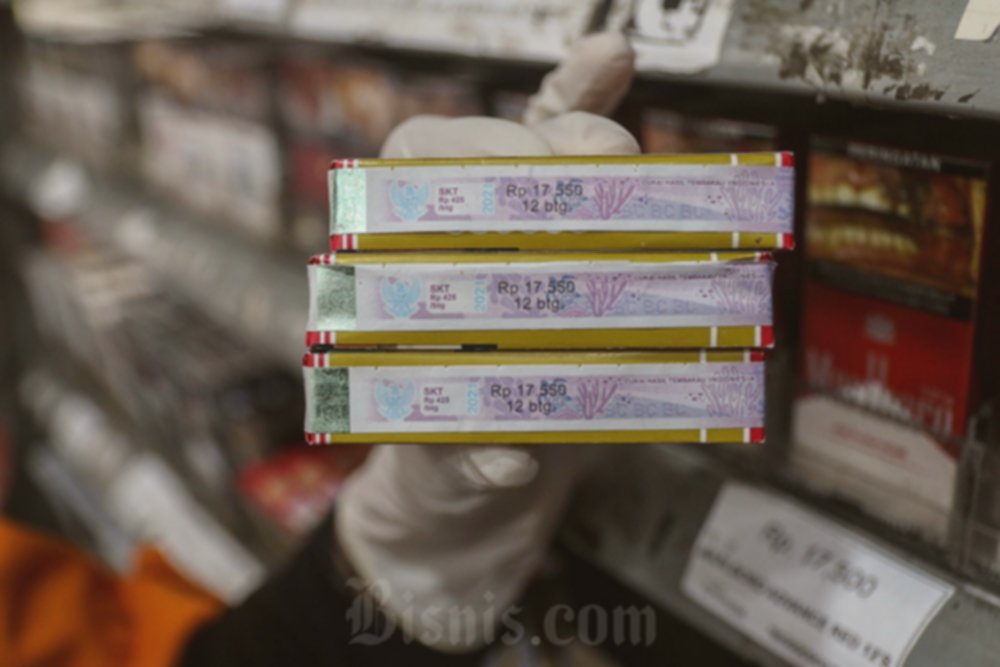
JAKARTA – Several prominent tobacco companies, including PT Hanjaya Mandala Sampoerna Tbk. (HMSP), PT Gudang Garam Tbk. (GGRM), and PT Indonesian Tobacco Tbk. (ITIC), reported unsatisfactory financial performance in the first half of 2025. Heading into the end of the year, a persistent slowdown in consumer purchasing power continues to be a major challenge for the industry.
Further underscoring these economic pressures, Statistics Indonesia (BPS) reported a month-to-month (MtM) deflation of 0.08% in the Consumer Price Index (CPI) for August 2025. The food, beverages, and tobacco expenditure group was the largest contributor to this monthly deflation, experiencing a 0.29% drop.
In line with the broader economic trend, PT Hanjaya Mandala Sampoerna Tbk. (HMSP) saw its sales decline by 4.57% year-on-year (YoY) in the first half of 2025. Similarly, PT Gudang Garam Tbk. (GGRM) experienced an 11.30% YoY decrease in revenue, while PT Indonesian Tobacco Tbk. (ITIC) recorded an 8.40% YoY revenue correction. These figures align with forecasts predicting that Sampoerna’s (HMSP) revenue would be pressured by weakened purchasing power.
Conversely, PT Wismilak Inti Makmur Tbk. (WIIM) managed to achieve sales growth of 29.64% YoY during January-June 2025. However, this growth rate represents a slowdown compared to the 46.34% YoY increase reported in the first half of 2023.
Ekky Topan, an Investment Analyst at Infovesta Utama, views the monthly deflation in August 2025 as a clear signal of tangible consumption pressure. He notes that this trend aligns with the declining sales reported by major tobacco issuers like HMSP and GGRM, highlighting a broader economic challenge that could be exacerbated by issues such as the shadow economy and illegal cigarette trade.
However, Ekky pointed out an interesting exception: WIIM, which primarily focuses on the Class II Hand-Rolled Kretek (SKT) cigarette segment. He explained to Bisnis on Tuesday (September 2, 2025) that this particular segment demonstrates greater resilience amidst economic pressures because it targets a broader, more price-sensitive consumer base.
According to Ekky, WIIM’s competitive pricing strategies and its expansion into international markets are currently the company’s key strengths. These strategies allow it to navigate market challenges, which are often compounded by factors like increased excise taxes impacting overall cigarette production.
Examining the performance of these issuers on the stock exchange on Tuesday (September 2, 2025), GGRM closed up 2.11% at Rp8,475, despite a 36.16% decline since the beginning of the year. ITIC also closed higher, gaining 0.90% to Rp224, though it has fallen 9.69% year-to-date. HMSP remained unchanged at Rp525 but has corrected by 17.32% since the start of the year. In contrast, WIIM closed up 1.26% at Rp805, marking a 15% increase year-to-date.
Ekky observed that tobacco stocks are currently more sensitive to fundamental factors such as actual sales performance, expectations regarding excise tax policies, and indicators of public purchasing power. He also noted that external sentiments, including the government’s fiscal policy direction, potential revisions to excise tax rates, and signals from BPS or the Ministry of Finance, continue to act as significant psychological drivers or depressors for the market.
Given these considerations, Ekky’s short-term recommendation for tobacco stocks remains a “wait and see” approach. However, for the long term, he identifies WIIM as a primary choice.
“With its consistently growing market segment and strong support from export expansion, WIIM stock is quite attractive for accumulation,” Ekky concluded. “The medium to long-term price target is estimated at around Rp1,200, provided that sales performance and efficiency can be consistently maintained.”
Meanwhile, Indonesian capital market observer Reydi Octa believes that the performance of major tobacco issuers like HMSP and GGRM is likely to remain under pressure until the end of the year. Key contributing factors include weakened consumer purchasing power and the anticipation of excise tax hikes. These elements could potentially lead to stagnant or even declining sales volumes.
Amidst this challenging situation, Octa attributes WIIM’s revenue growth in the first half of 2025 to the company’s strategic focus on lower-tier, more affordable products.
He further explained that the movement of tobacco stocks on the exchange is heavily influenced by fundamental aspects such as sales volume, profit generation, and production costs. Beyond these fundamentals, external sentiments also play a significant role, including evolving regulations—especially restrictions on tobacco advertising—excise policies, health concerns, healthy lifestyle trends, and foreign capital flows.
“The short-term outlook for this sector remains fraught with significant challenges,” Octa concluded.
According to consensus recommendations compiled from the Bloomberg Terminal, 6 out of 16 analysts currently recommend a “buy” rating for HMSP. Their 12-month price target is set at Rp645, indicating a potential return of 22.9% from its last closing price of Rp525.
In stark contrast, GGRM has no “buy” recommendations whatsoever. Instead, 11 out of 15 analysts advise selling the stock. Their 12-month price target stands at Rp5,97.67, which implies a potential loss of 29.3% from its recent price of Rp8,450.
As for WIIM, all three analysts providing recommendations suggest a “buy.” The latest “buy” recommendation comes from CGS International Indonesia Sekuritas, with a 12-month price target of Rp870, representing a potential return of 3.12% from its last closing price of Rp800.
Tobacco Industry Remains Under Pressure
Ronny P. Sasmita, a Senior Analyst at the Indonesia Strategic and Economic Action Institution, views the future prospects for tobacco issuers as rather bleak. His reasoning is based on current macroeconomic data, particularly inflation and purchasing power indicators, which consistently show continued weakening.
This economic climate will likely compel consumers to either reduce their consumption or seek out cheaper substitute products. Furthermore, rising excise taxes have pushed the prices of conventional cigarettes beyond what is considered reasonable, leading to a widening disparity between public purchasing power and the selling price of traditional tobacco products.
Another significant factor is the shifting consumer preferences among the younger generation, who demographically represent the majority of today’s population. They increasingly favor alternative tobacco products that typically do not originate from the major publicly listed issuers.
He added, “Electronic cigarettes or vapes have successfully eroded the market share of conventional cigarettes in recent years. Moreover, the growing prevalence of illegal cigarettes is also significantly eating into the conventional tobacco market, particularly targeting lower-income consumers.”
To navigate the current challenges, Ronny suggests that tobacco issuers should innovate with new, more appealing products to reclaim lost market segments.
Secondly, the outreach for conventional tobacco products needs to be creatively expanded through messaging mechanisms that can reach a wider market, especially the younger generation. Thirdly, companies should actively collaborate with the government to raise awareness about the dangers of illegal cigarettes and similar illicit products.
Ronny also highlighted the government’s current dilemma regarding the tobacco industry. On one hand, it is a labor-intensive sector that employs many people and serves as a significant source of state revenue. On the other hand, the government has a moral obligation to educate the public about the health risks associated with smoking.
“Consequently, the government tends to restrict the tobacco industry’s activities through fiscal measures, continuously increasing excise taxes over time,” he asserted.
Therefore, Ronny believes that government support for this industry could involve considering a moratorium on cigarette excise tax increases for the next few years. He argues that such a measure is crucial to prevent the widening gap between public purchasing power and cigarette prices.
Secondly, he suggests that the Indonesian government should also consider tightening regulations on smoke-free tobacco products, similar to Singapore’s approach, due to their unproven safety. Thirdly, the government must demonstrate serious commitment to curbing the proliferation of illegal cigarettes.
“These three actions are essential for the government to uphold the dignity of this labor-intensive industry, which has created numerous job opportunities and engaged countless partners across its entire business line,” he concluded.
Regarding the revenue outlook for these issuers, consensus data from the Bloomberg Terminal projects GGRM’s revenue at the end of 2025 to reach only Rp92.41 trillion. This figure reflects a 6.33% YoY correction compared to its 2024 revenue of Rp98.65 trillion.
A more detailed breakdown shows that revenue from the Machine-Rolled Kretek (SKM) segment is predicted to shrink by 4.03% YoY to Rp83.13 trillion. Meanwhile, the Hand-Rolled Kretek (SKT) segment is projected to contract by 2.00% YoY, reaching Rp9.18 trillion.
This anticipated revenue decline aligns with a projected decrease in sales volume. Consensus forecasts predict GGRM’s total sales volume at the end of 2025 to reach 45.05 billion units, representing a 15.22% drop. Specifically, SKT sales volume is expected to fall by 11.75% YoY to 7.19 billion units, and SKM products are anticipated to shrink by 14.88% YoY to 38.29 billion units.
Meanwhile, the consensus projects HMSP’s revenue to still grow by 0.48% year-on-year (YoY) to Rp118.44 trillion by the end of this year. However, this projected growth represents a significant slowdown compared to the 1.64% YoY growth in 2024, the 4.29% YoY growth in 2023, and the substantial 12.48% YoY revenue increase recorded in 2022.
For the end-of-2025 revenue projection, Machine-Rolled Kretek (SKM) products are expected to contribute Rp66.75 trillion, showing a 0.77% YoY growth. In contrast, Hand-Rolled Kretek (SKT) products are projected to reach Rp39.92 trillion, reflecting a 0.75% YoY correction, while Machine-Rolled White Cigarettes (SPM) are predicted to increase by 10.03% YoY to Rp7.52 trillion.
Summary
Major tobacco companies including HMSP, GGRM, and ITIC reported unsatisfactory financial performance in H1 2025, experiencing significant sales declines due to weakened consumer purchasing power and economic pressures. Conversely, WIIM achieved sales growth, driven by its focus on the resilient Class II Hand-Rolled Kretek segment, competitive pricing, and international expansion. Analysts attribute industry-wide challenges to factors like excise taxes, illegal trade, and shifting consumer preferences, recommending a cautious “wait and see” approach for most stocks.
The overall outlook for the tobacco industry remains bleak, facing declining sales volumes and market share erosion from alternative products like vapes and illegal cigarettes. Experts suggest innovation, market outreach, and curbing illicit products are crucial for companies to navigate these challenges, alongside potential government support like a moratorium on excise tax increases. Consensus recommendations indicate “buy” ratings for HMSP and WIIM, with WIIM favored long-term, but a “sell” rating for GGRM due to projected revenue and volume declines.