
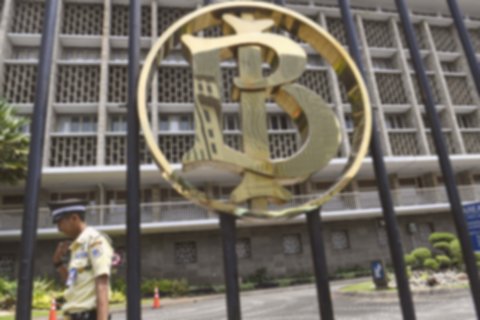

Bank Indonesia (BI) recently observed a significant net inflow of foreign capital into Indonesia’s domestic stock market, totaling an impressive Rp 4.51 trillion during the transaction period from September 22 to 25, 2025. This positive development for the Indonesian stock market stands out amid prevailing pressures.
However, this influx of foreign funds into equities occurred concurrently with outflows from other key instruments. Consequently, the overall Indonesian financial market still registered a net outflow during the same period, indicating a more complex landscape for foreign investor activity.
Ramdan Denny Prakoso, Executive Director of Bank Indonesia’s Communication Department, provided a detailed breakdown of these foreign fund movements. The robust net buy of Rp 4.51 trillion in the stock market was juxtaposed with a net sell of Rp 2.16 trillion in Government Securities (SBN) and a substantial net sell of Rp 5.06 trillion in Bank Indonesia Rupiah Securities (SRBI).
Reflecting these varied movements, Denny confirmed in an official statement on Sunday, September 27, that based on transaction data from September 22-25, 2025, non-resident investors collectively recorded a net sell of Rp 2.71 trillion across all financial instruments.
Zooming out to a year-to-date perspective, foreign investors have shown a significant net sell trend in both the stock market and SRBI, amounting to Rp 51.34 trillion and Rp 128.85 trillion respectively. In contrast, the SBN market has proven more attractive, drawing a net foreign inflow of Rp 36.25 trillion up to September 25, 2025, highlighting divergent preferences among international investors.
These dynamics within the Indonesian financial markets were also mirrored in the country’s investment risk premium. The 5-year Credit Default Swaps (CDS) spread, a key indicator of sovereign risk, increased to 83.18 basis points (bps) as of September 25, up from 69.55 bps recorded on September 19, suggesting a rising perception of risk.
In the bond market, the yield on the 10-year SBN climbed to 6.43 percent on Friday, September 26, slightly higher than its previous level of 6.40 percent. This local bond yield movement coincided with a strengthening of the 10-year US Treasury Note yield, which advanced to 4.170 percent on Thursday, September 25, reflecting global interest rate trends.
Concurrently, the rupiah exchange rate opened weaker against the US dollar on Friday, September 26, trading at Rp 16,750 per US dollar, a depreciation from its previous day’s closing of Rp 16,735. This weakening was observed as the US Dollar Index (DXY) also gained strength, reaching 98.55 at the close of trading on Thursday, September 15.
In response to these market conditions, Denny reiterated Bank Indonesia’s commitment, stating, “Bank Indonesia continues to strengthen coordination with the Government and relevant authorities, optimizing its policy mix strategy to bolster Indonesia’s external economic resilience.” This underscores BI’s proactive stance in navigating global and domestic financial challenges.
Summary
Indonesia’s domestic stock market witnessed a net inflow of Rp 4.51 trillion from foreign capital during September 22-25, 2025. However, this positive development was offset by outflows from Government Securities (SBN) and Bank Indonesia Rupiah Securities (SRBI). Consequently, non-resident investors registered an overall net sell of Rp 2.71 trillion across all Indonesian financial instruments within the same period.
Year-to-date, foreign investors have shown a net sell trend in stocks and SRBI, while the SBN market attracted a net inflow. These market dynamics coincided with an increase in Indonesia’s investment risk premium, a climb in the 10-year SBN yield, and a depreciation of the rupiah. Bank Indonesia affirmed its commitment to coordinating with the government to optimize policy and bolster the nation’s external economic resilience.