
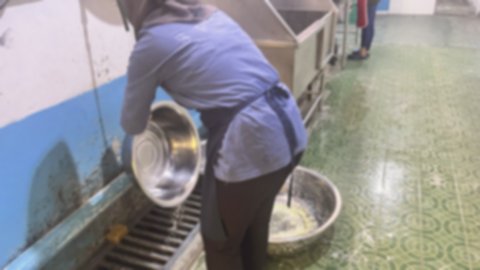

The Jakarta Provincial Government has revealed a critical challenge concerning its Free Nutritious Meal (MBG) program: all 180 Nutritional Service Units (SPPG) operating across Jakarta currently lack the mandatory Hygiene and Sanitation Feasibility Certificate (SLHS). This certificate is vital, serving as an official guarantee that the food served through the SPPG kitchens meets stringent health and cleanliness standards, thereby ensuring the quality and safety of meals provided.
Addressing these concerns, Ani Ruspitawati, Head of the DKI Jakarta Health Agency, confirmed on Saturday (4/10) at Tanah Merah Field, Ancol, North Jakarta, that while none of the 180 units have secured the SLHS yet, all are actively engaged in the certification process. “There are 180 SPPGs in Jakarta. None have obtained the certificate yet, but all are currently in progress,” Ruspitawati stated, emphasizing the concerted effort underway.
To expedite the issuance of the SLHS for these 180 SPPGs, the Jakarta Provincial Government is set to collaborate closely with relevant stakeholders. Furthermore, Ani outlined plans for a comprehensive series of repeated Environmental Health Inspections (IKL) to ensure the MBG program achieves heightened hygiene levels in its meal preparation and service.
Highlighting the intensity of these efforts, Ani elaborated, “We will conduct massive re-inspections. We did initial inspections when these units were first established, but we will be inspecting them again.” She also stressed an accelerated timeline designed to help the units promptly align with SLHS requirements, facilitating a swift certification process. Ani underscored the ambitious target, expecting the entire SLHS issuance process to be finalized within the next two weeks, provided all procedures run smoothly.
In a related development, the Jakarta Provincial Government is also initiating an extensive training program for SPPG personnel across Jakarta. This crucial training aims to refine the operational management of the MBG program, particularly in light of recent incidents of food poisoning affecting a number of students. The initiative seeks to prevent future occurrences by enhancing the capabilities of those directly involved in food handling and preparation.
Ani confirmed the substantial scale of this training, indicating that approximately 8,000 SPPG staff members are slated to receive this specialized instruction. “We are providing training for both the supervisors of the SPPGs and the food handlers. We aim to train around 8,000 people,” she explained. “We will continuously train these approximately 8,000 individuals so they can manage operations at their respective SPPGs more effectively.”
Encouragingly, Ani reported that all SPPGs in Jakarta have demonstrated full cooperation in supporting both the IKL process and the implementation of the training initiatives, underscoring their commitment to improving the MBG program. She concluded by affirming, “All SPPGs have been cooperative; they have all committed to the inspections, and if any discrepancies are found, they will be rectified according to existing regulations.” This expedited process is designed to enable the rapid issuance of health certificates, which will then be followed by continuous oversight to maintain high standards.
Summary
The Jakarta Provincial Government’s Free Nutritious Meal (MBG) program faces a significant challenge as all 180 Nutritional Service Units (SPPG) currently lack the mandatory Hygiene and Sanitation Feasibility Certificate (SLHS). The DKI Jakarta Health Agency confirmed that while none have the certificate yet, all units are actively engaged in the certification process. The government plans intensive re-inspections and aims to finalize SLHS issuance for all units within the next two weeks to ensure adherence to health and cleanliness standards.
Furthermore, in light of recent food poisoning incidents, the Jakarta Provincial Government is initiating an extensive training program for approximately 8,000 SPPG staff, including supervisors and food handlers. This crucial training aims to enhance operational management and food handling practices to prevent future occurrences. All SPPGs have shown full cooperation with both the inspection process and the training initiatives, committing to rectify any discrepancies and maintain high standards for the program.