
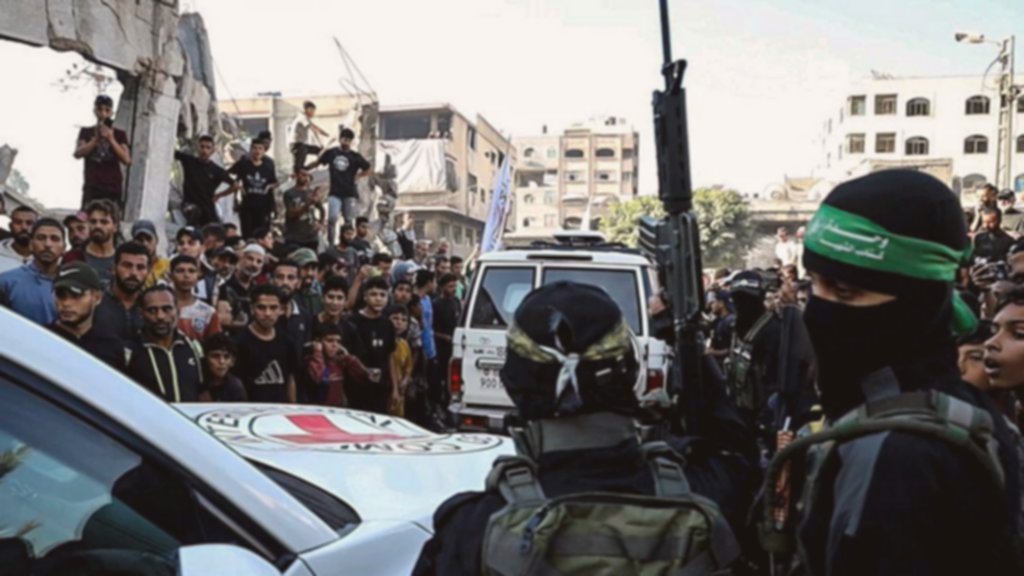

Israel’s Defense Forces (IDF) have confirmed that Hamas has released all remaining living hostages held in Gaza. This significant exchange, part of the initial phase of former U.S. President Donald Trump’s comprehensive peace plan for Gaza, saw thousands of Palestinian prisoners and detainees freed in return.
The agreement ushered in a crucial ceasefire between Israeli forces and Hamas, which took effect on Friday, October 10th, and facilitated a vital increase in humanitarian aid entering the Gaza Strip over the weekend.
With this first phase concluded, subsequent negotiations are anticipated to detail the specifics of the plan’s future stages.
Here’s what we know so far about this pivotal development.
Who Are the Released Hostages?
The ceasefire agreement culminated in Hamas freeing all 48 Israeli and foreign nationals it had held captive during the two-year conflict, with 20 of them confirmed to be alive. All but one of these individuals were among the 251 people abducted during the Palestinian militant group’s October 7, 2023, assault on southern Israel, an attack that tragically claimed approximately 1,200 lives. In response to this devastating incursion, Israel launched extensive military operations in Gaza, resulting in over 67,000 fatalities, according to the Hamas-run Ministry of Health in the territory.

On the morning of Monday, October 13th, Hamas handed over the 20 surviving hostages in two distinct groups to the International Committee of the Red Cross (ICRC). Israeli authorities identified the first group as Eitan Mor, Gali Berman, Ziv Berman, Omri Miran, Alon Ohel, Guy Gilboa-Dalal, and Matan Angrest. The second group comprised Bar Kupershtein, Evyatar David, Yosef-Chaim Ohana, Segev Kalfon, Avinatan Or, Elkana Bohbot, Maxim Herkin, Nimrod Cohen, Matan Zangauker, David Cunio, Eitan Horn, Rom Braslabski, and Ariel Cunio.

Furthermore, a copy of the ceasefire agreement released by Israeli media stipulated that the remains of all deceased hostages were also to be handed over by 12:00 PM local time on Monday, October 13th. However, the document also seemed to acknowledge the potential difficulty for Hamas and other Palestinian factions to locate all bodies within that timeframe. An Israeli official confirmed that an international task force would be established to search for any remains not repatriated during the exchange.
Who Are the Released Palestinian Prisoners?
In reciprocal fashion for the hostage release, Israel consented to free 250 Palestinian prisoners serving life sentences in Israeli jails, along with 1,718 detainees from Gaza, a group that included 15 minors. The most recent list of these prisoners and detainees was disseminated by the Hamas-run Prisoners’ Media Office on the morning of Monday, October 13th. Notably, this list did not feature prominent figures serving life sentences for deadly attacks against Israelis, such as Marwan Barghouti and Ahmad Saadat, whose release Hamas had specifically demanded.
Last week, Israeli media reported that approximately 100 of the 250 prisoners would be released into the occupied West Bank, 15 into occupied East Jerusalem, while 135 were slated for deportation to the Gaza Strip or other locations. It remains uncertain whether any delays in the repatriation of the deceased hostages’ remains might also impact or postpone the release of the Palestinian prisoners.
What Happens After the Hostage and Prisoner Exchange?
Prior to the release of the hostages, Israeli forces pulled back to lines that left them in control of 53% of Gaza’s territory. This marks the first of three proposed stages of Israeli troop withdrawal outlined in the Trump plan. A multinational force, comprising approximately 200 soldiers and overseen by the U.S. military, is tasked with monitoring the fragile ceasefire, a senior U.S. official confirmed. This force is believed to include contingents from Egypt, Qatar, Turkey, and the United Arab Emirates, though U.S. officials explicitly stated that no American troops would be stationed in Gaza.

The comprehensive 20-point plan, which can be read in full here, stipulates that if agreed upon by both sides, the war would “immediately end.” Central to its vision is the demilitarization of Gaza, with all “military, terror, and offensive infrastructure” slated for destruction. Initially, Gaza would be governed by an interim transitional committee composed of Palestinian technocrats, overseen by a “Peace Council” led and chaired by Trump, also involving former British Prime Minister Tony Blair. Ultimately, the governance of the Gaza Strip would be handed over to a reformed Palestinian Authority, which currently administers the West Bank.
Crucially, Hamas, which has governed the territory since 2007, is explicitly excluded from any future role in Gaza’s governance, whether direct or indirect, according to the plan. Hamas members would be offered amnesty if they commit to peaceful coexistence or granted safe passage to another country. The plan also assures that no Palestinian will be forced to leave Gaza, and those who wish to depart will be free to return. An expert panel will be convened to develop “Trump’s economic development plan to rebuild and energize Gaza,” addressing the territory’s long-term recovery.

What Are the Key Sticking Points?
Despite the successful initial phase, significant points of contention are likely to emerge during subsequent negotiations over the deal’s future stages. Hamas has consistently refused to disarm, asserting that it would only do so after the establishment of a Palestinian state. The group’s initial response to the plan last weekend conspicuously omitted any mention of disarmament, fueling speculation that its fundamental position on this issue remains unchanged.

Adding to the complexity, while Israel has fully endorsed the Trump plan, Israeli Prime Minister Benjamin Netanyahu appeared to reject the involvement of the Palestinian Authority in post-war Gaza, even as he stood alongside the former president last week. Countering this, Hamas has also expressed its expectation of playing some future role in Gaza as part of a “unified Palestinian movement.”

Another crucial area of disagreement revolves around the extent of Israel’s troop withdrawal. While Israel stated that the first withdrawal would allow it to retain control over approximately 53% of Gaza’s territory, the White House plan indicates further withdrawals, eventually reducing control to about 40% and then 15%. The final stage proposes a “security perimeter” that would “remain until Gaza is truly safe from any re-emerging terror threats.” The phrasing in this particular point lacks clarity and fails to provide a definite timeline for Israel’s full withdrawal – a crucial detail Hamas will undoubtedly seek to clarify in future talks.
- Israel and Hamas begin prisoner and hostage exchange – Tears of joy and emotion as Palestinians welcome released prisoners
- ‘Even if homes are destroyed, only rubble remains, we will return’ – Thousands of Palestinians go home after ceasefire begins
- Indonesia denies visas to Israeli athletes for Artistic Gymnastics World Championships in Jakarta
- Israel-Hamas ceasefire, a major breakthrough amid uncertainty – What points have been agreed upon?
- Israeli Navy intercepts Global Sumud Flotilla ship to Gaza, Greta Thunberg detained
- Trump and Netanyahu agree on peace plan in Gaza – What is Indonesia’s stance?
- President Trump proposes Gaza peace plan – What are the full details?
- Israel-Hamas ceasefire, a major breakthrough amid uncertainty – What points have been agreed upon?
- Trump and Netanyahu agree on peace plan in Gaza – What is Indonesia’s stance?
Summary
Hamas has released all remaining living hostages in Gaza as part of a peace plan initiated by former U.S. President Donald Trump, leading to the reciprocal release of thousands of Palestinian prisoners and detainees by Israel. This exchange facilitated a crucial ceasefire that began on October 10th and allowed for a significant increase in humanitarian aid to the Gaza Strip. Following this initial phase, Israeli forces pulled back to control 53% of Gaza, and a multinational force was established to monitor the fragile ceasefire.
The comprehensive 20-point peace plan aims to end the war, demilitarize Gaza, and establish a reformed Palestinian Authority for its governance, explicitly excluding Hamas from any future role. However, significant sticking points remain, including Hamas’s refusal to disarm without the establishment of a Palestinian state and conflicting views on the Palestinian Authority’s post-war involvement. The extent and timeline of Israel’s full troop withdrawal from Gaza also present a crucial area for future negotiation.