
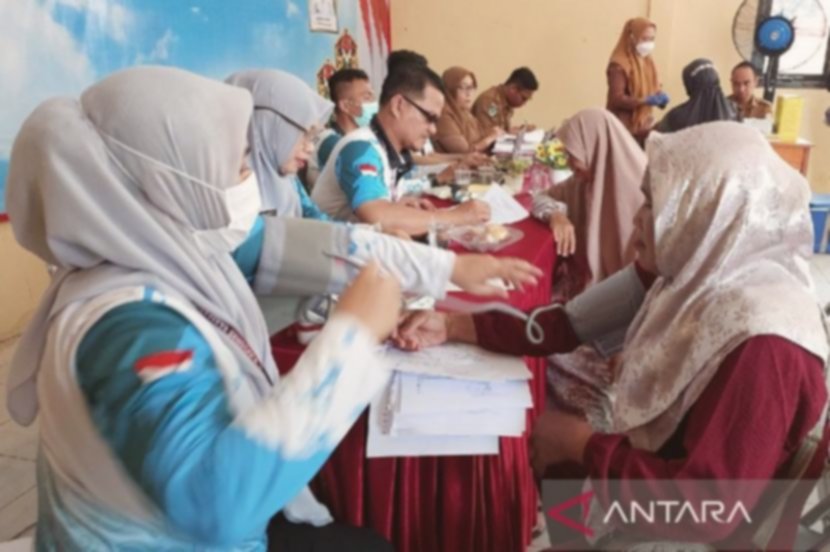
JAKARTA – Minister of Health Budi Gunadi Sadikin announced on Friday a remarkable milestone in Indonesia’s public health efforts: approximately 44.9 million individuals have registered for the government’s comprehensive free health screening program. Of this substantial number, an impressive 41.89 million people have already undergone the screenings, marking significant progress in the nation’s preventive healthcare initiatives.
Minister Sadikin further elaborated on the program’s accelerating momentum, noting a current screening rate of 600,000 individuals daily. This rapid pace is projected to bring an additional 30 million participants into the fold during the final ten weeks of 2025. “Honestly, we might reach around 70 million participants,” he stated, expressing strong optimism. Sadikin is particularly hopeful that the upcoming appointment of Benjamin Paulus as Deputy Minister of Health under President Prabowo Subianto’s administration will significantly bolster and expedite screening rates, especially within corporate sectors.
At the same event, Deputy Minister of Health Dante Saksono Harbuwono underscored the critical importance of the CKG program in championing preventive healthcare. He articulated that this vital initiative empowers communities to gain a clearer understanding of their individual health risks, thereby encouraging them to embrace healthier lifestyles. As a tangible example, the program utilizes the renowned Framingham Score to accurately estimate an individual’s ten-year risk of heart attack. Beyond risk assessment, the CKG initiative actively encourages more people to regularly visit primary healthcare facilities for comprehensive monitoring of key indicators such as cholesterol levels, blood pressure, blood sugar, and other crucial health markers.
Striking data emerging from the CKG program reveals the five most prevalent health issues among Indonesian adults: insufficient physical activity, dental problems, central obesity, general overweight, and hypertension. Addressing these findings, Harbuwono passionately declared, “We aim to cultivate a generation that isn’t afraid to sweat. Through exercise, body weight decreases, blood pressure drops, and blood sugar levels improve.” This statement reinforces the program’s dedication to fostering a more active and health-conscious populace.
Furthermore, the CKG data brings to light a concerning statistic: 10.1 percent, or approximately one in ten Indonesians, suffer from diabetes. Alarmingly, only 30 percent of these individuals are aware of their condition. “This means 70 percent were previously unaware,” Harbuwono emphasized, highlighting a significant diagnostic gap. He noted a parallel trend with hypertension, where a substantial number of cases remain undiagnosed. In light of these findings, the Deputy Minister urgently appealed to the media for their invaluable assistance in promoting this flagship program, crucial for preventing catastrophic diseases such as cardiovascular illnesses, cancer, and stroke.
This content was processed with AI assistance.
Summary
Health Minister Budi Gunadi Sadikin announced that 44.9 million Indonesians have registered for the free health screening program, with 41.89 million already screened. The program currently screens 600,000 individuals daily, aiming for a total of 70 million participants by the end of 2025. Deputy Minister Dante Saksono Harbuwono highlighted the CKG program’s role in promoting preventive healthcare, enabling communities to understand their health risks, and encouraging healthier lifestyles through regular primary healthcare visits.
Data from the CKG program revealed the most prevalent adult health issues are insufficient physical activity, dental problems, central obesity, general overweight, and hypertension. A concerning 10.1 percent of Indonesians have diabetes, with 70 percent unaware of their condition, and a similar diagnostic gap exists for hypertension. The Deputy Minister urged media support to promote this crucial initiative for preventing major diseases like cardiovascular illnesses, cancer, and stroke.