
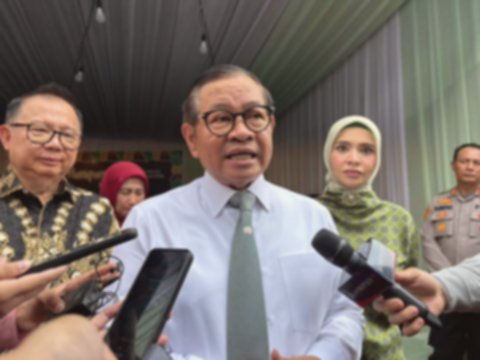
Jakarta Governor Pramono Anung has officially addressed the alarming discovery by the National Research and Innovation Agency (BRIN) regarding microplastic content in Jakarta’s rainwater. The Governor assured the public that the DKI Jakarta Provincial Government is actively investigating these critical findings. “Regarding the rain containing plastic particles found by BRIN, we have already initiated an in-depth study,” Pramono stated during an event at the East Jakarta Mayor’s Office in Cakung, Jakarta, on Tuesday, October 21.
Furthermore, Pramono indicated that he would soon instruct the DKI Jakarta Environmental Agency (DLH) to present the findings of their own research on this issue to the public. He reiterated, “Specifically, I will ask the Head of the Environmental Agency to communicate their findings to the public, as they are also conducting studies. I will certainly ask them to make this public very soon.” This move underscores the administration’s commitment to transparency and evidence-based action regarding Jakarta’s environmental quality.
These recent statements follow BRIN’s groundbreaking research, which revealed that Jakarta’s rainwater contains hazardous microplastic particles, primarily stemming from intensive urban human activities. This startling discovery serves as a critical warning that plastic pollution is no longer confined to our land and oceans but has alarmingly infiltrated the very atmosphere we breathe.
Muhammad Reza Cordova, a lead researcher at BRIN, elaborated that their comprehensive study, which commenced in 2022, consistently detected microplastics in every single rainwater sample collected across the capital. These microscopic plastic particles are formed through the degradation of plastic waste that becomes airborne due to various human activities.
Reza further specified the pervasive origins of these contaminants, explaining, “These microplastics originate from synthetic clothing fibers, vehicle and tire dust, residues from burning plastic waste, and the degradation of plastics in open environments.” His remarks were published on the BRIN website on Friday, October 17, highlighting the multifaceted nature of microplastic pollution in Jakarta.
In response to BRIN’s compelling findings, the DKI Jakarta Environmental Agency (DLH) has proactively committed to addressing the issue of microplastics found in Jakarta’s rainwater.
Asep Kuswanto, Head of DLH DKI Jakarta, affirmed the agency’s continuous efforts to strengthen plastic waste control across the entire supply chain, from production to disposal. This comprehensive approach also includes ongoing monitoring of air and rainwater quality, crucial for understanding the full scope of plastic pollution in Jakarta.
Emphasizing collective responsibility, Asep stated in a press release on Saturday, October 19, “Keeping Jakarta’s skies free from microplastics is a shared responsibility, and a fundamental shift in community behavior is the primary key to tackling this plastic problem.” His statement highlights the vital role of public participation in effective waste management.
The DKI Jakarta Provincial Government has already implemented several proactive measures to combat plastic waste. These include the issuance of Governor Regulation No. 142 of 2019, which mandates the use of eco-friendly shopping bags; the expansion of the Regional Waste Management Strategy (Jakstrada), targeting a 30 percent waste reduction at the source; and the active development of waste banks, 3R (Reduce, Reuse, Recycle) facilities, and various community-based recycling initiatives. These efforts demonstrate a multi-pronged approach to sustainable waste management in Jakarta.
Currently, DLH DKI, in collaboration with BRIN, is further enhancing its monitoring capabilities for airborne and rainwater microplastics through the innovative Jakarta Environmental Data Integration (JEDI) system. JEDI is a sophisticated, data-driven platform designed to provide comprehensive oversight of environmental quality in Jakarta.
The invaluable data gathered from the JEDI system will serve as the crucial foundation for developing robust, evidence-based policies aimed at safeguarding the city’s future environmental health. This commitment to data-driven decision-making highlights Jakarta’s progressive stance on addressing its pressing environmental challenges.
Summary
The National Research and Innovation Agency (BRIN) has discovered hazardous microplastic particles in Jakarta’s rainwater, stemming from intensive urban human activities and consistently detected since 2022. Jakarta Governor Pramono Anung confirmed that the DKI Jakarta Provincial Government is conducting an in-depth investigation into these findings. The Governor committed to instructing the DKI Jakarta Environmental Agency (DLH) to publicly present their research findings on this critical environmental issue.
These microplastics originate from sources like synthetic clothing fibers, vehicle dust, and plastic degradation. In response, DLH is strengthening plastic waste control across the entire supply chain and continuously monitoring air and rainwater quality. The provincial government has also implemented measures such as eco-friendly bag mandates and waste reduction strategies, and is now collaborating with BRIN through the JEDI system to gather data for robust, evidence-based environmental policies.