
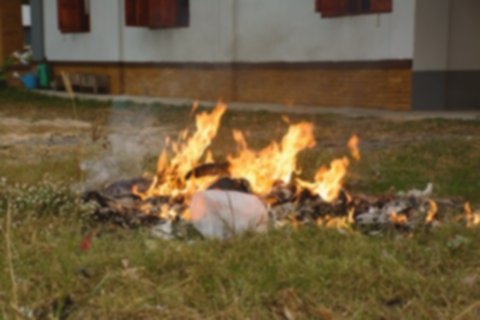
Pemerintah Provinsi DKI Jakarta berencana menambah bentuk sanksi bagi pelaku pembakaran sampah atau open burning. Pelaku akan diberikan sanksi sosial berupa publikasi wajah di ruang publik. Langkah ini diharapkan bisa memberi efek jera dan mendorong perubahan perilaku warga terhadap pengelolaan sampah.
The DKI Jakarta Provincial Government is poised to introduce a novel form of penalty for individuals engaging in illegal waste burning, often referred to as “open burning.” This new social sanction will involve the public disclosure of offenders’ faces in prominent public spaces. Authorities anticipate this measure will serve as a strong deterrent, fostering significant behavioral change among residents regarding responsible waste management practices.
This initiative comes amidst growing environmental concerns. Recent research by the National Research and Innovation Agency (BRIN) has revealed that rainwater in Jakarta now contains hazardous microplastic particles, primarily stemming from various urban human activities. Pollution generated by open burning is identified as a significant contributor of fine particulate matter into the air, potentially transporting these microplastics into the atmosphere and exacerbating the city’s air quality crisis.
Asep Kuswanto, Head of DKI Jakarta’s Environmental Department (DLH), acknowledged the relative infrequency of open burning incidents in Jakarta compared to other regions. However, he emphasized that despite the lower numbers, the practice remains a critical concern due to its disproportionately large impact on air pollution. “While numerically, open burning in Jakarta might be relatively low compared to other areas, it does exist,” Asep stated during a media briefing at City Hall in Gambir, Central Jakarta, on Friday, October 24th. He also expressed gratitude, adding, “I want to thank the community, who are incredibly responsive when open burning occurs in their vicinity, and we invariably take action.”
Social Sanctions
Kuswanto further elaborated on the upcoming plans, stating that the Environmental Department would explore implementing social sanctions by publicizing offenders’ identities on the agency’s official social media channels. “In the future, we will begin implementing social sanctions where perpetrators of open burning can be subject to public display of their faces on the DLH’s social media platforms,” he explained.
Asep believes this measure will positively influence public behavior, especially given the serious health and environmental repercussions of waste burning. “We hope this will have a positive effect in helping the community reduce open burning habits,” Asep remarked, acknowledging that “we are aware some members of society consider open burning or waste incineration a part of their lives, a habit.” He reiterated a strong warning: “But once again, because open burning causes extraordinary pollution, containing carcinogens, we hope all members of the public will realize this and cease engaging in open burning.”
The concept of these social sanctions was originally proposed by BRIN Research Professor Muhammad Reza Cordova. He suggested that the existing fine of IDR 500,000 for waste burners in Jakarta could be significantly bolstered by the addition of social penalties to enhance their effectiveness. “When I heard about the IDR 500,000 fine, I wondered if it could truly be enforced; it’s a good amount if implemented effectively,” Reza commented. “But personally, if I could add something, how about social sanctions? Display the faces of those who burn waste in their sub-districts. Frankly, for me, Indonesians fear shame more than paying a fine.”
Cordova firmly believes that shame-based sanctions could have a far greater impact than mere monetary penalties. “If their photos are displayed, perhaps on banners, stating ‘This is a perpetrator of indiscriminate burning,’ I am confident that person would feel immense shame, and the likelihood of reoffending would be significantly reduced,” Reza articulated. He also alluded to other potential social repercussions, noting, “Or, if given other social sanctions, well, our netizens have incredible reach.”
According to Reza, this kind of social approach could effectively foster civic compliance in environmental preservation without solely relying on administrative penalties. He concluded, “It seems this is indeed what we can do to shift our focus, so fines aren’t always monetary but can also take the form of social sanctions, which appears to be a viable option.”
Summary
The Jakarta Provincial Government plans to implement social sanctions, including publicizing the faces of illegal waste burners on social media, to deter open burning. This initiative aims to change public behavior and reduce pollution, particularly in light of recent findings about microplastic contamination in Jakarta’s rainwater.
The Head of Jakarta’s Environmental Department emphasizes that while open burning incidents may be relatively infrequent, their impact on air pollution is significant. The social sanctions, initially proposed by a BRIN researcher, are expected to be more effective than fines alone, as shame is a strong deterrent for many Indonesians and could lead to greater compliance with environmental regulations.