
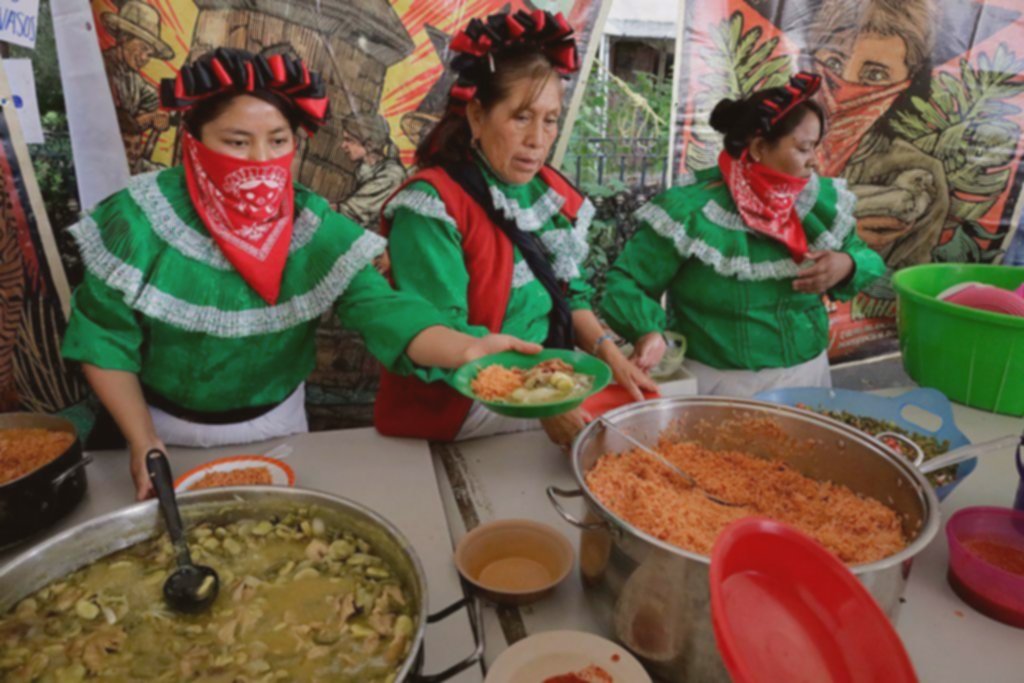

A pioneering restaurant in Mexico City is redefining dining with a revolutionary concept that allows patrons to pay what they can afford. This bold initiative raises an intriguing question: how does such a business model sustain itself, especially in the competitive culinary world?
The innovative minds behind this venture are chefs Norma Listman and Saqib Keval. They were celebrating a colleague’s success in New York when they received an unexpected call – they had been awarded a prestigious Michelin star. Michelin, renowned for its annual recognition of restaurants globally for their exceptional culinary quality, employs anonymous judges, keeping their assessments a secret from the restaurant owners themselves.
“Our restaurant management called us, but we didn’t pick up,” Listman recounted with a laugh. “Then the most serious manager in the office called. I thought, he never calls unless something is wrong. It turned out we were being featured on the Michelin awards stage.” This humorous anecdote highlights the unexpected nature of their recognition.
Listman and Keval are celebrated for pioneering revolutionary initiatives in the restaurant industry, most notably their “eat what you want, pay what you can” philosophy. Their dedication extends far beyond prestigious accolades; they are driven by a profound passion for food advocacy and community engagement. This commitment was evident when they chose to attend a celebration for a cherished culinary colleague rather than the Michelin awards ceremony itself.

Their groundbreaking concept, implemented at their restaurant Masala y Maiz, truly embodies the ‘pay what you can’ ethos. Several times a year, guests are invited to savor a special menu featuring a fusion of Mexican, African, and Indian flavors. At the end of their meal, patrons receive an envelope, where they discreetly leave a payment reflecting their economic capacity or what they believe is a fair price. This experience is designed to be barrier-free: there are no fixed bills, no mandatory reservations, and service operates on a first-come, first-served basis, creating a truly egalitarian dining environment. Furthermore, an important condition requires guests to specify what percentage of their payment should be allocated directly to the kitchen staff, promoting transparency and fair compensation.
Through this thoughtful initiative, Listman and Keval aim to ensure that everyone in Mexico City, regardless of their economic background, can experience the exceptional cuisine offered at their establishment. During these special days, diners can enjoy signature dishes like camarones pa’pelar, a delectable shrimp dish cooked with vanilla, lime, and ghee, or their renowned kuku poussin, small fried chicken served with cheese, lettuce, and tamarind sauce. Crucially, these dishes are presented with the same meticulous preparation, size, and quality as on any regular day – the only difference being the absence of price tags on the menu.
Surprisingly, the chefs affirm that operating under this model does not result in financial losses. The vast majority of patrons contribute something, with some even offering original artwork to the staff as payment. Many customers generously pay more than the usual cost, sometimes up to three times the typical price. For Listman and Keval, empowering customers to pay what they can is a deeply significant step in a city grappling with increasing challenges of gentrification and over-tourism.
“There is a lot of class inequality, a lot of economic inequality in this city. There are people who make all the money and people who do all the work,” Listman explains. She believes that a restaurant concept like theirs can effectively “bridge these class and economic disparities, making the restaurant accessible to everyone – at least for one day.”

Regarding their Michelin recognition, Listman and Keval admit they never anticipated their restaurant would be listed. However, they now see the Michelin star as a valuable asset, capable of benefiting the community they serve and elevating awareness of the ‘pay what you can’ concept among other establishments, at least across Mexico City. In an exciting development, on August 27, 2025, twenty other restaurants in the city will implement the ‘pay what you can’ model for the first time, a testament to the growing influence of this movement. Keval expresses his earnest hope that this compassionate concept will spread worldwide.
“We’ve received contacts from people in Chile, Colombia, other parts of Mexico, and Peru who want to join this movement,” Keval told BBC. He optimistically adds, “I don’t see why this cannot become an ‘international pay what you can’ initiative.” This year, a diverse range of food businesses, from small family bakeries like Panadería Valle Luna in Colonia Juarez to other Michelin-starred establishments such as Expendio de Maíz – which focuses on traditional Mexican cuisine with corn at its heart – are participating. With over 20 restaurants involved in this year’s event, Listman and Keval anticipate the number of participating culinary ventures will continue to grow next year, fostering a powerful sense of community and shared purpose.

Ximena Igartúa from Loup Bar in Cuauhtémoc District, a participant in the event, articulated the driving force behind it: “We are motivated by a spirit of togetherness. This is a collective message of unity and solidarity, an invitation to challenge stereotypes. It is also a way to reciprocate the kindness we receive from our customers.”
Keval envisions this movement sparking a larger global trend, a dream that may already be taking shape. Indeed, independent ‘pay what you can’ schemes already exist elsewhere, such as the Annalakshmi Restaurant in Singapore and Rethink Cafe in Brooklyn, NY, operating independently of the Mexico City initiative. The proprietors of Masala y Maiz aspire for more restaurants and more people worldwide to embrace the opportunity to enjoy delicious food at an accessible price point.
“Working in a restaurant is incredibly exhausting, and profits are diminishing,” Keval observes, acknowledging the thin margins that often stifle innovation and ambition. “Profit margins are so thin that it’s difficult to have room to dream. But this is a step that can be taken,” he concludes, offering a beacon of hope for a more inclusive and sustainable culinary future.
- How do restaurants earn a Michelin star?
- The history behind Michelin’s awards for the most delicious food
- Why food prices continue to soar and is the era of cheap food over?
- Why global meat prices reached record highs
Summary
Chefs Norma Listman and Saqib Keval of Masala y Maiz in Mexico City have gained recognition not only for receiving a Michelin star but also for their pioneering “pay what you can” dining model. This concept allows guests to enjoy special menus featuring a fusion of Mexican, African, and Indian flavors, paying discreetly what they can afford, with a portion directed to kitchen staff. The initiative seeks to combat class and economic inequality, making exceptional cuisine accessible to all, and has proven financially sustainable as many patrons contribute generously. The chefs believe this approach can bridge disparities within the city.
Listman and Keval utilize their Michelin star to raise awareness and promote the “pay what you can” concept among other restaurants. This movement is expanding significantly, with 20 other Mexico City establishments, including another Michelin-starred venue, set to implement the model in August 2025. The chefs aspire for this compassionate dining initiative to spread globally, encouraging more restaurants to offer delicious and accessible food worldwide.