
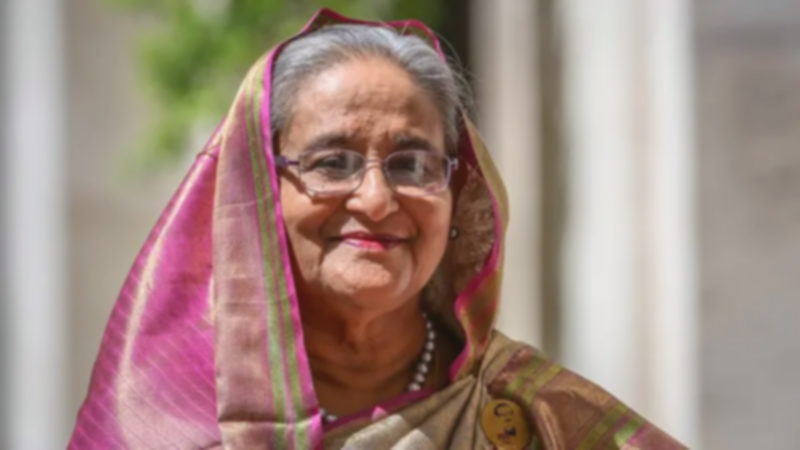
Former Bangladesh Prime Minister Sheikh Hasina Sentenced to Death for Crimes Against Humanity
In a stunning turn of events, former Bangladeshi Prime Minister Sheikh Hasina has been found guilty of crimes against humanity and sentenced to death. A special tribunal determined that Hasina was responsible for ordering the brutal suppression of student-led protests last year, a crackdown that resulted in a staggering loss of life.
The United Nations estimates that the death toll reached 1,400, with the vast majority of casualties resulting from gunfire by security forces. The trial proceeded in absentia, as Hasina had fled to India after being forced from power.
Speaking to the BBC last week, Hasina denounced the proceedings held in her absence as a “kangaroo court,” further fueling the controversy surrounding the verdict.
In the wake of the verdict, security has been significantly heightened across Bangladesh amid fears of a violent backlash. Demonstrations have already erupted in several locations since this morning.
Hasina’s Response to the Charges
In an email sent to the BBC prior to the verdict, Sheikh Hasina dismissed her in absentia trial as a “comedy” orchestrated by a “puppet court” controlled by her political rivals.
She was accused of personally ordering security forces to fire upon protestors in the weeks leading up to her departure from the country, allegations she vehemently denies.
“I do not deny that the situation became uncontrolled, or that many lives were tragically lost. But I never issued any order to shoot unarmed civilians,” she stated in her written response.
What Sparked the Massive Protests in Bangladesh?
The catalyst for last year’s deadly protests was widespread anger among young Bangladeshis over the government’s job allocation policies.
Since gaining independence from Pakistan in 1971, Bangladesh has reserved 30% of all civil service positions for veterans and, crucially, their descendants.
By 2024, a significant number of jobs were being awarded based on lineage rather than merit, with beneficiaries often being supporters of Sheikh Hasina and her Awami League party.
For young students and graduates facing soaring unemployment rates, the quota system became emblematic of nepotism among the Bangladeshi elite, rather than a tribute to patriotism.
Read More:
- How Demonstrations in Bangladesh Ended Sheikh Hasina’s 15-Year Rule
- How Demonstrations in Bangladesh Turned Into Deadly Riots
- Muhammad Yunus, Nobel Laureate Known as ‘Banker to the Poor,’ Now Leads Bangladesh
Since the interim government assumed power, the quota system has been drastically reduced. Now, only 5% of government positions are reserved for descendants of war veterans.
The new leader of Bangladesh, Muhammad Yunus, has also achieved some economic stabilization by boosting the nation’s foreign currency reserves and securing vital loans from the International Monetary Fund (IMF).
However, Bangladesh, a major garment producer, requires significantly more foreign investment to truly revitalize its fragile economy. This is unlikely to happen as long as violence and political instability persist.
Who is Sheikh Hasina?
Sheikh Hasina holds the distinction of being the longest-serving Prime Minister in the history of Bangladesh. She rose to prominence as a pro-democracy icon, joining other political parties in opposing military rule in the 1980s and first being elected as Prime Minister in 1996.
Her second tenure, beginning in 2009, became increasingly controversial. It was marred by accusations of extrajudicial killings, enforced disappearances, and suppression of the opposition – a stark contrast to her earlier advocacy for multi-party democracy.
Hasina has called the killings during last year’s anti-government demonstrations “tragic,” but she firmly denies personally ordering security forces to fire on protestors in the weeks before her departure.
Her father, Sheikh Mujibur Rahman, led Bangladesh to independence from Pakistan in 1971 and became its first president.
He, along with most of Hasina’s family, was assassinated in 1975. Only Hasina and her younger sister, Sheikh Rehana, survived because they were abroad at the time.
Hasina is a seasoned politician, having survived numerous arrests while in the opposition, and several assassination attempts. However, today’s guilty verdict significantly diminishes her chances of returning to the political stage, or even returning to Bangladesh, anytime soon.
Seeking Refuge in India
On August 5, 2024, Sheikh Hasina’s military plane landed at Hindon Air Base in Ghaziabad as she fled the escalating protests in Bangladesh.
That day marked the start of a familiar sanctuary in a country that once helped before.
Nearly five decades ago, she arrived in India with her sister after their father, the First President of Bangladesh – Sheikh Mujibur Rahman, was murdered along with most of his family in a military coup in 1975.
The two sisters were vacationing abroad when the assassinations occurred. With nowhere safe to turn, they sought refuge in India, a key ally of Bangladesh during its 1971 War of Independence against Pakistan.
Hasina was granted political asylum by then-Indian Prime Minister Indira Gandhi.
She, along with her children, husband, and sister, resided in Delhi at a luxurious property on Pandara Road for almost six years under assumed identities.
During this period, she cultivated strong political ties with Indian leaders before eventually returning to Bangladesh and entering the political arena herself.
This article will be updated as the story develops.
Summary
Former Bangladeshi Prime Minister Sheikh Hasina has been sentenced to death after being found guilty of crimes against humanity related to the suppression of student-led protests. The trial, which proceeded in absentia as Hasina had fled to India, determined she was responsible for ordering the brutal crackdown that resulted in a significant loss of life. Hasina has denounced the proceedings as a “kangaroo court” orchestrated by her political rivals.
The deadly protests were sparked by widespread anger over the government’s job allocation policies, specifically the reservation of a significant percentage of civil service positions for veterans and their descendants. Hasina, who denies ordering security forces to fire upon protestors, sought refuge in India, where she had previously been granted asylum after the assassination of her father, Sheikh Mujibur Rahman. Security has been heightened in Bangladesh following the verdict, amid fears of violent backlash.