
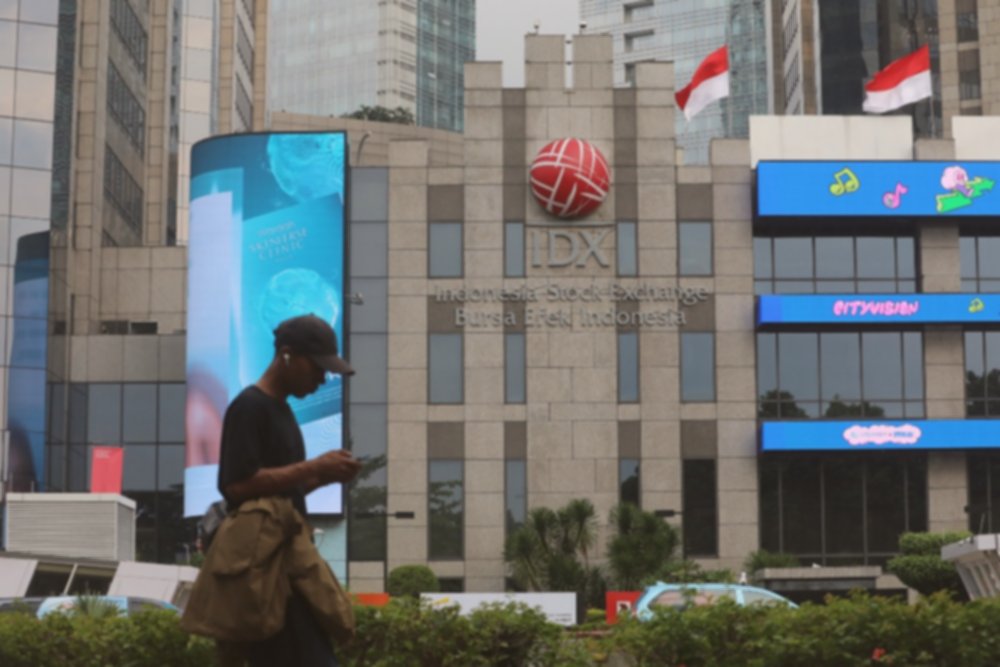
The potential adoption of the Common Law system in Indonesia’s stock market is being seen as a crucial step to significantly increase the inflow of foreign capital. This legal framework, widely used in major investment hubs like Singapore and Hong Kong, could reshape the country’s investment landscape.
Muhammad Wafi, Head of Research at KISI Sekuritas, believes that implementing Common Law in Indonesia would substantially boost the interest of global investors in the domestic market.
According to Wafi, such a shift promises a rise in potential capital inflow. “If implemented, the structure for foreign investment would become much more flexible, similar to Singapore or Hong Kong. For global investors, this could reduce the legal friction that has long been an impediment to entry,” Wafi told Bisnis on Friday, November 21, 2025.
This discussion comes at a time when foreign investor ownership in the Indonesian stock market has predominantly become a minority stake since 2021. Data from the Indonesia Central Securities Depository (KSEI) reveals a significant decline from a previous average of 60% foreign ownership to a range of 30-40% from 2021 to the present.
For instance, foreign investors held 37.48% of assets in 2021, compared to a substantial 62.52% held by domestic investors. While the largest foreign ownership percentage recorded in the last five years was 40.70% in 2024, the latest KSEI data as of November 7, 2025, shows foreign asset ownership at merely 37.23%, with local investors holding a dominant 62.77%.
Examining transaction balances, statistics from the Indonesia Stock Exchange (IDX) indicate a foreign net buy of Rp16.529 trillion at the close of 2024. This stands in stark contrast to the current year, which as of November 20, 2025, has registered a significant foreign net sell of Rp30.54 trillion year-to-date (YtD).
Wafi further elaborated that while the potential for increased capital inflow through Common Law adoption is significant, regulatory factors alone cannot guarantee success. “The effect depends on other factors. While this regulation can increase inflows, the impact won’t be instant, as capital inflow also hinges on macro stability, domestic liquidity, market valuation, issuer governance, and sentiments related to the Fed/US yields,” he concluded.
In parallel with these discussions, the Indonesian government is actively developing a draft government regulation (RPP) focusing on Financial Instrument Managers (Special Purpose Vehicle/SPV) and Trust Fund Managers (Trustees).
Masyita Cristallin, Director General of Financial Sector Stability and Development at the Ministry of Finance, elucidated that this RPP is a key derivative of the Law on Financial Sector Development and Reinforcement (P2SK), slated for completion by next year.
Cristallin emphasized the critical importance of this draft regulation, stating, “This RPP is certainly important to invite capital inflow to Indonesia,” during her remarks at the Parliament Complex in Senayan, as quoted on Tuesday, November 18, 2025.
She clarified that this overarching legal framework is designed to enable Indonesia’s investment system to incorporate legal systems beyond the Civil Law, which is predominantly observed across the archipelago.
Civil Law is the prevailing legal system in Indonesia, characterized by its inclusion of customary law and Islamic law in specific regions, effectively creating a mixed legal system.
Masyita further articulated that the RPP aims to create scope within Indonesia’s investment system for the application of Common Law principles, thereby making it more appealing to foreign investors. This adoption of Common Law involves the careful adaptation and modification of regulations pertaining to business entities, taxation, financial services, and immigration, all meticulously tailored to the local context and Indonesia’s national interests.
She also explained, “This is also to ensure, although Indonesia adopts Civil Law, we can craft a bit of Common Law into the investment system so we can create an area where bankruptcy remoteness occurs.” This innovative approach seeks to provide stronger safeguards for investors.
Bankruptcy remoteness is a financial and legal concept describing a protective structure designed to keep an asset, company, or entity secure even if a related party faces bankruptcy. In essence, assets or entities are legally separated to prevent them from being drawn into the insolvency proceedings of a parent company or related entity.
Ultimately, Masyita concluded, “There is a separation between the owner and beneficiary of the investment, making the investment process significantly easier and more attractive.”
Summary
Indonesia is considering adopting Common Law principles in its stock market to significantly increase foreign capital inflow, aligning with practices in major investment hubs like Singapore and Hong Kong. This shift aims to make foreign investment more flexible and reduce legal friction, which is crucial given the notable decline in foreign ownership in the Indonesian stock market since 2021.
In parallel, the Indonesian government is developing a draft regulation to integrate Common Law elements, such as “bankruptcy remoteness,” into its predominantly Civil Law investment system. This initiative seeks to provide stronger investor safeguards and attract capital, although experts highlight that its success also depends on broader factors like macro stability, market valuation, and issuer governance.