
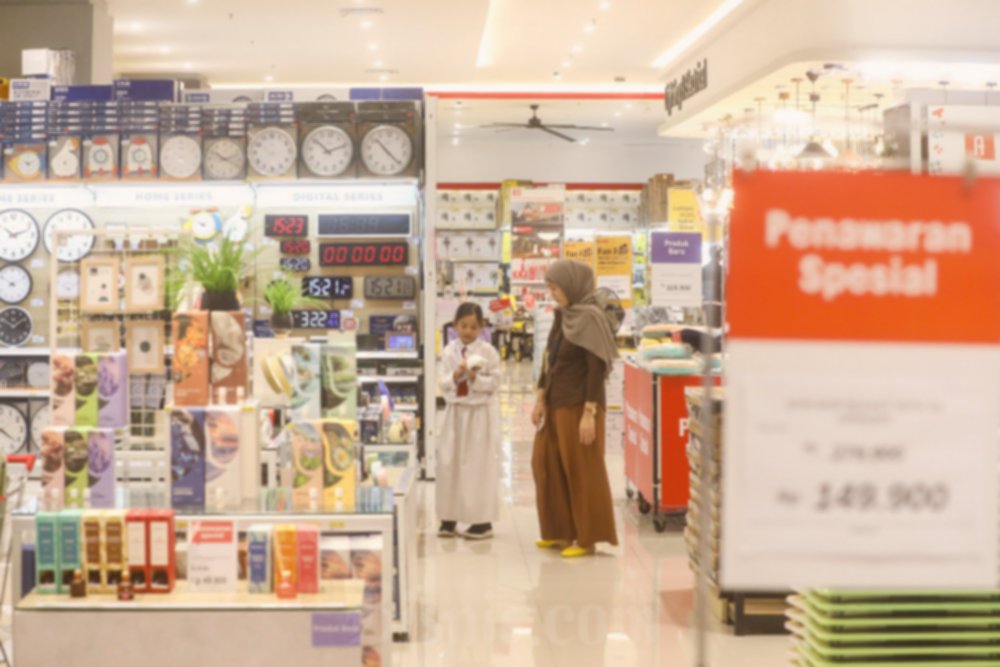

JAKARTA – Indonesia’s leading retail giants, including PT Sumber Alfaria Trijaya Tbk. (AMRT), PT Daya Intiguna Yasa Tbk. (MDIY), and PT Aspirasi Hidup Indonesia Tbk. (ACES), are aggressively pushing forward with ambitious expansion plans this year, adding numerous new outlets and stores across the archipelago. Despite this robust expansion drive, however, the stock performance of these prominent retailers has surprisingly trended downwards, grappling with market pressures.
MDIY, for instance, is steadfastly executing a sustainable growth strategy aimed at solidifying its nationwide presence, as stated by its President Director, Edwin Cheah. By the third quarter of 2025 alone, MDIY had successfully penetrated new territories spanning East Barito, Bolaang Mongondow, South Hulu Sungai, West Kutai, and Pesawaran. This strategic push saw the company inaugurate 70 new stores during Q3 2025, elevating MR DIY Indonesia’s total network to an impressive 1,154 outlets nationwide.
Cheah emphasized the strategic foresight required for such rapid growth, noting in a recent written statement, “Expanding our reach across Indonesia amid current market conditions demands agility and forward-thinking projections. Our efficient operational model, scalable logistics, and customer-centric approach continue to be the primary catalysts for our sustained growth.”
Further illustrating this trend, ACES, operating under its brand AZKO, is also spearheading significant expansion, targeting the addition of up to 30 new stores this year. Gregory Sugyono Widjaja, Director of Aspirasi Hidup Indonesia, highlighted the rapid pace of this year’s expansion efforts. As of September 2025, ACES had already launched 16 new stores, bringing its total footprint to 259 outlets spread across 87 cities in Indonesia.
Gregory confirmed during a recent press conference that the focus for these new store openings is primarily outside Java, concentrating on tier-3 cities. “This year marks our inaugural entry into Papua. We are broadly targeting between 25 and 30 new stores for the year,” he elaborated. To achieve this ambitious target, ACES is accelerating its store additions by year-end, allocating a substantial capital expenditure (capex) of IDR 200 billion to IDR 300 billion for this expansion.
Meanwhile, AMRT, the operator of the Alfamart convenience store chain, is equally engaged in aggressive expansion, aiming to establish 1,000 new stores in 2025, with the majority planned for the Jabodetabek area. The company has earmarked a substantial capex of IDR 4.5 trillion to IDR 5 trillion for its 2025 development initiatives. PT Mitra Adiperkasa Tbk. (MAPI) is also intensifying its expansion efforts in 2025, aggressively bolstering its position in the national retail sector by acquiring all GS Supermarket outlets from South Korea through its subsidiary, FoodHall Indonesia.
MAPI’s growth is further propelled by its subsidiaries. For instance, PT MAP Boga Adiperkasa Tbk. (MAPB) aims to develop 40 new Starbucks stores throughout 2025. These new locations are not confined to tier-1 cities like Jabodetabek and Bali but also include plans to broaden its reach to Lombok and Batam. Additionally, MAPI is reportedly making preparations to reintroduce the Ace Hardware brand to Indonesia, signaling an expansion into everyday household products.
However, despite these vigorous expansion drives, the stock prices of these retail issuers remain lackluster. As of the close of trading on Monday, November 24, 2025, AMRT’s stock price had fallen 34.39% year-to-date (YTD) from its initial trading day in 2025, settling at IDR 1,870 per share. Over the same period, MAPI’s stock declined 7.8% YTD to IDR 1,300 per share, ACES saw a sharp drop of 45.82% YTD to IDR 428 per share, and MDIY experienced a 40.17% YTD decrease, trading at IDR 1,065 per share.
According to M. Nafan Aji Gusta, Senior Market Analyst at Mirae Asset Sekuritas, the performance of retail issuers has been largely influenced by persistently weak consumer purchasing power, compounded by an underwhelming economic climate in early 2025. Nevertheless, he maintains that retail stocks still hold significant promise, buoyed by their ongoing expansion. “Expansion enhances the consumer experience, making the retail industry more attractive. Moreover, the retail sector generally continues to demonstrate growth in both its bottom and top lines,” Nafan shared with Bisnis.
Echoing this sentiment, Novi Vianita, an analyst at Panin Sekuritas, believes that retail stocks like AMRT remain prospective, driven by their active expansion. Panin Sekuritas has issued a ‘buy’ recommendation for AMRT shares, setting a target price of IDR 2,600 per share. “The target of opening 1,000 new stores serves as a key driver for retail issuers such as AMRT,” Novi stated in her research report, underscoring the potential for future gains despite current market headwinds.
Summary
Major Indonesian retail companies, including PT Sumber Alfaria Trijaya Tbk. (AMRT), PT Daya Intiguna Yasa Tbk. (MDIY), and PT Aspirasi Hidup Indonesia Tbk. (ACES), are aggressively expanding their store networks across the archipelago in 2025. MDIY, for instance, opened 70 new stores in Q3 2025, while ACES aims for up to 30 new stores, and AMRT plans to establish 1,000 new outlets. PT Mitra Adiperkasa Tbk. (MAPI) is also growing by acquiring GS Supermarket and expanding its Starbucks brand. Despite these robust expansion efforts, the stock performance of these prominent retailers has surprisingly trended downwards, grappling with significant market pressures and year-to-date declines as of November 2025.
Analysts attribute this lackluster stock performance primarily to persistently weak consumer purchasing power and an underwhelming economic climate in early 2025. Nevertheless, experts maintain that retail stocks still hold significant promise, buoyed by their ongoing expansion strategies. This growth is expected to enhance the consumer experience and drive both top and bottom-line growth for the retail sector. Consequently, some analysts have issued ‘buy’ recommendations for stocks like AMRT, highlighting the opening of numerous new stores as a key driver for future gains.