
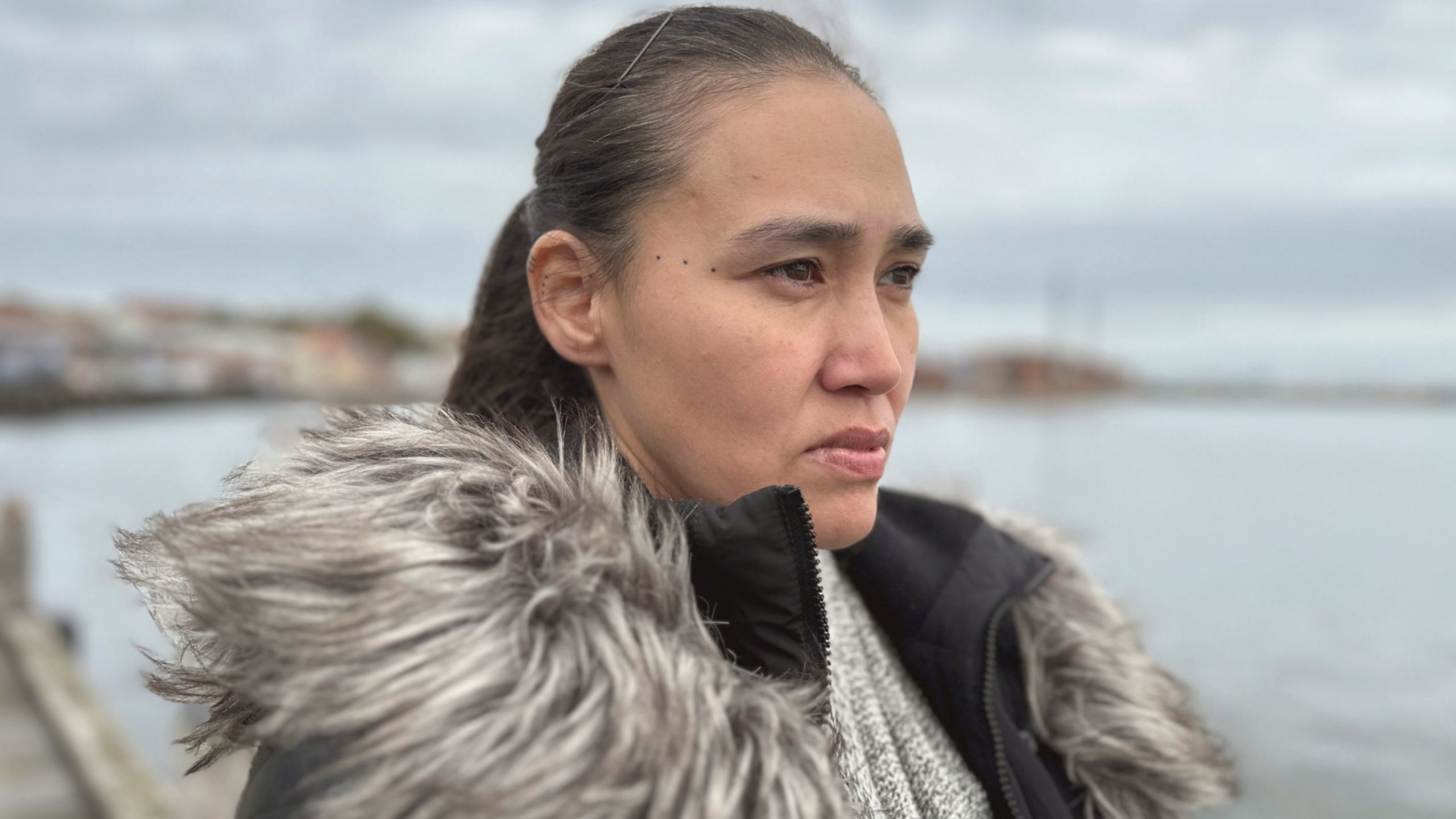
When Keira’s daughter was born last November, she was granted a mere two hours with her newborn before the baby was taken to a foster home.
“From the moment she was born, I started counting the seconds I had with her,” says Keira, a 39-year-old woman caught in a heartbreaking struggle. “I kept looking at the clock to see how much time we had left.”
The moment her daughter, Zammi, was taken from her arms, Keira recalls weeping uncontrollably and whispering “sorry” to her infant.
“It felt like a part of my soul died,” she confessed.
Keira is one of many Greenlandic women residing in Denmark who are fighting to regain custody of their children, who were taken by Danish social services.
These cases often involve the separation of babies and children from their parents following parental competency tests – known in Denmark as FKUs. These tests are administered by the Danish government to assess parental fitness.
Last May, the Danish government banned the use of these tests on Greenlandic residents following decades of criticism. However, the tests remain in use for other residents of Denmark, including Greenlanders living in mainland Denmark. Greenland is an autonomous territory within the Kingdom of Denmark.
Parental competency tests, which can take months to complete, are implemented in complex welfare cases where Danish authorities believe children are at risk of neglect or abuse.
The examinations include interviews with parents and children, a range of cognitive assessments, such as recalling sequences of numbers in reverse, general knowledge quizzes, and personality and emotional tests.
Proponents of the tests argue that they offer a more objective assessment method compared to anecdotal and subjective evidence potentially provided by social workers and other professionals.
However, critics contend that these tests are not significantly predictive of good parenting. They also argue that the tests are designed based on Danish cultural norms and are administered in Danish, not Kalaallisut, the native language of most Greenlanders.
Greenlandic residents are Danish citizens, allowing them to live and work in mainland Denmark. Thousands of indigenous Greenlanders choose to reside in Denmark, drawn by better job opportunities, education, and healthcare services.
According to the Danish National Centre for Social Research, a government-funded research institution, Greenlandic parents are 5.6 times more likely to have their children taken into care by the authorities compared to parents in Denmark.
Last May, the government announced its intention to review approximately 300 cases—including those involving FKU tests—where Greenlandic children were forcibly separated from their families.
However, as of last October, the BBC found that the government had only reviewed 10 parental competency test cases. To date, no Greenlandic children or babies have been returned to their families as a result of these reviews.
Keira’s 2014 test results, conducted while she was pregnant, concluded that she did not have “sufficient capacity to care for a newborn independently.”
Keira recounted being asked questions such as, “Who is Mother Teresa?” and “How long does it take sunlight to reach Earth?”
Psychologists who support the tests argue that such questions can reveal the extent of a parent’s general knowledge and assess their understanding of various cultures and social concepts within society.
“They made me play with dolls and then criticized me for not making enough eye contact,” Keira said.
She added that when she questioned the test, a psychologist responded, “To see if you are civilized enough, if you can act like a human.”
Danish authorities stated they could not comment on individual child removal cases.
The Danish government maintains that decisions to place a child in care are made when there are serious concerns about a child’s “health, development, and well-being.”
In 2014, Keira’s other two children—then aged nine years and eight months—were also taken into care following FKU tests. The test results concluded that Keira’s parenting skills were not developing quickly enough to meet their needs.
Her eldest child, Zoe, now 21, returned home at age 18. She currently lives in her own apartment but sees her mother frequently.
Keira hopes to be reunited with her baby, Zammi, permanently soon.
The Danish government has stated that its review will examine whether there were errors in the administration of FKU tests to Greenlandic citizens.
In the meantime, Keira is allowed to visit Zammi, who remains in foster care, once a week for one hour.
Each time, she brings flowers and sometimes traditional Greenlandic food, such as chicken liver soup.
“It’s so there’s a little piece of our culture with her,” she says.
‘I felt the most terrible heartbreak’
However, not all child removal cases will be reviewed by the Danish government.
Johanne and Ulrik’s child was adopted in 2020. The Danish government stated that it would not review cases involving children who have already been adopted.
Johanne, now 43, underwent testing in 2019 while pregnant.
As with Zammi, their son was to be taken by the authorities shortly after birth.
However, because Zammi was born prematurely on Christmas Day, and social workers were on holiday, Johanne and Ulrik were able to spend more time with their son – 17 days.
“It was the happiest time of my life as a father,” said Ulrik, age 57.
“Holding him, changing his diaper, making sure Johanne pumped her breast milk before going to bed at night,” Ulrik said, describing his most cherished memories.
One day, two social workers and two police officers arrived at the couple’s home to take Zammi. The couple pleaded with them not to take their baby.
Johanne asked if she could breastfeed her son one last time.
“While I was putting clothes on my son to hand him over to his foster parents who were on their way, I felt the most terrible heartbreak,” Ulrik said.
Johanne had previously undergone testing after two children from another relationship, aged five and six, were taken into care following FKUs in 2010.
The 2019 test concluded that Johanne was “narcissistic and mentally retarded.” This conclusion was based on terms developed by the World Health Organization.
Johanne rejects the conclusions reached by the Danish government testers.
Theoretically, there is no pass or fail grade for FKU tests. The test is just one factor among many that local authorities consider when deciding whether a child will be placed in care.
However, psychologist Isak Nellemann, who previously administered the tests, said that in practice, the test is “very important, even the most important, because if the test result is bad, in about 90% of cases, they will lose their children.”
According to Nelleman, some of the tests lack scientific validity and were developed to study personality traits rather than predict parenting abilities.
Turi Frederiksen, a senior psychologist whose team currently administers the tests, agreed. She said that while the tests are not perfect, “they are valuable and comprehensive psychological tools.”
She also said that her team does not believe they are biased against Greenlandic people.
When Johanne was asked in 2019 about what she saw during the Rorschach test—a psychological test using symmetrical inkblot cards to assess a person’s personality, emotional characteristics, and thought processes—she said she saw a woman butchering a seal, a common sight in Greenland’s hunting culture.
Johanne claims that after hearing the response, the psychologist called her a “barbarian.”
The local council involved in the couple’s 2019 assessment did not respond directly to Johanne’s claims.
They stated that the assessment “revealed significant concerns regarding the parents’ overall parenting abilities” as well as “concerns about the parents’ lifestyle and their level of functioning in everyday life.”
‘I never saw his first steps’
After Johanne and Ulrik’s son was taken into care, they were allowed to see him during short visits each week until he was adopted in 2020.
They have never seen him since.
“I never saw his first steps, his first words, his first tooth, or his first day at school,” said Johanne.
However, days after his birth, they baptized him, creating an official record that included their names and domiciles.
“We needed to create a paper trail so that he could find his way back to us,” Johanne said.
Their lawyer, Jeanette Gjørret, hopes to bring the case to the European Court of Human Rights.
However, Denmark’s Minister for Social Affairs, Sophie Hæstorp Andersen, told the BBC that the government would not reopen adoption cases because each child has now settled with a “loving and caring family.”
When asked about the progress of the review, she said, “it sounds slow, but we have started.”
She also said that the decision to evacuate and adopt children is part of a “very thorough process where we assess the family’s ability to take care of their child not just for one or two years, but for a long period of time.”
This was echoed by Tordis Jacobsen, the team leader for social workers in Aalborg Kommune in northern Denmark. She said that child separation in Denmark is never taken lightly.
She explained that concerns about child protection are often first identified by schools or hospitals. In cases where a child is permanently adopted, the decision to approve this is made by a judge.
Pilinguaq is a rare case of a Greenlandic mother who has been reunited with her child.
She and her daughter, who was placed in foster care at the age of one, were reunited several months ago. Her daughter is now six years old.
Pilinguaq, 39, said she received the unexpected news via telephone from social services.
“I started crying and laughing at the same time. I couldn’t believe it. I kept thinking, ‘Oh God, she’s coming home.'”
Pilinguaq’s three children were placed in foster care in 2021. Her other two children were six and nine years old at the time.
She admitted that she agreed when local authorities temporarily placed her children in foster care. At the same time, she was looking for a new home suitable for her children.
Pilinguaq said she believed her children would be returned to her soon, but instead, she had to undergo a parental competency test.
The assessment concluded that she had a pattern of entering into “unhealthy relationships” and was unfit to be a parent.
‘They could take her away in one hour’
Several months after her six-year-old daughter returned home, Pilinguaq was told by local authorities that her two older biological children would return to her this December.
The decision to return the children to Pilinguaq’s care was made by local authorities, not on the recommendation of the government review. Local authorities declined to comment on her case.
Being separated for more than four years has made it difficult for Pilinguaq to repair her relationship with her daughter.
“If I go to the bathroom and close the door, she’ll have a panic attack and say, ‘Mom, I can’t find you,'” Pilinguaq said.
She also said she is terrified of losing her daughter again.
“They could take her away in one hour. They could do it again.”
Keira is currently preparing for Zammi’s first birthday, even though she won’t be there.
She is hand-crafting a traditional Greenlandic sled from wood, with a picture of a polar bear on the seat.
Earlier this month, she was told her daughter would not be coming home—at least for now—but she has not given up.
Keira still has a crib next to her bed, and another in the living room, with framed photos of Zammi on the walls, along with baby clothes and diapers.
“I will not stop fighting for my children.
“If I don’t finish this fight, it will be my children’s fight in the future.”
This coverage is part of the BBC World Service’s Global Women series, which shares untold and important stories from around the world.
Summary
Greenlandic mothers living in Denmark are fighting to regain custody of their children, who were removed by Danish social services following parental competency tests (FKUs). Despite the Danish government banning these tests for Greenlandic residents within Greenland due to cultural bias concerns, they are still applied to Greenlanders residing in mainland Denmark. Critics contend these tests, administered in Danish and based on Danish cultural norms, are not accurate predictors of good parenting and contribute to Greenlandic parents being 5.6 times more likely to have their children taken into care.
The Danish government has initiated a review of approximately 300 such cases, but progress is slow, with only 10 FKU cases reviewed and no children returned as of October. Cases involving adopted children, such as that of Johanne and Ulrik, will not be reopened, while mothers like Keira continue their challenging fight to be reunited with their children. This situation highlights the significant emotional distress and long-term separation experienced by many Greenlandic families.