
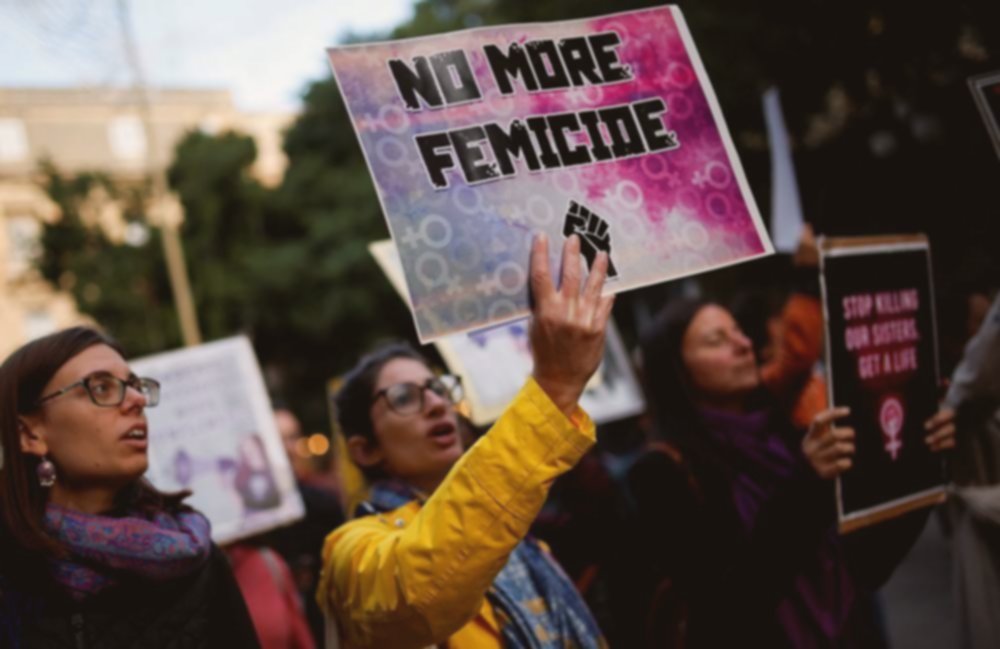
According to a recent report by the United Nations Office on Drugs and Crime (UNODC) and UN Women, a woman or girl is killed by someone she knows – a partner, spouse, or family member – every ten minutes.
This grim statistic translates to 137 women losing their lives daily, a trend observed across all regions of the globe.
In 2024 alone, approximately 50,000 women and girls were murdered by intimate partners or family members, representing a staggering 60% of all intentional killings of women and girls worldwide.
The report, released to coincide with the International Day for the Elimination of Violence against Women on Tuesday, underscores a distressing reality highlighted by the UN: home remains the most dangerous place for women.
While femicides also occur outside the home, data collection on these incidents remains limited, according to the UN report.
“Femicides are not isolated events. They are often the culmination of a continuum of violence that includes controlling behavior, threats, and abuse – both online and offline,” stated Sarah Hendriks, Director of the UN Women’s Policy Division.
A Global Crisis Unfolds
Africa reports the highest rate of femicide perpetrated by partners or family members, with three victims per 100,000 women and girls. The Americas follow with 1.5, Oceania with 1.4, Asia with 0.7, and Europe with 0.5.
“Home continues to be a dangerous, and sometimes deadly, place for too many women and girls globally,” said John Brandolino, UNODC Director.
In Europe and the Americas, the majority of female homicides in 2024 were committed by partners (rather than other family members): 64% in Europe and 69% in the Americas, according to the report.
These killings are often the tragic culmination of years of torment.
In Albania, a shocking 90% of female homicide victims had previously experienced violence at the hands of the perpetrator. Some were killed mere days after the perpetrator’s release from prison, despite protective measures such as restraining orders.
Many of these femicides involve firearms, sharp or blunt instruments, or physical force.
Jealousy, rejection of separation, retaliation for reporting to the police, or refusal to accept a new relationship after a breakup are cited as primary motives behind these killings, the report reveals. Furthermore, 35,000 children who lost their mothers to femicide are also deeply affected by this violence.
Lesotho faces alarmingly high rates of intimate partner violence, with 44% of women aged 15 to 49 reporting physical or sexual violence by a partner, according to data compiled by the Lesotho Ministry of Health.
The report indicates that most femicides involve intimate partners or family members, with domestic violence, alcohol abuse, and conflict identified as common triggers.
Technology and Firearms: Escalating Threats
The report’s findings highlight the increasing roles of firearms and technology as contributing factors in femicides.
“Available evidence in this area suggests that firearm ownership by perpetrators of intimate partner violence significantly increases the likelihood of femicide and also raises the risk of multiple victims by 70% in homicides occurring in private settings.”
Technology is also increasingly exploited as a tool of control.
The report warns of emerging threats, including technology-facilitated violence such as online stalking, doxing (the act of publishing someone’s personal information and identity online without their consent), and image-based abuse.
“In the UK, an analysis of 41 domestic homicide reviews published between 2011 and 2014 revealed that in 58.5% of cases, technology was used to exert coercive control and monitor the victim prior to the homicide.”
Growing evidence demonstrates how violence in online spaces, such as coercive control, monitoring, and stalking, can manifest offline in various ways, including physical violence.
Women with public profiles, such as journalists, activists, and politicians, face a heightened risk of technology-related violence, the report adds.
The report concludes that femicides are preventable with “timely and appropriate interventions,” including targeted policies.
Risk factors include access to firearms, stalking, relationship breakdowns, and substance abuse. The report urges stronger legislation, enforcement of protection orders, and improved data collection to prevent these killings before they occur.
The Victims
* Rebecca Cheptegei, a 33-year-old Ugandan Olympic runner, was attacked at her home in Trans Nzoia, Western Kenya, by her former partner, Dickson Ndiema. He poured gasoline on her body and set her ablaze. She succumbed to her injuries days later, while Ndiema died shortly after Cheptegei from severe burns sustained in the attack. They were reportedly disputing over a piece of land.
* Louise Hunt (25) and her sister Hannah (28) were murdered by Louise’s former partner, Kyle Clifford, after he stabbed their mother, Carol (61), to death at the family home in Bushey, Hertfordshire, England. Clifford raped Louise Hunt and used a crossbow to shoot Louise and her sister in July 2024, after Louise ended their relationship. He was sentenced to three life sentences and told he would never be released from prison. The two women were the wife and daughters of BBC horse racing commentator, John Hunt.
* Kristina Joksimovic, a 38-year-old former model and Miss Switzerland finalist, was found murdered at her home near Basel in February 2024. Her husband, the father of their two children, confessed to killing her. Police had reportedly been called to their home previously regarding reports of physical violence, according to Swiss media reports.
* Norma Andrade’s daughter was murdered in a gender-related killing in Ciudad Juárez, Mexico. After Lilia Alejandra was kidnapped, tortured, and murdered, Andrade founded the NGO Nuestras Hijas de Regreso a Casa (“May Our Daughters Return Home”) in Mexico.
“One day, my daughter, Lilia Alejandra García Andrade, did not come home. She didn’t return that day, and as I later learned, I would never see her again. That’s when my world shattered,” said Norma Andrade.
“Lilia Alejandra had been kidnapped, tortured, and murdered. After her gender-based murder, we realized that her case was not the only one in Ciudad Juárez. We united and transformed our grief into determination to fight for justice and demand an end to the killings of women,” Andrade stated.
Summary
A recent report by UNODC and UN Women reveals that a woman or girl is killed by an intimate partner or family member every ten minutes, making home the most dangerous place for them globally. In 2024, approximately 50,000 women and girls were murdered this way, representing 60% of all intentional killings of women worldwide. Africa reports the highest rates of femicide perpetrated by partners or family members.
These killings often stem from a continuum of violence, driven by motives such as jealousy or rejection of separation. The report highlights increasing risks from firearms, which significantly raise the likelihood of femicide, and technology, used for online stalking and coercive control that can escalate to physical violence. Femicides are preventable with timely interventions, stronger legislation, enforced protection orders, and improved data collection.