
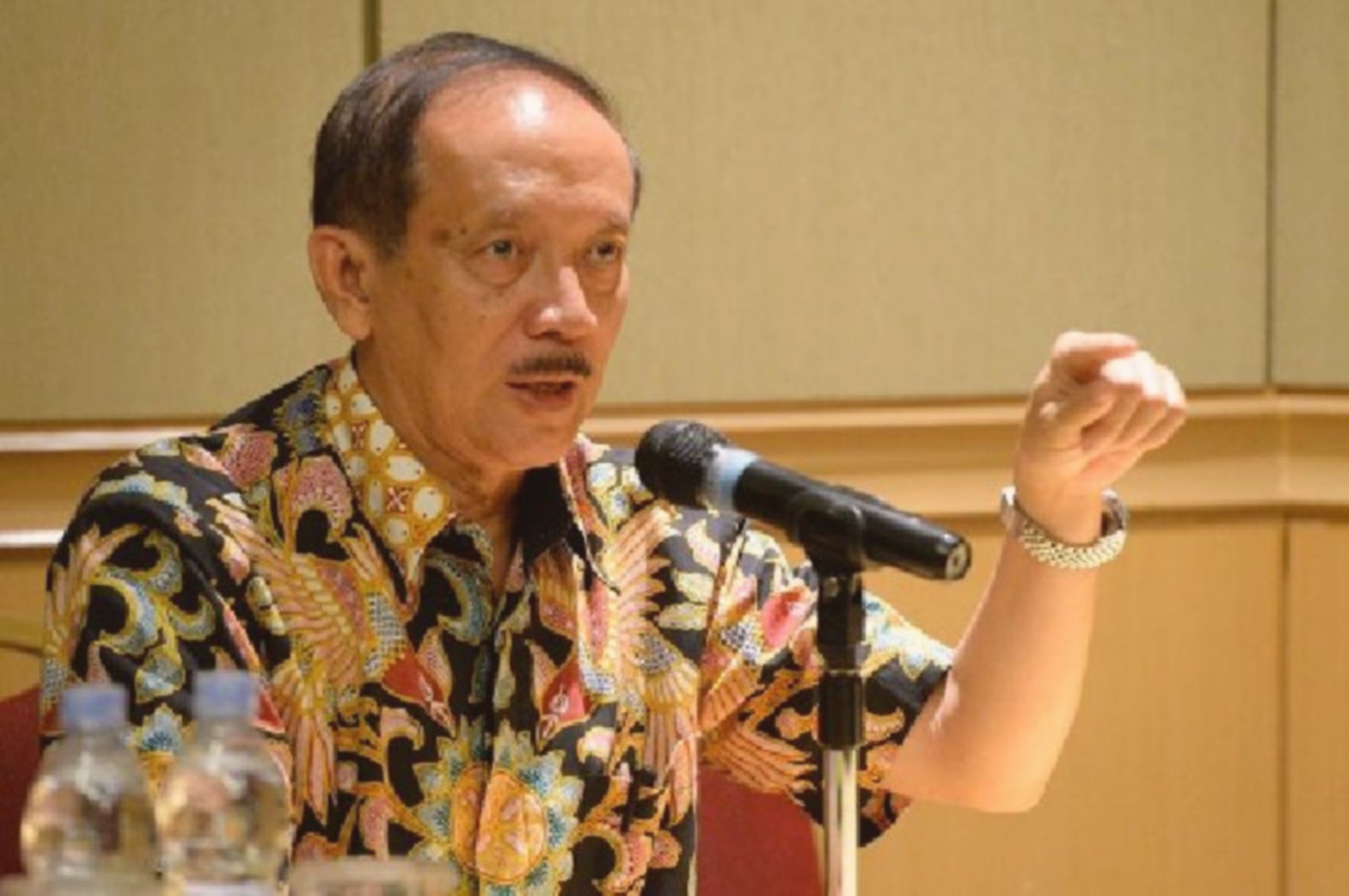
A long-standing controversy surrounding the release of 1.6 million hectares of forest land in Riau province has resurfaced, prompting Hadi Daryanto, the former Secretary-General of the Ministry of Forestry (Kemenhut), to set the record straight. Daryanto unequivocally stated that this extensive land conversion, carried out during the tenure of then-Minister of Forestry Zulkifli Hasan (Zulhas), was purely for provincial spatial planning, not to grant lucrative palm oil concessions to corporations.
This clarification is underpinned by official documents: Ministerial Decrees (SK) Number 673/Menhut-II/2014 and SK Number 878/Menhut-II/2014 concerning the Riau province forest area, both signed by Zulkifli Hasan during his term as Minister of Forestry. These decrees, signed towards the end of Zulhas’s tenure, explicitly outline the policy as a “Change of Forest Area Designation to Non-Forest Area.”
“Indeed, it was not related to palm oil plantation permits; it was solely for the provincial spatial plan,” Hadi Daryanto, who served as the Secretary-General of Kemenhut during Zulhas’s leadership, affirmed on a recent Saturday. He explained that the Minister of Forestry issued SK 673/2014, designating 1,638,294 hectares as non-forest area. This decision was a direct response to the requirements of provincial spatial planning, necessitated by the expansion of cities and regencies within Riau.
Daryanto further elaborated that Ministerial Decrees 673/Menhut-II/2014 and 878/Menhut-II/2014 also detail that this central government initiative aimed to accommodate official proposals from various local authorities, including governors, regents, and mayors, as well as the pressing aspirations of communities across Riau Province, who sought certainty for regional development.
The assertion that this forest land was simply handed over to large-scale developers is thoroughly refuted by the detailed maps appended to these decrees. The forest areas whose status was relinquished were earmarked for three crucial purposes:
Firstly, human settlements, encompassing established villages, districts, and urban areas that have become densely populated.
Secondly, social and public facilities, including vital infrastructure development such as provincial and regency roads, school buildings, places of worship, and hospitals that were previously located within designated forest areas.
Finally, for community farmland, allowing for traditional agriculture and local plantations that have been cultivated by generations of residents.
This revision to the Provincial Spatial Plan (RTRWP) was intricately linked to the enactment of Law No. 27/1992, which mandated all Indonesian provinces, including Riau, to submit their spatial plans. Consequently, Riau Province established Regional Regulation No. 10/1994, allocating 4.34 million hectares for non-forestry purposes. In accordance with Law No. 41/1999 concerning Forestry, the Minister of Forestry formed a special team (TIMDU). This team, leveraging its scientific authority, recommended the conversion of 2,726,901 hectares of forest areas into non-forest zones. However, based on management authority, the Minister of Forestry ultimately designated a more conservative 1.6 million hectares solely for provincial spatial planning—a decision distinctly separate from corporate interests, especially considering the needs of city/regency expansion and essential infrastructure.
Hadi underscored that the paramount objective behind issuing these decrees was to provide unequivocal legal certainty. Without this critical spatial plan revision, thousands of residents living in these areas would technically be considered to be occupying forest land illegally, leading to widespread issues of illegal occupation.
“Again, this area is smaller than the TIMDU’s proposal and significantly less than Riau’s regional regulation had initially outlined,” he concluded, emphasizing the meticulous and restrained approach taken in this significant forest land release.
Summary
Former Secretary-General of the Ministry of Forestry, Hadi Daryanto, clarified that the release of 1.6 million hectares of forest land in Riau province during Zulkifli Hasan’s tenure was for provincial spatial planning, not palm oil concessions. This conversion was outlined in Ministerial Decrees 673/2014 and 878/2014, signed by Zulkifli Hasan. The policy designated these areas as “Non-Forest Area” to facilitate regional development and respond to local authority and community aspirations.
These forest areas were specifically allocated for human settlements, essential social and public facilities like roads and schools, and traditional community farmland. The objective was to provide legal certainty for residents and infrastructure that were previously within designated forest zones. Daryanto emphasized that the final 1.6 million hectares released was a carefully considered amount, less than initially proposed by a special team, demonstrating a restrained approach.