
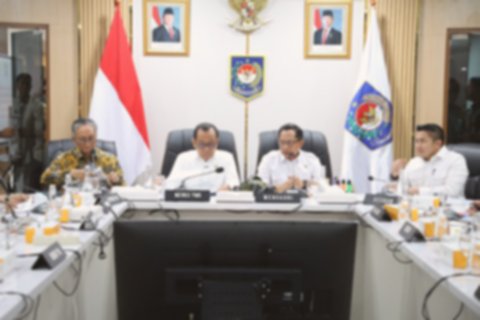

Indonesia’s Minister of Home Affairs, Muhammad Tito Karnavian, has swiftly moved into action, immediately accelerating efforts to map out the multifaceted challenges of disaster management across the Sumatra region. This decisive step follows his official appointment by President Prabowo Subianto as the Head of the Task Force for Accelerated Post-Disaster Rehabilitation and Reconstruction for Aceh, North Sumatra (Sumut), and West Sumatra (Sumbar).
These crucial mapping efforts commenced with a high-level meeting held at the Ministry of Home Affairs Headquarters in Jakarta on Thursday, January 8, 2026. The gathering convened key figures including Coordinating Minister for Human Development and Culture Pratikno, Minister of Public Works Dody Hanggodo, Cabinet Secretary Teddy Indra Wijaya, and Deputy Head of the Task Force Lieutenant General Richard Taruli Horja Tampubolon of the Indonesian National Armed Forces (TNI), underscoring a unified governmental approach.
Reflecting on the immediate objectives, Minister Tito stated, “The essence of our work is to assess and map the current situation. While emergency response phases have concluded in some areas, others are still continuing their emergency efforts for the next 15 days, requiring ongoing attention.”
During the meeting, Tito outlined the significant scope of the disaster, impacting 52 districts and cities across the three provinces. From the outset, the central government, in close coordination with local governments (Pemda) and various stakeholders, launched a massive mobilization for emergency response. This comprehensive effort included reopening critical road access, constructing temporary bridges, providing essential health services, and ensuring the basic needs of affected communities were met without delay.
Based on consolidated reports and on-the-ground monitoring, Minister Tito affirmed that a majority of the 52 impacted districts and cities have demonstrated significant progress in their recovery journeys. This advancement is clearly marked by the restoration of local government administration, the re-establishment of main road connectivity, the return of vital basic services like healthcare and education, and the gradual resurgence of community economic activities, signaling a return to normalcy for many.
Despite these encouraging strides, Tito acknowledged that several areas still require concentrated, specialized attention to facilitate their complete recovery. In Aceh province, for instance, out of 18 affected districts and cities, 11 have largely returned to normal, while the remaining seven remain a primary focus for continued intervention. A similar pattern is observed in North Sumatra and West Sumatra; though most impacted areas are now in the recovery phase, specific regions within these two provinces continue to receive tailored assistance, commensurate with the severity of the disaster’s impact.
Furthermore, Minister Tito emphasized the government’s unwavering commitment to restoring fundamental infrastructure, particularly the national, provincial, and district/city road networks. Nearly all national road segments across the three provinces have been successfully reconnected. Concurrently, repairs to non-national roads are progressing systematically through the collaborative efforts of the Ministry of Public Works, the Indonesian National Armed Forces (TNI), the Indonesian National Police (Polri), and local governments.
The Minister also provided an update on the crucial process of collecting data on disaster-damaged homes. Government efforts are currently focused on accelerating both the data collection and its validation to ensure that aid reaches affected communities as swiftly as possible. Tito expressed optimism that this expedited aid distribution will significantly reduce the number of displaced persons who are still residing in temporary shelters, moving them towards more stable living conditions.
To further bolster field-level recovery efforts, Tito proposed deploying additional personnel from the TNI, Polri, Civil Servants (ASN), and students from civil service academies to assist with environmental cleanup, restoration of government offices, and public facilities. Complementing this, two main disaster recovery posts will be established: one in Jakarta and another in Banda Aceh. These posts will serve as vital centers for coordination, control, and information dissemination, streamlining recovery operations.
Concluding his remarks, Tito confirmed, “These posts will operate under 24-hour surveillance by a dedicated team. Their primary role will be to gather and consolidate information from various ministries, agencies, and the affected regions, ensuring a comprehensive and responsive recovery effort.”
Summary
Minister of Home Affairs Muhammad Tito Karnavian has been appointed Head of the Task Force for Accelerated Post-Disaster Rehabilitation and Reconstruction in Aceh, North Sumatra, and West Sumatra. He immediately began mapping disaster challenges, commencing with a high-level meeting on January 8, 2026, attended by various key government officials. The disaster affected 52 districts and cities across the three provinces, prompting a comprehensive emergency response that included restoring critical road access and essential services.
While most impacted areas have achieved significant recovery in administration, connectivity, and basic services, several regions still require focused intervention. The government is committed to restoring infrastructure, accelerating data collection and validation for damaged homes to expedite aid distribution, and reducing the number of displaced persons. To support recovery efforts, additional personnel will be deployed, and two 24-hour recovery posts will be established in Jakarta and Banda Aceh for streamlined coordination and information.