

For millennia, eyeliner has graced the eyes of both men and women across Middle Eastern societies. This enduring tradition extends far beyond mere aesthetic appeal or ocular health; it carries profound spiritual significance.
“When I wear eyeliner in my Brooklyn home, so far from my homeland, I feel a deep connection to my mother, my grandmother, and to women across the entire Middle East,” shares journalist Zahra Hankir, reflecting on the personal resonance of this ancient cosmetic.
Last December, UNESCO, the UN’s cultural agency, officially inscribed kohl onto its list of Intangible Cultural Heritage. Kohl, a dark eye cosmetic traditionally applied around the eyes by both women and men, stands as a testament to this rich history.
While known as “celak” in Indonesian, kohl is the English equivalent of eyeliner, with roots stretching back thousands of years. This ancient practice is not confined to one region, either.

Across various territories, kohl adopts different names, such as “kajal” in South Asia, “tiro” in Nigeria, and “sormeh” in Iran, highlighting its widespread cultural adoption and adaptation.
Traditionally, kohl was crafted from antimony, lead, or other minerals. Modern formulations, however, often incorporate alternative ingredients.
This eye cosmetic holds particularly special meaning for Lebanese-American writer Zahra Hankir, whose family relocated to the UK in 1975 to escape civil war.
“I used to watch my mother apply her makeup when we lived far apart. I felt she was connected to something very profound,” Hankir recalls, describing the formative influence of her mother’s ritual.
That very same profound connection is what Hankir now experiences herself whenever she applies eyeliner.

Hankir delves into this rich history in her compelling book, Eyeliner: A Cultural History.
She asserts that UNESCO’s recognition elevates kohl beyond a fleeting trend or commercial product, acknowledging it as a living cultural practice worthy of enduring protection.
“UNESCO’s designation helps safeguard the knowledge, rituals, and craftsmanship associated with the making and wearing of kohl,” Hankir explains. “It ensures these traditions are documented, transmitted, and appreciated across generations, rather than being diluted or lost amidst a globalized commercial beauty culture.”
Hankir often brings her kohl makeup kit to dinners with her Iranian friends. These gatherings frequently spark conversations about kohl’s rich history and symbolism, which ultimately inspired Hankir to embark on her extensive exploration of eyeliner’s global journey and meaning.
“It’s that understanding that makes kohl hold such deep significance for women, for minority women, and for women living in the diaspora,” she states.
Beyond beauty
The origins of kohl can be traced back to ancient civilizations in Egypt, Mesopotamia, and Persia. In Ancient Egypt, Hankir notes, kohl was worn universally by everyone, irrespective of gender or social class.
“They wore it for purposes that extended far beyond mere beauty,” Hankir emphasizes. She points out that kohl was also integral to their spirituality and served as a protective measure against eye diseases.
“Ancient Egyptians would even bury their kohl containers with them, to take into the afterlife, signifying just how profoundly important kohl was,” Hankir reveals, illustrating its deep cultural and spiritual value.

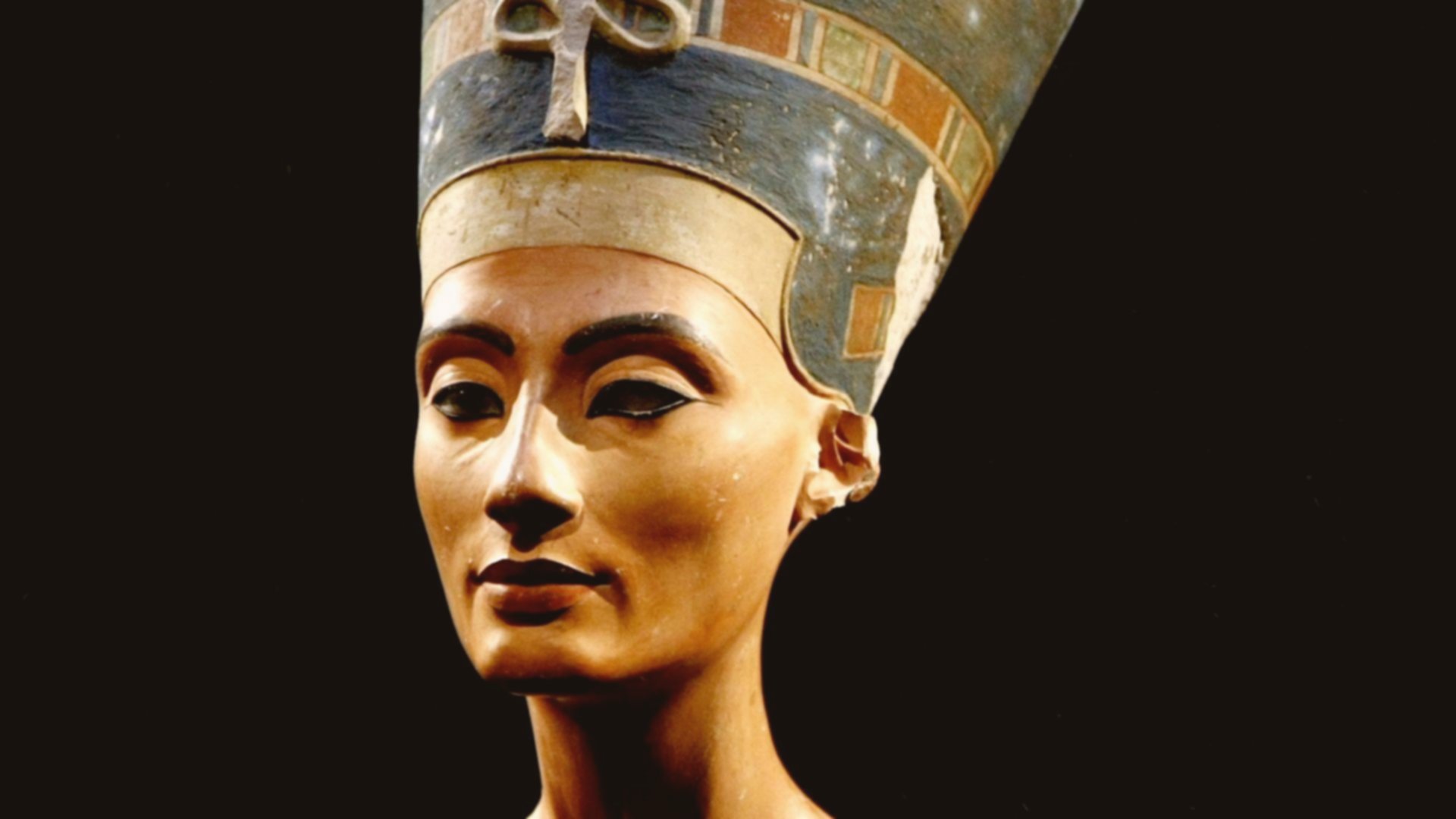
Egypt’s legendary Queen Nefertiti arguably holds the title of the original “influencer” in eyeliner use, according to Hankir.
The iconic bust of Nefertiti, unearthed by a German archaeological team led by Ludwig Borchardt in Egypt in 1912, vividly showcases her application of kohl eyeliner.
“Her brows are arched, perfectly sculpted and filled with a deep black pigment, likely kohl. The color contrast is striking, yet the queen’s overall appearance is flawless,” Hankir writes in her book, detailing the artistic precision of Nefertiti’s look.
“Women in Germany sought to emulate her ‘exotic’ appearance by wearing kohl, associating it with beauty, authority, and empowerment,” Hankir adds, highlighting Nefertiti’s enduring cultural impact.
Indeed, Nefertiti’s distinctive makeup continues to be a trendsetter even today.
“There are hundreds of tutorials on YouTube, TikTok, and Instagram recreating the queen’s face with varying degrees of accuracy,” Hankir notes in her book, pointing to her ongoing relevance in contemporary beauty culture.
Eyeliner in other parts of the world
Hankir’s comprehensive research into eyeliner has taken her on a remarkable global odyssey.
From Kerala to Chad, Mexico, Jordan, and Japan, her travels consistently reveal a common thread: while eyeliner is widely used and varies greatly in its application and meaning, its role as a form of protection remains universally consistent.
Its uses span a wide spectrum, ranging from shielding eyes against the harsh sun and warding off the “evil eye” to religious rituals and medicinal applications.

In Japan, Hankir observed Geisha, traditional Japanese entertainers renowned for their mastery of music, dance, and conversation. Geisha invariably wear red eyeliner, a powerful and timeless symbol of protection.
Meanwhile, Hankir highlights that within Mexican-American Chola culture, eyeliner serves as a potent symbol of identity, resistance, and cultural pride.
And, reminiscent of Ancient Egypt, Hankir has observed that in several parts of the world, eyeliner is not exclusively worn by women.
In Chad, Hankir spent time with the Wodaabe, a nomadic Fulani group celebrated for their annual beauty contests where women judge men based on their appearance, showcasing an intriguing inversion of traditional gender roles in beauty.
“Bedouin men in Petra, Jordan, wear eyeliner not just to protect themselves from the sun or to channel their religiosity, but they also know it makes them look handsome,” she remarks with a laugh. “It’s also a rite of passage into adulthood and a marker of bachelor status.”

Eyeliner is also frequently applied to the eyes of children, a practice deeply rooted in the belief that it offers crucial protection.
In Arab-speaking countries, people are often given names such as Kajal or Kahilain, profoundly reflecting the enduring cultural significance of eyeliner.
According to Hankir, UNESCO’s recognition of kohl was long overdue, a timely acknowledgment of its heritage.
She asserts that this accolade holds immense meaning for communities in the Southern Hemisphere, particularly those in the Middle East, who have meticulously preserved and maintained this tradition for centuries, often in the face of displacement, colonialism, and cultural erasure.
Ultimately, for Hankir, it is the profound connection to her own culture that imbues kohl with such deep personal importance.
“It’s almost like a spiritual act. It’s almost like a ritual when you apply it. You’re connecting with more than just the act of drawing a line along your lash line or on your upper eyelid,” she concludes, encapsulating the true essence of kohl.
- Kebaya: A heritage of many cultures in Southeast Asia, a symbol of rebellion and women’s empowerment
- The story behind all the men in the Sahara Desert dressed entirely in blue
- ‘Black mamba’, the meaning behind the contradictory black color
- ‘The doctor said I had mouth cancer, I immediately got scared’ – The tradition of chewing betel nut in Papua, a dilemma between culture and health risks
- Ancient Turkish traditions for secretly helping those in need
- Savoring the rich history and culture of coffee in Saudi Arabia
- Photos revealing the hidden mysteries of the Middle East
Summary
Eyeliner, known as kohl, has been a culturally significant cosmetic for millennia across the Middle East, worn by both men and women for aesthetic, protective, and profound spiritual reasons. UNESCO recently inscribed kohl onto its Intangible Cultural Heritage list, recognizing its widespread global adoption under various names like “kajal” and “sormeh.” Journalist Zahra Hankir, author of *Eyeliner: A Cultural History*, emphasizes that this designation helps safeguard the traditions and craftsmanship associated with kohl, which deeply connects her to her heritage.
The origins of kohl trace back to ancient civilizations like Egypt, Mesopotamia, and Persia, where it was worn universally, transcending beauty to serve spiritual and medicinal purposes, such as protecting against eye diseases. Ancient Egyptian figures like Queen Nefertiti illustrate kohl’s historical importance and influence, extending its trendsetting appeal even today. Globally, as researched by Hankir, eyeliner consistently serves as a form of protection against elements or the “evil eye,” and is worn by men, women, and children across diverse cultures, highlighting its universal functional and symbolic roles.