

Asian stock markets faced significant pressure at the start of the week, driven by escalating war tensions in the Middle East. This followed a stringent ultimatum from US President Donald Trump to Iran, demanding the opening of the Strait of Hormuz within 48 hours or face military action. The unfolding geopolitical crisis has sparked widespread anxiety among global investors, contributing to a sharp surge in US bond yields, which have climbed to an eight-month high.
The intensifying geopolitical climate is further exacerbated by Iran’s retaliatory threats, as reported by Reuters on Monday, March 23. Tehran has declared its intent to target the energy and water infrastructure of Gulf states if the United States proceeds with an attack on its power grid. This defiant stance has effectively dampened any lingering hopes for a swift resolution to the conflict, which has now entered its fourth turbulent week.
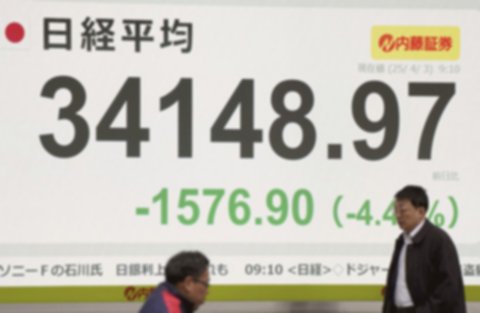
Across equity markets, the downturn was broadly felt. Japan’s Nikkei index plummeted by 3.9 percent, deepening its March decline to over 13 percent. Similarly, the South Korean exchange tumbled 4.5 percent, pushing its cumulative monthly loss to 12 percent. Meanwhile, the MSCI Asia-Pacific index, excluding Japan, also saw a notable correction of 1.2 percent, reflecting the widespread investor apprehension.
The energy market also experienced considerable turbulence. Oil prices initially surged dramatically before stabilizing into a more volatile pattern. Brent crude saw a marginal dip of 0.2 percent to USD 111.90 per barrel, though it still boasts an impressive surge of approximately 55 percent for the month. In contrast, US crude oil remained relatively stable, trading around USD 98.35 per barrel amid the broader market jitters.
“The war could still continue for several more weeks and cause oil prices to rise to as much as USD 150 per barrel,” stated Shane Oliver, Head of Investment Strategy at Fund Manager AMP. He further elaborated, “And the continuous destruction of energy infrastructure means it will take much longer to return supply to normal.”

Oliver highlighted that oil price surges during previous crises typically extended for several months. “It also needs to be noted that past oil price shocks have played out over several months in terms of the oil price increases as the full impact became clearer, about 4 months in 1973 and one year in 1979,” he noted, providing historical context to the current situation.
The cascading impact of surging energy prices is now spreading to other vital sectors. Analysts at HSBC observed that jet fuel prices in Singapore have skyrocketed by an astonishing 175% year-to-date, reaching multi-decade highs. Concurrently, liquefied natural gas (LNG) prices in Asia have climbed 130 percent, while bunker fuel for shipping has also surged, consequently driving up logistics costs and threatening to escalate global food prices.
This relentless inflationary pressure from the energy sector has prompted a significant recalibration of global monetary policy expectations. Hopes for interest rate cuts, once prevalent, are now rapidly fading, giving way to a growing anticipation of potential interest rate hikes in several developed nations as central banks confront rising inflation.
This profound shift in expectations is simultaneously exerting considerable pressure on bond markets. The yield on the benchmark US 10-year government bond has sharply risen to 4.4110 percent, marking an eight-month high. This dramatic increase reflects a surge of 44 basis points since the conflict initially erupted, underscoring the market’s sensitivity to geopolitical and monetary policy shifts.
In the foreign exchange market, the US dollar has notably strengthened, asserting its role as a preferred safe-haven asset amidst the heightened volatility. The Euro, by contrast, slightly weakened to USD 1.1555, while the US dollar held firm at 159.15 yen, hovering near its 20-month peak, demonstrating its resilience in uncertain times.
Meanwhile, gold prices have seen a modest uptick of 0.4 percent, reaching USD 4,511 per ounce. This increase comes after the precious metal had previously faced downward pressure due to earlier expectations of global interest rate hikes, highlighting the dynamic interplay between safe-haven demand and monetary policy outlooks.