
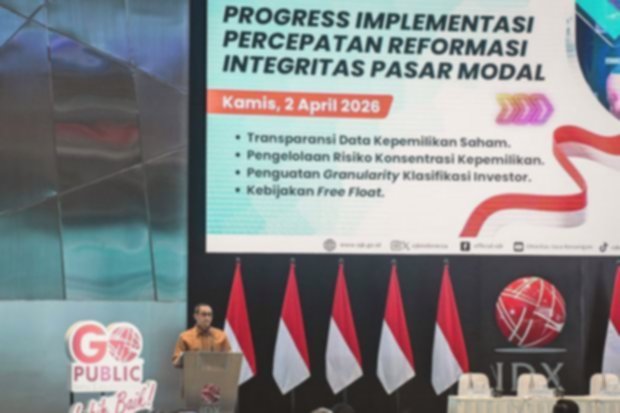

The Financial Services Authority (OJK) has warmly welcomed the results of the FTSE Russell assessment, which were released on Wednesday, April 7, 2026. The `FTSE Equity Country Classification March 2026 Interim Announcement` confirmed that Indonesia’s status within the FTSE Russell classification remains firmly in the Secondary Emerging Market category.
This retention of Secondary Emerging Market status positions Indonesia on par with major global economies such as China and India. Crucially, FTSE Russell also affirmed that Indonesia would not be placed on its `Watch List`, signaling robust confidence in the nation’s financial landscape and its ongoing reform efforts.
“The FTSE Russell assessment reflects the ongoing initiatives implemented through the eight Action Plans aimed at accelerating the reform and integrity of the Indonesian capital market. These efforts demonstrate positive and credible progress in the eyes of global index providers,” stated Agus Firmansyah, Head of the Integrated Financial Services Sector Surveillance and Policy Department at OJK, in a Jakarta statement on Wednesday.
In its assessment, FTSE Russell specifically noted that various reform steps, encompassing enhanced transparency, integrity, and market governance, would continue to be monitored continuously in line with their implementation progress. This sustained oversight underscores the importance of Indonesia’s persistent commitment to these crucial reforms.
Aligning with this positive feedback, OJK elaborated on the strategic policies that have been collaboratively implemented with Self-Regulatory Organizations (SROs). These policies form a comprehensive part of the broader effort to bolster the credibility and competitiveness of the Indonesian capital market on the international stage.
Notably, four key proposals designed to strengthen capital market transparency, which were previously communicated to global index providers, have now been fully completed. These pivotal initiatives include:
- Enhanced transparency of share ownership data for holdings above 1 percent.
- Strengthening the granularity of investor classification, expanding to a total of 39 distinct investor classifications and types.
- Raising the minimum free float threshold to 15 percent, a strategic move designed to encourage healthier market liquidity.
- Implementing `High Shareholding Concentration (HSC)` announcements, serving as an effective early warning mechanism for investors.
Furthermore, Agus highlighted additional strides in transparency, specifically the reporting of beneficial ownership for shareholders holding 10 percent or more. OJK believes that this significant recognition of its diverse reform initiatives serves as a potent positive signal, fostering increased investor confidence among both domestic and global participants.
“This simultaneously reaffirms that the policy direction pursued by Indonesia is in full alignment with international best practices for strengthening the structure and quality of the capital market,” Agus affirmed.
Looking ahead, OJK, in collaboration with all stakeholders, remains steadfast in its commitment to consistently and measurably continue the implementation of these reforms. This includes strengthening communication and engagement with global index providers, including FTSE Russell, to ensure ongoing alignment and understanding.
“This step is crucial to ensure that all adopted policies can be effectively implemented and deliver tangible impacts on enhancing overall market quality,” Agus emphasized, highlighting the strategic foresight behind these continuous efforts.
Beyond this, OJK underscored its unwavering commitment to maintaining market stability, reinforcing investor protection, and driving market deepening through continuous product development and the expansion of the investor base.
“With robust domestic economic fundamentals and sustained policy synergy, OJK is confident that the Indonesian capital market will become increasingly credible, inclusive, and globally competitive,” Agus concluded, projecting a bright future for Indonesia’s financial sector.