
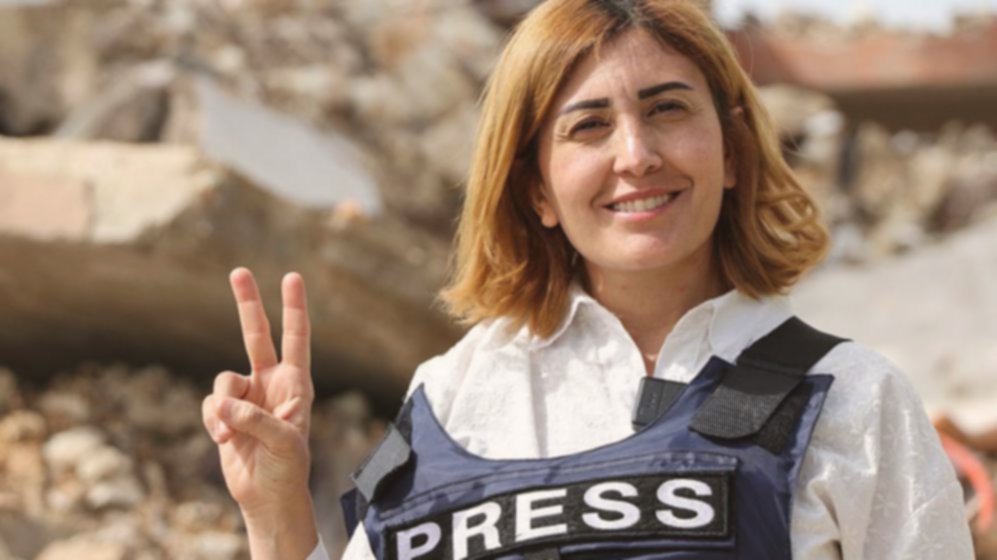

The Prime Minister of Lebanon has accused Israel of committing war crimes following an airstrike in southern Lebanon on Wednesday that resulted in the death of a journalist and left another injured.
The strike claimed the life of Amal Khalil, a journalist for the Lebanese newspaper Al-Akhbar, and wounded freelance photographer Zeinab Faraj. According to Lebanese officials, the pair were deliberately targeted as they sought shelter in a house. This attack occurred after an initial strike hit a vehicle in front of them, killing two men whose identities have not yet been disclosed.
Lebanese authorities also allege that the Israel Defense Forces (IDF) intentionally targeted a clearly marked ambulance as it attempted to reach the scene in the village of Tayri to provide medical assistance to the journalists.
The IDF has denied these allegations, stating that its military does not target journalists and did not obstruct rescue teams from accessing the site.
Why is Israel accused of targeting Amal Khalil?
The 43-year-old journalist Amal Khalil and freelance photographer Zeinab Faraj were traveling together when the Israeli airstrike occurred. Lebanese Prime Minister Nawaf Salam condemned the incident, asserting that the targeting of journalists, the obstruction of rescue teams, and the practice of striking a location again after rescuers arrive constitute clear war crimes.
Salam described this behavior as an established approach by the IDF to target media personnel in southern Lebanon. He extended his condolences to Khalil’s family and affirmed that Lebanon intends to pursue justice for these crimes in relevant international forums.
In a separate statement, the IDF rejected these accusations. The Israeli military maintained that it does not target journalists and strives to minimize risks to them while ensuring the safety of its own forces. Furthermore, the IDF claimed it had identified two vehicles departing from a military structure used by Hezbollah. According to the military, one of these vehicles crossed a forward defense line, violating the ceasefire and posing an immediate threat, which prompted the Israeli Air Force to strike the vehicle and the structure where the individuals sought refuge.
However, the Lebanese Ministry of Health accused the IDF of hunting down Khalil and Faraj after they took cover in a nearby house, which was then targeted.
Did Israel obstruct medical assistance?
When a Lebanese Red Cross ambulance arrived to provide aid, reports indicate that Israeli forces threw flashbangs and opened fire on the medical vehicle. The Lebanese ministry labeled this a dual violation: obstructing the rescue of a known civilian media worker and targeting an ambulance clearly marked with the Red Cross emblem.
Clayton Weimer, executive director of Reporters Without Borders, stated that the IDF had received notifications from his organization and other journalists requesting safe passage for the ambulance. Weimer noted that the Red Cross signaled they could not reach the location due to continuous Israeli bombardment, labeling the incident an act of negligence that appeared to be a targeted killing.
While Faraj was eventually evacuated alongside two other victims, Khalil’s body was recovered later by the Lebanese civil defense team.
Why is targeting journalists a serious violation?
Al-Akhbar honored Amal Khalil by writing that she remained steadfast in her professional and humanitarian duties. The Guardian journalist William Christou described her on X as a professional, kind, and dedicated reporter who was always a pleasure to encounter in the field.
The Committee to Protect Journalists (CPJ) expressed outrage over the death of Khalil. Sara Qudah, the CPJ’s regional director, emphasized that repeated strikes on the same location, the targeting of areas where journalists seek shelter, and the obstruction of medical access constitute severe violations of international humanitarian law.

What threats had Amal Khalil received?
Reports from local media indicate that in 2024, Khalil claimed she was the target of death threats from Israel, warning her to leave southern Lebanon. The CPJ noted that these reports raise grave concerns regarding the intentional targeting of media workers.
Tragically, this follows a pattern of violence against journalists in the region. Earlier this month, Ghada Dayekh, a broadcaster for Sawt al-Farah, and Suzan Khalil, a reporter for Al-Manar TV, were killed in separate Israeli strikes. Last month, three other Lebanese journalists—Ali Shoeib, Fatima Ftouni, and Mohamed Ftouni—were also killed. At the time, the IDF confirmed killing Shoeib and Mohamed Ftouni, labeling them as Hezbollah militants, while noting reports regarding a female journalist’s death.
Lebanese President Joseph Aoun denounced these killings as blatant crimes that violate the most fundamental rules of international law regarding the protection of civilians performing their professional duties.
What is the civilian death toll in Lebanon?
Since the beginning of the current conflict, at least 2,475 people have been killed in Israeli strikes in Lebanon, with over 7,500 injured, according to Lebanese authorities. While these figures do not distinguish between civilians and combatants, they include at least 274 women and 177 children.
The Lebanese Ministry of Health reported that over 100 medical personnel have been killed and documented more than 120 attacks on ambulances and healthcare facilities. The CPJ estimates that Israeli strikes have killed seven journalists in Lebanon throughout the conflict. Conversely, Israeli authorities state that Hezbollah attacks have killed two civilians and 13 soldiers in Israel since March 2.
What is the status of the Lebanon-Israel ceasefire?
Both Hezbollah and Israel have accused each other of violating the ceasefire agreement. On Wednesday, the IDF reported that Hezbollah launched attacks on Israeli forces in southern Lebanon, while Hezbollah issued four statements claiming it attacked Israeli targets in response to prior violations by the “Israeli enemy.”
Last week, U.S. Secretary of State Marco Rubio mediated high-level meetings between Lebanese and Israeli envoys, leading to an agreement for a 10-day cessation of hostilities starting Friday to facilitate peace negotiations. Ahead of further talks in Washington, President Joseph Aoun reaffirmed that Lebanon is pushing to extend the ceasefire. His priorities remain maintaining national sovereignty, ending Israeli strikes, securing the withdrawal of Israeli forces, and starting reconstruction efforts.

- Five journalists among dozens killed in double Israeli strike on hospital
- 26 killed, including prominent journalist, in Somalia hotel attack
- Saudi Arabia finally acknowledges murder of journalist Jamal Khashoggi
- Lebanon and Israel ceasefire: What to know about the deal
- Satellite imagery reveals Israeli destruction of southern Lebanese towns
- Israel punishes soldiers who destroyed statue of Jesus in Lebanon
Summary
Amal Khalil, a dedicated journalist for the Lebanese newspaper Al-Akhbar, was killed in an Israeli airstrike in southern Lebanon while seeking shelter with freelance photographer Zeinab Faraj. Lebanese officials and international organizations have accused the Israel Defense Forces (IDF) of deliberately targeting media personnel and obstructing medical efforts, as reports indicate that rescue teams were fired upon while attempting to reach the site. The IDF has denied these allegations, asserting that it does not target journalists and claiming the strike was a response to an immediate security threat.
This incident has sparked widespread condemnation and renewed concerns regarding the safety of media workers, with organizations like the Committee to Protect Journalists labeling the attack a severe violation of international humanitarian law. Khalil’s death is part of a broader pattern of violence against journalists in the region, adding to a staggering civilian toll throughout the conflict. While Lebanon continues to pursue international justice for these actions, both parties remain deadlocked in mutual accusations of ceasefire violations amid ongoing efforts to negotiate a lasting peace.