

Djoko Setijowarno, an advisor to the Indonesian Transportation Society (MTI), is calling for the immediate acceleration of the Double-Double Track (DDT) project along the Bekasi-Cikarang rail corridor. He emphasizes that separating commuter lines from long-distance trains is a critical step toward enhancing passenger safety and operational efficiency.
According to Djoko, the operational nature of KRL Commuter Line services and intercity trains (KAJJ) is fundamentally different, making their continued shared use of the same tracks far from ideal. “Separating these operational lines must be a top priority. The completion of the Jakarta-Cikarang Double-Double Track project is essential not only for increasing capacity but, more importantly, for ensuring the safety of all passengers,” Djoko told kumparan on Tuesday (April 28).

Djoko warned that without full track separation, the risk of disruptions and accidents remains high, particularly in high-traffic corridors like Bekasi-Cikarang. Currently, the track separation is only partially implemented. While the remaining shared segments remain functional, they come at the expense of system capacity and rigid scheduling.
“When tracks are shared, rail capacity is significantly constrained, and train schedules must be frequently revised to accommodate safety gaps,” he explained. To maintain safety under current conditions, PT KAI is forced to reduce travel frequency, which inevitably limits service availability for commuters.
Beyond track separation, Djoko urged authorities to expedite the elimination of level crossings in high-density areas, which are frequent sources of congestion and accidents. He also highlighted the urgent need for better urban planning around railway corridors to prevent uncontrolled public activity.
“Spatial planning along railway lines must be strictly enforced. Uncontrolled public activity, unauthorized track access, and weak zoning enforcement pose serious risks to rail operations,” said Djoko. He concluded by asserting that transportation safety should be viewed as a vital long-term investment rather than merely a financial burden.

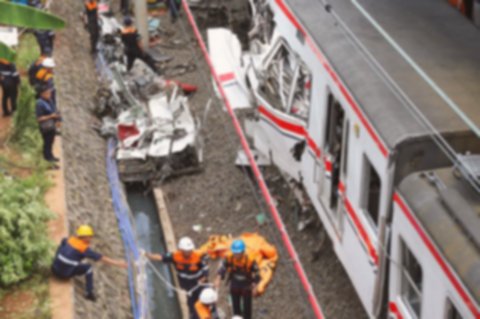
In response to these concerns, the Ministry of Transportation has indicated that the development of the Bekasi-Cikarang DDT will be prioritized following a recent collision between an Argo Bromo Anggrek train and a KRL Commuter Line at Bekasi Timur Station. Minister of Transportation Dudy Purwagandhi confirmed that accelerating the project is a key component of the ministry’s formal safety evaluation.
“Naturally, this is a central part of our evaluation regarding the double-double track project,” Dudy stated. He added that the DDT development would eventually integrate with the electrification program up to Cikampek, aiming to elevate the overall quality of rail services, particularly for KRL commuters.
Summary
Djoko Setijowarno, an advisor to the Indonesian Transportation Society (MTI), is urging the government to accelerate the Double-Double Track (DDT) project between Bekasi and Cikarang. He emphasizes that separating commuter lines from intercity trains is essential to improve operational efficiency, increase rail capacity, and ensure passenger safety. Currently, shared tracks force significant reductions in train frequency and create frequent scheduling conflicts.
In addition to track separation, MTI calls for the elimination of dangerous level crossings and stricter enforcement of urban planning near railway corridors to prevent unauthorized access. The Ministry of Transportation has acknowledged these concerns, confirming that the DDT project is now a priority following recent safety incidents. This initiative is expected to integrate with future electrification programs to enhance the quality of rail services for all passengers.