

JAKARTA – Amid a sluggish Indonesian Composite Index (IHSG) weighed down by geopolitical tensions and a lack of domestic catalysts, energy and precious metal stocks have emerged as the primary market leaders. Since the beginning of 2026, these sectors have consistently outperformed, acting as a buffer against broader market volatility.
According to data from the Indonesia Stock Exchange (IDX) as of April 30, the IHSG has declined by approximately 19.55% year-to-date (YtD), settling at the 6,956.81 level. This performance mirrors the market conditions seen in June 2025, when the index struggled following the US announcement of new tariff policies. Concurrently, foreign investors have recorded a net sell of Rp49.87 trillion throughout the year, with the current index valuation standing at a price-to-earnings (PER) ratio of 14.69 times and a price-to-book value (PBV) of 1.9 times.
Despite this downward pressure, at least 10 stocks have demonstrated significant resilience, serving as key drivers that have prevented a more severe correction for the index.
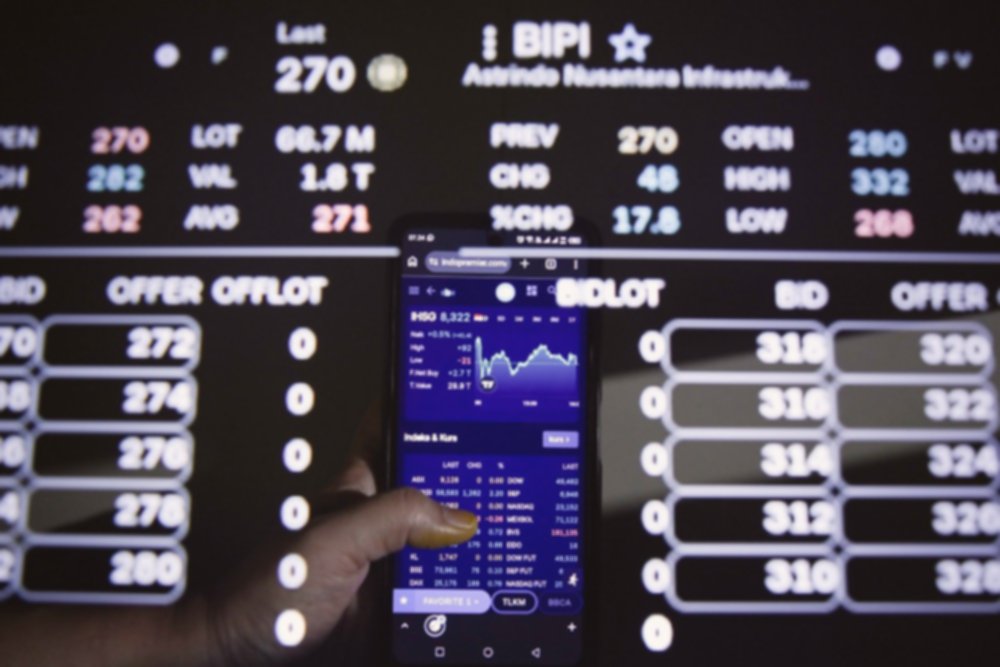
PT Merdeka Gold Resources Tbk. (EMAS) has been the standout performer of 2026. By the end of April, EMAS shares surged 60.81% to Rp8,925, contributing 36.18 points to the index. Its affiliate, PT Merdeka Copper Gold Tbk. (MDKA), followed suit with a 41.67% YtD gain to Rp3,230, adding 24.93 points. Other notable contributors include PT Adaro Andalan Indonesia Tbk. (AADI), which climbed 66.31% to Rp11,600, along with PT Alamtri Resources Indonesia Tbk. (ADRO), PT Astrindo Nusantara Infrastruktur Tbk. (BIPI), and PT Aneka Tambang Tbk. (ANTM), which saw impressive gains of 39.23%, 179.09%, and 18.73% respectively.
The energy sector’s strength is further reflected in shares like PT Bakrie & Brothers Tbk. (BNBR) and PT Arkora Hydro Tbk. (ARKO), which rose 68.50% and 62.18% respectively. Diversified performance was also evident in non-commodity sectors, such as PT MNC Digital Entertainment Tbk. (MSIN) with a 90.48% jump and PT Bank Mega Tbk. (MEGA) with a 34.49% increase.
Nafan Aji Gusta, Senior Market Analyst at Mirae Asset Sekuritas, notes that record-high global oil prices serve as a potent catalyst for oil and gas issuers. Furthermore, the spike in oil prices has encouraged industrial energy substitution toward coal, driving up demand and prices for the commodity.
Top 10 IHSG Leaders in 2026 (YtD Performance):
| Stock Code | Growth | IHSG Contribution |
| EMAS | 60.81% | 36.18 points |
| MDKA | 41.67% | 24.93 points |
| AADI | 66.31% | 15.25 points |
| MSIN | 90.48% | 14.38 points |
| ADRO | 39.23% | 13.46 points |
| MEGA | 34.49% | 12.53 points |
| BIPI | 179.07% | 12.22 points |
| ANTM | 18.73% | 11.09 points |
| BNBR | 68.50% | 9.94 points |
| ARKO | 62.18% | 8.26 points |
The current market pressure stems from a confluence of global and domestic sentiments. Rising oil prices, exacerbated by escalating conflicts in Iran, have prompted investors to retreat from riskier assets. Additionally, the MSCI’s decision to suspend changes to the Indonesian stock composition has triggered short-term capital outflows.
Abida Massi Armand, an analyst at BRI Danareksa Sekuritas, observes that the sharp correction has pushed the IHSG’s price-to-earnings ratio down to the 11-12 times range. This level sits near a five-year low and remains below the historical average of 14-15 times. “This indicates that most risks—including MSCI adjustments, rupiah weakness, and FOMC uncertainty—have been largely priced in by the market,” Abida explained.
For medium-term investors, current levels offer a sufficient margin of safety for gradual accumulation. While the market awaits further stability regarding the rupiah and US Federal Reserve policy, internal exchange reforms—such as the implementation of high shareholding concentration (HSC) standards, improved free-float regulations, and stricter index criteria—are expected to fortify the domestic market foundation.
These reforms, particularly the 15% minimum free-float requirement, are projected to restore institutional investor confidence. In a base-case scenario, Indonesia could see a return to net foreign buying by the third or fourth quarter of 2026, provided the currency stabilizes below the Rp17,000 mark and reform initiatives remain on schedule.
Disclaimer: This article is for informational purposes only and does not constitute financial advice or an invitation to buy or sell securities. Investment decisions remain the sole responsibility of the reader. Bisnis.com is not liable for any losses or gains arising from investment decisions based on this content.
Summary
The Indonesian Composite Index (IHSG) has faced a challenging year-to-date, declining by 19.55% due to global geopolitical tensions and foreign capital outflows. Despite this broader market volatility, energy and precious metal stocks have acted as critical buffers. Specifically, companies like EMAS, MDKA, and AADI have emerged as top performers, recording significant growth and contributing substantially to the index’s resilience throughout the first four months of 2026.
Analysts suggest that current market valuations, which sit near five-year lows, have largely accounted for existing risks such as currency instability and monetary policy uncertainty. Moving forward, the implementation of exchange reforms, including improved free-float regulations, is expected to restore institutional investor confidence. Projections indicate a potential return to net foreign buying by the second half of 2026, provided that market conditions and the rupiah stabilize.