
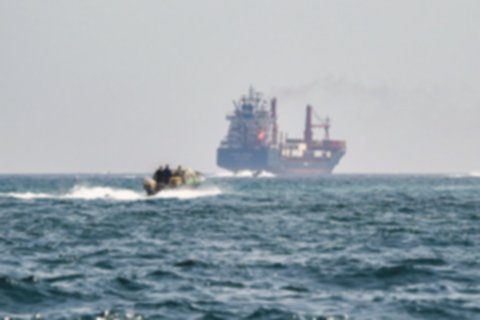

Iran has issued a stern warning to United States forces against entering the vital Strait of Hormuz. This comes after US President Donald Trump announced intentions to assist in freeing commercial vessels and oil tankers currently trapped in the Persian Gulf due to the escalating US-Israel conflict with Iran.
Tehran underscored its commitment to respond forcefully to any perceived threat, explicitly cautioning commercial and oil tanker traffic against independent movement without coordinating with the Iranian military. Ali Abdollahi, Head of the Integrated Command, reiterated Iran’s stance, stating, “We have repeatedly said that the security of the Strait of Hormuz is in our hands and that safe navigation must be coordinated with the armed forces.” He further warned, “We caution that any foreign armed forces, particularly the aggressive US military, will be attacked if they intend to approach and enter the Strait of Hormuz.”
These robust declarations follow President Trump’s public statement regarding plans to aid ships and their crews stranded within the strategic shipping lanes. The ongoing closure of the Strait of Hormuz has reportedly led to critical shortages of food and essential supplies, a dire consequence after more than two months of sustained conflict.
“We have informed these nations that we will safely guide their vessels out of these restricted waterways, so they can freely resume their activities,” Trump posted on Truth Social, signaling a direct US intervention in the maritime blockade. The United States Central Command (CENTCOM) has affirmed its support for this operation, committing a significant force of 15,000 military personnel, over 100 aircraft, warships, and drones.
Commander Brad Cooper of CENTCOM emphasized the critical nature of the mission, stating, “Our support for this defensive mission is essential for regional security and the global economy, as we also maintain the sea blockade.” Amidst the heightened tensions, the International Maritime Organization (IMO) has reported that hundreds of ships and approximately 20,000 seafarers are currently unable to traverse the Strait of Hormuz, exacerbating the humanitarian and economic crisis.
Shortly after President Trump’s announcement, the United Kingdom Maritime Trade Operations reported a concerning incident where a tanker was struck by an unidentified projectile within the strait region. While details remain limited, all crew members onboard were reported safe in the incident, which occurred near the waters off Fujairah, United Arab Emirates.
For over two months, Iran has effectively blocked nearly all shipping in the Persian Gulf, allowing passage only for its own military vessels. This aggressive posture has significantly contributed to a surge in global energy prices. Reports indicate that several vessels attempting to navigate the strait have been fired upon, with Iran also seizing numerous other ships. Last month, the US implemented its own blockade against vessels originating from Iranian ports, further escalating the maritime standoff.
The Trump administration is actively working to forge an international coalition aimed at securing the crucial shipping lanes in the Strait of Hormuz. This comprehensive strategy combines diplomatic initiatives with coordinated military actions. However, details regarding participating nations and operational mechanisms remain unclear. President Trump has also issued a stark warning, indicating that any attempts to disrupt US operations will be met with decisive military force.
Summary
Iran has issued a stern warning to United States forces against entering the vital Strait of Hormuz, threatening an attack and advising commercial vessels to coordinate with its military. This comes as President Trump announced US intentions to intervene and assist commercial ships and oil tankers trapped in the Persian Gulf due to the ongoing conflict. The US Central Command (CENTCOM) is committing a significant force, including 15,000 personnel, to this “defensive mission” crucial for regional and global economic security.
For over two months, Iran’s effective blockade of the Strait has caused critical shortages, trapping hundreds of ships and thousands of seafarers, and leading to a surge in global energy prices. Iran has fired upon some vessels and seized others, while the US has also implemented its own blockade against Iranian ports. The Trump administration is actively working to form an international coalition to secure these crucial shipping lanes, warning that any attempts to disrupt US operations will be met with decisive military force.