
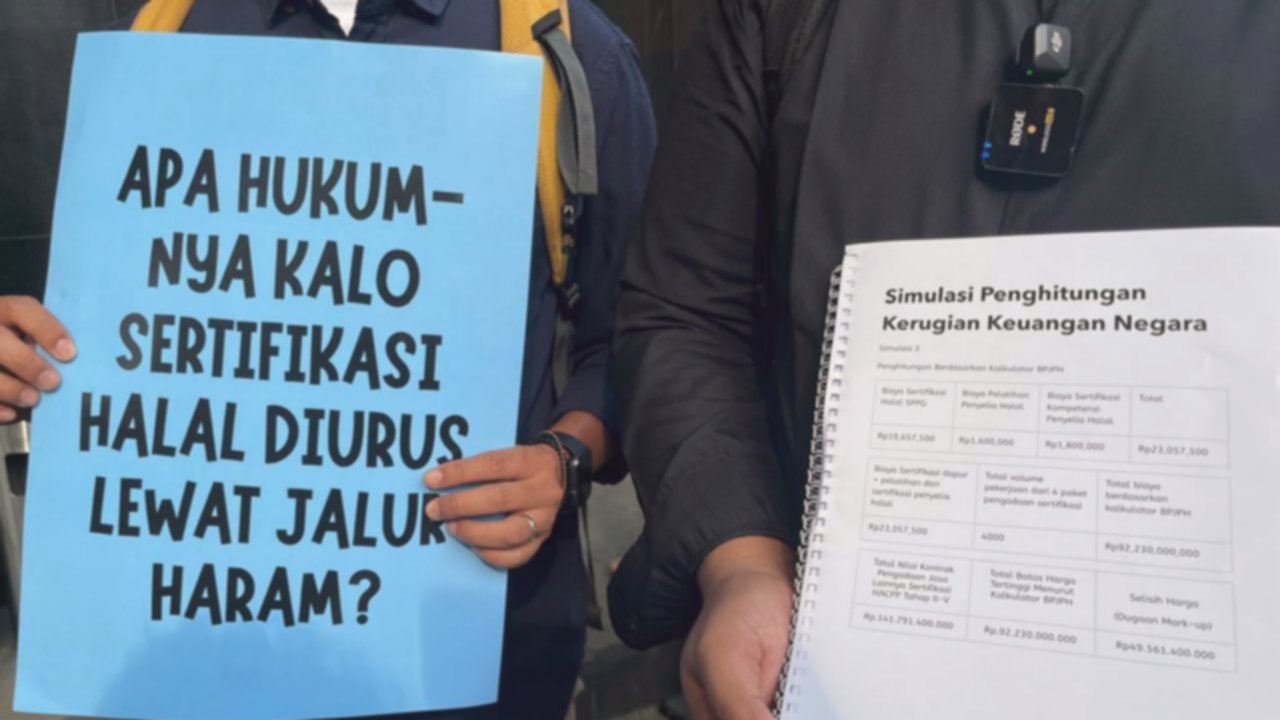

The Indonesian Corruption Watch (ICW) has officially reported the National Nutrition Agency (BGN) to the Corruption Eradication Commission (KPK) over alleged graft involving the procurement of halal certification services. The watchdog estimates potential state losses reaching Rp49.5 billion.
The report names BGN Head Dadan Hindayana and the private firm appointed to manage the certification process. According to Wana Alamsyah, head of the ICW’s legal and investigation division, the allegations stem from systemic mismanagement in the procurement process.
Speaking at the KPK headquarters in Jakarta on Thursday (07/05), Alamsyah highlighted four primary areas of concern: the lack of a legal basis for the procurement, the questionable splitting of contract packages, alleged “flag-borrowing” (proxy arrangements), and suspected price inflation.
To date, BGN Head Dadan Hindayana has not responded to requests for comment from BBC News Indonesia regarding these allegations.
Why is this procurement facing legal scrutiny?
First, the ICW argues that the BGN lacks the legal standing to initiate this procurement. While Presidential Regulation Number 115 of 2025 mandates halal certification, the BGN’s own internal decree (Number 401.1 of 2025) specifies that this responsibility rests with the Nutritional Fulfillment Service Units (SPPG), not the BGN itself.
Alamsyah noted that the technical guidelines for SPPG management already allocate a daily incentive of Rp6 million specifically for this purpose, further undermining the BGN’s justification for a separate, centralized procurement.
Second, the contract was divided into four separate packages—all sharing the same location, work type, volume, schedule, and provider. The ICW contends that these should have been consolidated to leverage economies of scale and secure more competitive pricing. Investigators suspect this fragmentation was a deliberate tactic to bypass open tenders and obscure the legal accountability of the budget authority.

Third, the company partnered with the BGN for these services is reportedly not registered as a Halal Inspection Agency (LPH) within the Halal Product Assurance Organizing Agency (BPJPH) system. This has triggered concerns that the work was illegally subcontracted to unauthorized third parties, violating procurement regulations that strictly prohibit the outsourcing of primary contract tasks.
Zararah Azhim Syah, an ICW investigator, cross-referenced the project’s value with BPJPH’s regulated price ceiling. With a maximum allowable cost of Rp23.05 million per certificate, the four-package contract worth Rp141.7 billion for 4,000 certifications appears to show a significant mark-up. By applying the official price ceiling, the ICW calculated a potential state loss of Rp49.5 billion due to inflated pricing.

In response to inquiries, BGN Deputy Head for Public Communication and Investigation, Nanik S. Deyang, stated that she was unaware of the specifics regarding the procurement and directed further questions to Dadan Hindayana.
The Context of MBG Halal Certification
As of February 2026, the BPJPH reported that 2,340 SPPGs had obtained halal certification. BPJPH Head Ahmad Haikal Hasan, popularly known as Babe Haikal, explained that this progress was achieved through an accelerated strategy, which includes training kitchen heads to serve as “Halal Supervisors” within their respective SPPG facilities. He emphasized that these certifications are vital to maintaining food quality and safety across the complex supply chain of the Nutritious Eating Program (MBG).

A Pattern of Allegations
This is not the first time the MBG program has come under fire. On February 24, 2026, the ICW urged the KPK to monitor the management of police-run MBG kitchens, citing potential conflicts of interest and a lack of transparency regarding the estimated Rp2.2 trillion annual budget managed by the Kemala Bhayangkari Foundation.
While the National Police has denied any profit-oriented motives, the ICW continues to publish findings alleging “defective” governance within the MBG program, including high construction costs, discrepancies in beneficiary data, and instances where project partners appear linked to political figures, military officials, or individuals with histories of corruption.
Field findings by the ICW have also documented serious operational issues, ranging from spoiled food and poisoning cases to reports of intimidation against whistleblowers and the excessive workload placed on volunteers and teachers.
Alamsyah confirmed that the ICW is currently investigating other procurement irregularities within the BGN, including alleged issues with vehicle acquisitions. Meanwhile, the BGN maintains that the MBG program remains a significant engine for regional economic growth, claiming to have injected billions into local economies and created hundreds of thousands of jobs.
As the BGN navigates public pressure—including the temporary suspension of 1,720 SPPGs due to facility standard failures—the agency continues to defend its operational choices as proportional and data-driven. The ICW, however, remains committed to pursuing its investigation, signaling further potential legal challenges for the program.
- Campuses urged to support MBG kitchen development: Is project distribution a concern?
- Raw food ingredients in MBG meals under scrutiny: Where is the BGN’s oversight?
- The Rp335 trillion MBG budget challenged at the Constitutional Court: Will it impact education funding?
- BGN under fire for multi-billion rupiah procurement of tablets and shoe polish: What is the nutritional relevance?
- Public outcry and food poisoning reports: Are the current oversight mechanisms failing the MBG program?
Summary
The Indonesian Corruption Watch (ICW) has reported the National Nutrition Agency (BGN) and its head to the Corruption Eradication Commission (KPK) for alleged corruption in the procurement of halal certification services. The ICW estimates potential state losses of Rp49.5 billion, citing systemic mismanagement including a lack of legal basis for procurement, questionable contract splitting, alleged proxy arrangements, and price inflation.
Concerns have been raised regarding the BGN’s authority to procure these services, contract fragmentation seemingly designed to bypass open tenders, and the possibility of illegal subcontracting. The ICW calculated significant price inflation by comparing the contract value to the official price ceiling for halal certifications.