
JAKARTA – Shares of PT Maharaksa Biru Energy Tbk. (OASA) have demonstrated a remarkable performance, surging by 50.76% year-to-date (YtD) to reach Rp398 by the market’s close on Friday, May 8, 2026. This significant upward trajectory in the stock of the issuer, which specializes in converting waste into energy (WTE), underscores substantial investor confidence and high expectations for a turnaround in the company’s fundamental performance, despite its current net losses.
The waste-to-energy sector in Indonesia presents a compelling dual narrative of opportunity and challenge. On one hand, WTE projects benefit from clear developmental directives aligned with the central government’s priority programs, signaling a favorable policy environment. Conversely, these projects face economic viability tests, primarily due to their substantial funding requirements, which can be a significant hurdle for companies in this capital-intensive industry.
According to OASA’s latest financial report, the company recorded a net loss of Rp13.32 billion between January and September 2025. During the same period, OASA’s revenue experienced a notable contraction, falling from Rp50.59 billion to Rp30.65 billion. A key factor contributing to this financial underperformance is the WTE segment’s inability to generate revenue, as the company’s crucial waste-to-electricity (PSEL) projects in South Tangerang and West Jakarta have yet to commence operations.
Despite the current financial headwinds, analysts Juan Harahap and Ahnaf Yassar from Samuel Sekuritas Indonesia maintain a positive long-term outlook. They assert that OASA’s PSEL projects are poised to become the company’s primary revenue drivers in the future, even while acknowledging their demand for substantial capital investment. “From a profitability perspective, OASA is projected to generate additional EBITDA of approximately Rp250 billion or US$14.4 million, which has the potential to convert the current net loss into a positive net profit, assuming the South Tangerang project operates at 80% utilization by 2029,” the analysts detailed in their research, published on Sunday, May 10, 2026.
Samuel Sekuritas estimates that OASA will require a total of US$74 million in funding to realize these ambitions. This amount is expected to be financed through a combination of US$52 million in debt and US$22 million in equity, potentially via a rights issue. These critical funds are earmarked to propel OASA’s significant advancements within the WTE sector, with a particular focus on the development and operationalization of its PSEL projects in South Tangerang and West Jakarta.
Delving into project specifics, OASA holds a 76% stake in the South Tangerang PSEL project, which boasts an estimated capacity of 1,100 tons of waste per day and an electricity output of approximately 25 megawatts (MW). Furthermore, the company is actively involved in a larger-scale PSEL project in West Jakarta, where it holds a 28% ownership, capable of processing around 2,000 tons of waste daily. Both of these pivotal projects are anticipated to become operational by the end of 2028, marking a significant milestone for OASA’s revenue generation capabilities.
Even with OASA currently reporting net losses, Samuel Sekuritas evaluates the company’s financial balance sheet as fundamentally healthy. This assessment is largely attributed to OASA’s robust net cash position, with total cash reserves reaching Rp44 billion, or approximately US$2.5 million, during the first nine months of 2025.
To further amplify its presence and expand the scope of WTE projects across Indonesia, OASA is strategically engaging in the second wave of Danantara’s WTE tender pipeline. This expansion comes notably after PT Astrindo Nusantara Infrastruktur Tbk. (BIPI) acquired a 20% stake in PT Maharaksa Energi Hijau, one of OASA’s key subsidiaries. Analysts are optimistic, suggesting that OASA is exceptionally well-positioned to capitalize on the vast WTE opportunities that arise from Indonesia’s pressing environmental challenges and limited waste management infrastructure. The nation’s annual waste production stands at an alarming 37.3 million tons, with approximately 67.8% of this volume ending up in landfills without any form of processing, underscoring the critical need for advanced waste treatment solutions.
The alarmingly low penetration rate of effective waste processing technologies highlights substantial long-term growth opportunities for WTE adoption. OASA’s proprietary incineration technology is currently lauded as the most effective and efficient solution available in the market, providing a compelling competitive edge. From a regulatory standpoint, Presidential Regulation No. 109/2025 marks a pivotal turning point for the sector. This regulation significantly enhances project economics by mandating a fixed electricity tariff of US$0.20/kWh and guaranteeing a 30-year Power Purchase Agreement (PPA). Additionally, it ensures clearer government support across a spectrum of stakeholders, including PLN, local governments, and Danantara. Crucially, the government’s commitment to guaranteeing waste supply further mitigates project execution risks for OASA, creating a more secure investment environment.
Despite these promising opportunities, Samuel Sekuritas maintains a ‘non-rated’ assessment for OASA. This cautious stance aligns with the projection that significant improvements in financial performance are still a long-term prospect, alongside the ongoing challenge of the company’s considerable funding needs.
In related developments, Danantara officially announced its selected partners for PSEL projects in Bekasi and Denpasar on March 6, 2026. The operators chosen in this inaugural phase of bidding are Wangneng Environment Co., Ltd. for the Bekasi plant and Zhejiang Weiming Environment Protection Co., Ltd. for the Denpasar plant. Moving forward, these selected operator partners are mandated to form consortia, a strategic move designed to foster technology transfer and encourage partnerships with local government-owned enterprises and other Indonesian companies.
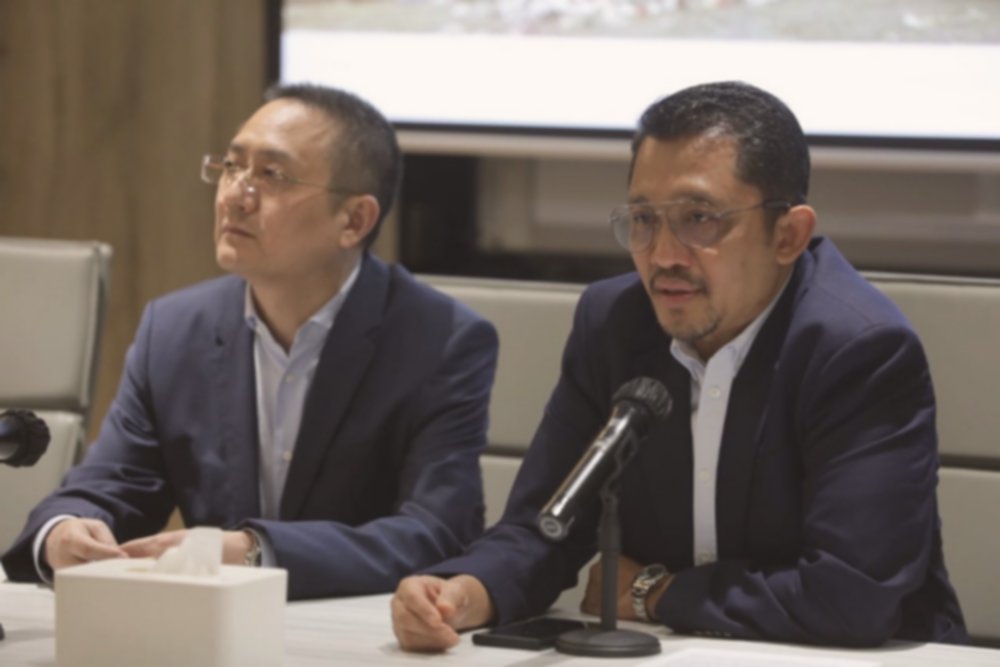
In late 2025, OASA’s President Director and CEO, Bobby Gafur Umar, disclosed that three companies had approached OASA regarding potential consortium partnerships. From these contenders, OASA ultimately selected Grandblue Environment Co., Ltd., a Chinese firm recognized for having the second-largest waste processing capacity in China, capable of handling nearly 99,000 tons of waste daily. “We’ve already signed an initial understanding, but later when making investment decisions, we’ll have to see. This is crucial; the waste type, the location—hopefully, there will be three parties involved: Danantara, Grandblue, and us. We’ll divide it three ways,” Bobby explained during an interview at The Westin Jakarta on Thursday, November 20, 2025. Regarding specific projections for improved financial performance, Bobby refrained from commenting at the time.
Disclaimer: This news article is not intended as an invitation to buy or sell shares. Investment decisions are solely at the discretion of the reader. Bisnis.com is not responsible for any losses or gains arising from the reader’s investment decisions.
Summary
PT Maharaksa Biru Energy Tbk. (OASA) has seen its stock price surge by 50.76% year-to-date, reflecting strong investor confidence in its waste-to-energy (WTE) projects. Despite reporting a net loss of Rp13.32 billion in 2025 due to delayed operations of its PSEL facilities, analysts at Samuel Sekuritas maintain a positive long-term outlook. They anticipate that the South Tangerang and West Jakarta projects will become primary revenue drivers, potentially turning the company profitable once they reach full utilization by 2029.
The company’s growth strategy is supported by a favorable regulatory environment, including Presidential Regulation No. 109/2025, which guarantees fixed electricity tariffs and long-term power purchase agreements. To fund the estimated US$74 million required for its upcoming projects, OASA is exploring debt and equity financing while forming strategic partnerships, including a collaboration with China’s Grandblue Environment Co., Ltd. While analysts remain cautious due to the company’s significant capital requirements and current financial state, OASA is positioned to capitalize on Indonesia’s pressing need for sustainable waste management infrastructure.