
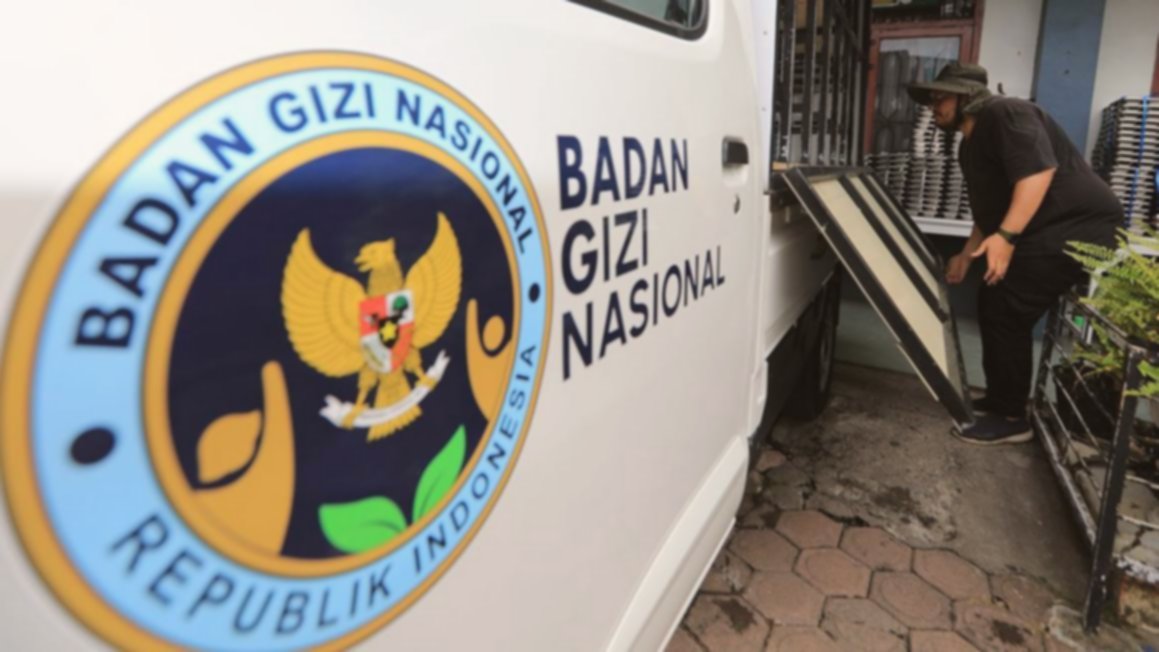

The National Nutrition Agency (BGN) has emerged as a central figure under the administration of President Prabowo Subianto, particularly due to the implementation of the Free Nutritious Meal (MBG) policy. Established approximately 18 months ago, the agency has consistently been in the spotlight, navigating a complex landscape of public scrutiny and high-stakes governance.
During a cabinet meeting on May 5, 2025, President Prabowo Subianto addressed his flagship priority, the MBG program. With characteristic confidence, he noted that among over 3 million beneficiaries, only 200 cases of food poisoning had been reported. According to his calculations, this reflects a 99.99% success rate—a claim that drew enthusiastic applause from his cabinet members.
While the President frames the policy as nearly flawless, he has urged field operators not to grow complacent. He specifically highlighted the leadership of BGN Head Dadan Hindayana, noting, “I appreciate the BGN head and his staff for aiming for zero deviations and zero errors, even though we understand that is no easy feat.”
The BGN has become a frequent subject of national discourse. Throughout its year-long operation, the agency has dominated headlines ranging from food safety incidents and menu composition to controversies surrounding procurement.

Mirah Mahaswari, a political science lecturer at Udayana University and doctoral candidate at Monash University, identifies the BGN as a primary political instrument in the Prabowo administration. “The BGN serves as the vehicle to realize the MBG,” she explains. “Uniquely, it also functions as a tool for political consolidation, as the success of the MBG is vital to the government’s political legitimacy.”
This strategic importance has granted the BGN significant flexibility in managing its funding. Isnawati Hidayah, an economist and food security expert at the Center of Economic and Law Studies (CELIOS), suggests this gives the BGN an aura of “unlimited power.” She clarifies, “While it is not literally limitless, they have been granted substantial leeway to execute their policies with significant government backing.”
The Genesis of a Powerful Agency
Two months before the end of his term, President Joko Widodo issued a presidential decree establishing the BGN as the government body responsible for fulfilling national nutritional needs. Article 2 of the decree places the agency directly under the President’s authority, with tasks ranging from technical policy formulation to the distribution of national nutrition supplies.
Shortly after the agency’s formation, President Jokowi appointed Dadan Hindayana, an academic from IPB University, as its head. The agency’s roots lie in the 2024 presidential campaign, where the Prabowo-Gibran ticket promised free meals and milk for school children and pesantren students, alongside nutritional support for pregnant women and toddlers.
During the fifth presidential debate in February 2024, Prabowo framed the program as a fundamental step toward improving the quality of life for Indonesians and eradicating poverty. Once in office, the BGN was tasked with mobilizing this promise.
The agency’s leadership structure is currently composed of ten key officials, including a head, deputies, and assistants. Notably, the leadership lacks nutrition experts; Dadan Hindayana’s background is in insect ecology, while his deputies include former journalists, retired military officers, and police officials. Only one woman occupies a top leadership position within the agency.
Technically, the BGN manages the MBG through the Nutritional Service Fulfillment Units (SPPG), which act as centralized kitchens. The BGN is responsible for selecting these partners, which include government agencies, private companies, and social foundations. As of April 2026, data from the BGN indicates that more than 27,000 SPPG units have been established nationwide.
Financial Dominance
The program is supported by massive allocations from the State Budget (APBN). In 2025, the BGN received Rp71 trillion, placing it among the top 10 state institutions in terms of funding. By 2026, this figure quadrupled to Rp268 trillion, making the BGN the largest recipient of state funds, surpassing both the Ministry of Defense and the Ministry of Education, Culture, Research, and Technology.
Critics point to this massive budget and political influence as evidence of the BGN’s strategic power. Transparency International Indonesia (TII) has raised concerns that the agency’s procurement process, which heavily relies on e-purchasing rather than open bidding, lacks transparency and fair competition. Furthermore, the 2025 expenditure of Rp6.31 trillion—spread across more than 1,000 packages—included questionable items such as shoe polish, belts, and towels, which critics argue do not align with the core mission of nutritional fulfillment.
Managing Public Trust and Accountability
In response to recurring incidents of food poisoning and allegations of corruption, the BGN has emphasized its commitment to professionalism. Head Dadan Hindayana stated that the agency has partnered with the Attorney General’s Office and the Financial and Development Supervisory Agency (BPKP) to audit expenditures. To further bridge communication with the public, the BGN launched SAGI 127, a 24-hour complaint channel.
President Prabowo himself has dismissed allegations that the MBG program is a political maneuver to secure votes for 2029. “If the people choose me in 2029, what is my crime?” he asked during the National Christmas Celebration in early 2025, emphasizing that his motivation is driven by the urgent need to address childhood malnutrition.
The Path Forward
Despite these defenses, the agency remains under intense scrutiny. The Indonesian Corruption Watch (ICW) recently reported alleged corruption in the agency’s halal certification procurement to the Corruption Eradication Commission (KPK), involving potential state losses of Rp49.5 billion. Experts like Isnawati Hidayah argue that the BGN’s current model is unsustainable and overly complex.
Recommendations for reform include narrowing the program’s scope to target low-income households and shifting from the high-cost SPPG system to utilizing existing school canteens. By transitioning toward a more targeted and decentralized approach, experts believe the government could better serve the needs of the people while ensuring that the massive fiscal investment yields tangible, positive outcomes for the nation’s future.
Summary
The National Nutrition Agency (BGN) has become a central institution under President Prabowo Subianto’s administration, primarily tasked with implementing the Free Nutritious Meal (MBG) program. Designed as a key political instrument for government legitimacy, the agency operates with significant autonomy and has received massive state budget allocations, reaching Rp268 trillion in 2026. Despite its strategic importance, the BGN faces intense public and expert scrutiny regarding its operational transparency, procurement processes, and the inclusion of non-nutritional items in its massive expenditure.
While the administration defends the program as a vital step toward improving public health and eradicating malnutrition, the agency is currently embroiled in controversies, including reports of food poisoning and allegations of corruption. Critics and watchdog organizations argue that the current, highly centralized model is unsustainable and lack transparency. To improve efficiency and accountability, experts suggest reforming the agency by narrowing its focus to low-income beneficiaries and transitioning to a more decentralized, cost-effective delivery system.