
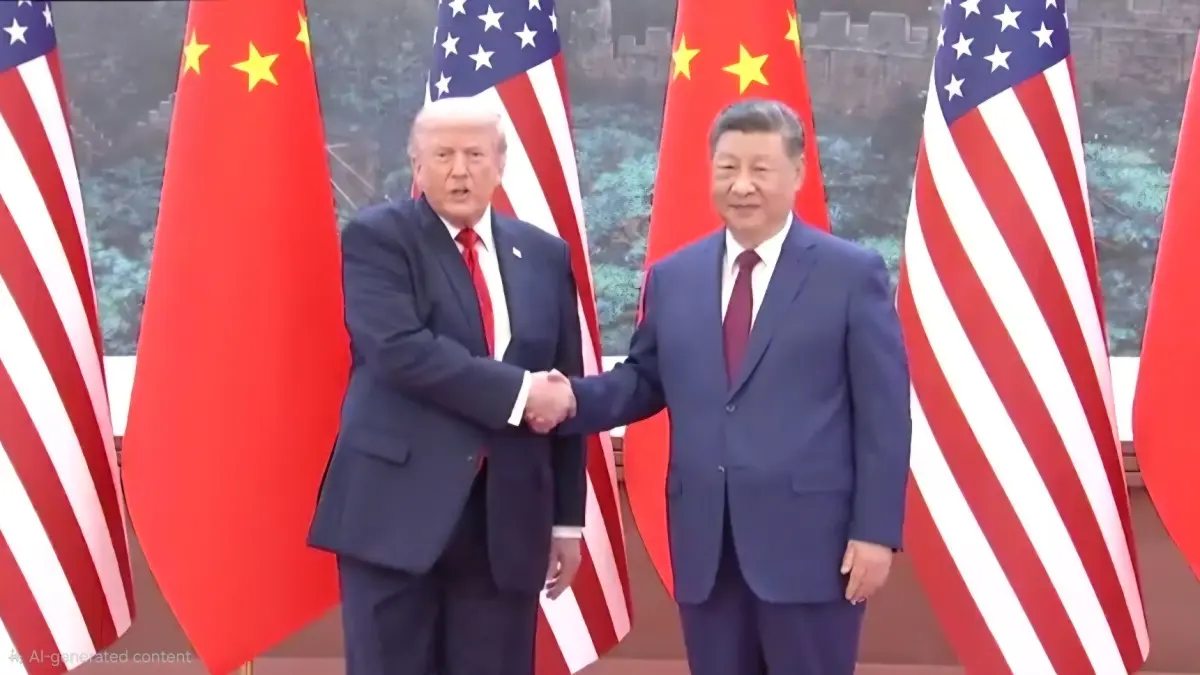

Flooring Guide by Cinvex — A recent summit in Beijing between United States President Donald Trump and Chinese President Xi Jinping has sent a clear signal: both global powers are prioritizing stable trade relations to navigate the current era of international uncertainty and avoid potential conflict.
During their bilateral meeting at the Great Hall of the People on Thursday (May 14), the two leaders addressed a wide-ranging agenda, spanning from trade and the Iran crisis to semiconductor technology and the complexities surrounding Taiwan.
President Xi underscored the critical nature of a stable US-China relationship for the global community. “A stable bilateral relationship is good for the world. We must be partners, not rivals,” Xi stated during the talks.
President Trump echoed this shift toward a warmer diplomatic approach. Referring to the Chinese leader as both a friend and a formidable figure, Trump remarked, “You are a great leader. It is an honor to be your friend.” He further added that he expects the relationship between the two nations to reach new heights, declaring, “The relationship between China and the US will be better than ever before.”
Focusing on Trade and Technology
According to reports from CBC, trade remains the cornerstone of the diplomatic dialogue. Washington is eager to expand exports—including Boeing aircraft, energy supplies, and agricultural products—into the Chinese market to address the trade deficit that has long been a focal point of Trump’s economic policy.
In response, Beijing is pushing for the US to ease export restrictions on advanced semiconductors and chip technology. Both nations also discussed establishing new forums to foster investment and trade, with a particular emphasis on potential cooperation in artificial intelligence (AI).
This meeting comes as both sides look to solidify the fragile trade truce established last October. At that time, the US suspended high tariffs on Chinese goods, while Beijing reciprocated by loosening export controls on rare earth materials, which are essential for industries ranging from electric vehicles to defense.
Addressing Geopolitical Flashpoints
Beyond trade, the ongoing conflict in Iran was a key topic of discussion. The US administration is seeking China’s influence to encourage Tehran to engage in a new agreement with Washington to de-escalate tensions. However, many analysts suggest that Xi Jinping is unlikely to apply significant pressure on Iran, given that the nation remains a vital component of Beijing’s own strategic interests.
The status of Taiwan also loomed over the discussions, as US arms sales to the island remain a persistent source of friction between the two capitals.
Notably, the atmosphere of this visit contrasts with Trump’s 2017 trip. While Beijing previously demonstrated its commitment through grand displays of economic partnership and massive purchases of American goods, current dynamics show a more balanced landscape. Trump is managing domestic political pressures related to the Iran situation and internal economic constraints, whereas President Xi appears to be operating from a position of increased political stability.
Despite these complexities, both leaders seem aligned on the necessity of maintaining a conducive relationship to ensure global economic stability. The importance of this connection was further highlighted by the presence of prominent American business leaders in Trump’s delegation, including Elon Musk, Nvidia CEO Jensen Huang, and Tim Cook. Their participation serves as a reminder that the Chinese market remains an indispensable engine for American technology and commerce.
Summary
President Donald Trump and President Xi Jinping held a summit in Beijing aimed at prioritizing stable trade relations and minimizing international conflict. Both leaders emphasized the importance of a cooperative partnership, with discussions covering trade, technology, and geopolitical issues such as the Iran crisis and Taiwan. The presence of high-profile American business leaders highlighted the continued significance of the Chinese market to the US economy.
The dialogue focused on addressing trade imbalances, with the US seeking to expand exports while China advocates for eased restrictions on advanced semiconductor technology. Building upon a previous trade truce, both nations explored new avenues for cooperation in artificial intelligence and investment. Despite underlying geopolitical friction, the summit signaled a commitment to maintaining a stable relationship to support global economic growth.