
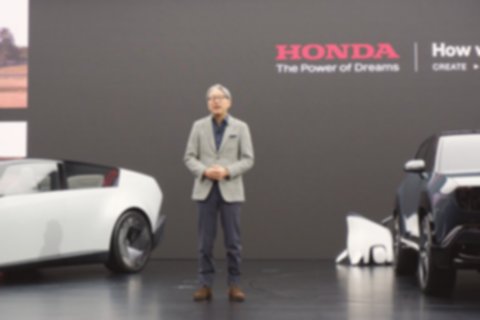

In a significant turn of events, Honda Motor, a titan of the global automotive industry, reported its first annual loss in nearly seven decades as a publicly traded company on Thursday, May 14. This unprecedented setback, marking its worst financial performance since listing on the stock exchange in 1957, comes as the Japanese automaker grapples with monumental restructuring costs for its electric vehicle (EV) business. These costs have soared past USD 9 billion, or approximately IDR 158.45 trillion (at an exchange rate of IDR 17,606).
Compounding these challenges, Honda has, according to Reuters, decisively canceled its ambitious long-term EV sales targets. This move underscores the immense risks associated with an aggressive electrification strategy for established automakers, particularly when global market demand for EVs fails to meet initial, optimistic projections.
Further signaling a recalibration of its EV ambitions, Honda CEO Toshihiro Mibe confirmed the company’s decision to scrap several key electrification milestones. This includes the aspiration for electric vehicles to constitute a fifth of its new car sales by 2030, a goal previously seen as a cornerstone of its future strategy. Furthermore, the broader target for Honda to transition entirely to electric or fuel cell vehicles by 2040 has also been withdrawn.
Adding to these significant strategic shifts, Mibe announced the indefinite suspension of Honda’s substantial EV project in Canada. This plan, involving an USD 11 billion investment for the production of electric vehicles and batteries, was slated to be Honda’s largest single investment in the country, highlighting the scale of the company’s revised outlook.

Amidst its automotive struggles, Honda’s robust and profitable motorcycle business has emerged as a crucial lifeline, consistently generating vital cash flow and bolstering shareholder returns. This segment stands in stark contrast to its lagging automotive division, which has faced criticism for its scale and execution.
James Hong, Head of Mobility Research at Macquarie, articulated this concern to Reuters on Friday, May 15, stating, “Overall execution is very slow.” Hong further noted that several strategic initiatives presented by the company as part of its strategy, such as increased reliance on local components from China, are not particularly novel, suggesting a lack of innovative momentum in its broader approach.
The financial impact of these challenges is substantial. Honda’s recorded operating loss for the year ending March 2026 reached an staggering 414.3 billion yen, equivalent to approximately USD 2.63 billion. This performance significantly underperformed the median loss estimate of 315.6 billion yen compiled from a survey of 22 analysts by LSEG, and represents a dramatic reversal from the impressive 1.2 trillion yen profit reported in the preceding year.
Furthermore, the company’s books show cumulative EV-related losses amounting to 1.45 trillion yen for the fiscal year that concluded in March. While Honda projects an additional 500 billion yen in related costs for the newly begun fiscal year, this revised estimate is, notably, lower than the previously forecast EV losses of up to 2.5 trillion yen announced by the company last March, suggesting some degree of cost containment or revised outlook.
Optimistic to Turn a Profit

Despite the current losses, Honda is projecting a return to profitability in the current year, forecasting a 500 billion yen profit. This anticipated rebound is primarily underpinned by stringent cost efficiency measures and the continued robust performance of its highly successful motorcycle business.
As outlined in its financial report, Honda’s motorcycle division is poised for significant expansion, notably increasing its production capacity in India. The company has set an ambitious target to achieve a historic high in sales, aiming for 22.8 million units globally.
Indeed, powerful sales momentum in crucial markets such as India and Brazil propelled Honda’s motorcycle business to record-breaking sales volumes and operating profits. This impressive performance proved instrumental in mitigating the severe financial repercussions of the EV business restructuring and the challenging decline in car sales observed in major markets like China.
Yet, even this stronghold faces impending challenges. James Hong of Macquarie cautions that Honda’s motorcycle division will inevitably confront margin pressure as the transition towards electric vehicles gains pace in vital markets, including India and Vietnam. He starkly warns, “They have limited time to act,” emphasizing the urgent need for strategic adaptation within this profitable segment.
Summary
Honda Motor reported its first annual financial loss in nearly seven decades, experiencing its worst performance since 1957 due to over USD 9 billion in electric vehicle (EV) restructuring costs. Consequently, CEO Toshihiro Mibe announced the cancellation of ambitious long-term EV sales targets, including goals for EVs to constitute a fifth of sales by 2030 and full electrification by 2040. The company also indefinitely suspended an USD 11 billion EV project in Canada, signaling a significant recalibration of its electrification strategy.
The automaker recorded an operating loss of 414.3 billion yen (USD 2.63 billion) for the year ending March 2026, with cumulative EV-related losses reaching 1.45 trillion yen. Despite these struggles, Honda’s robust motorcycle business has been a crucial financial lifeline, generating strong cash flow and reporting record sales, especially in India and Brazil. The company projects a return to a 500 billion yen profit in the current year, driven by cost efficiencies and continued motorcycle strength, though margin pressure is anticipated for motorcycles as EV adoption grows.