
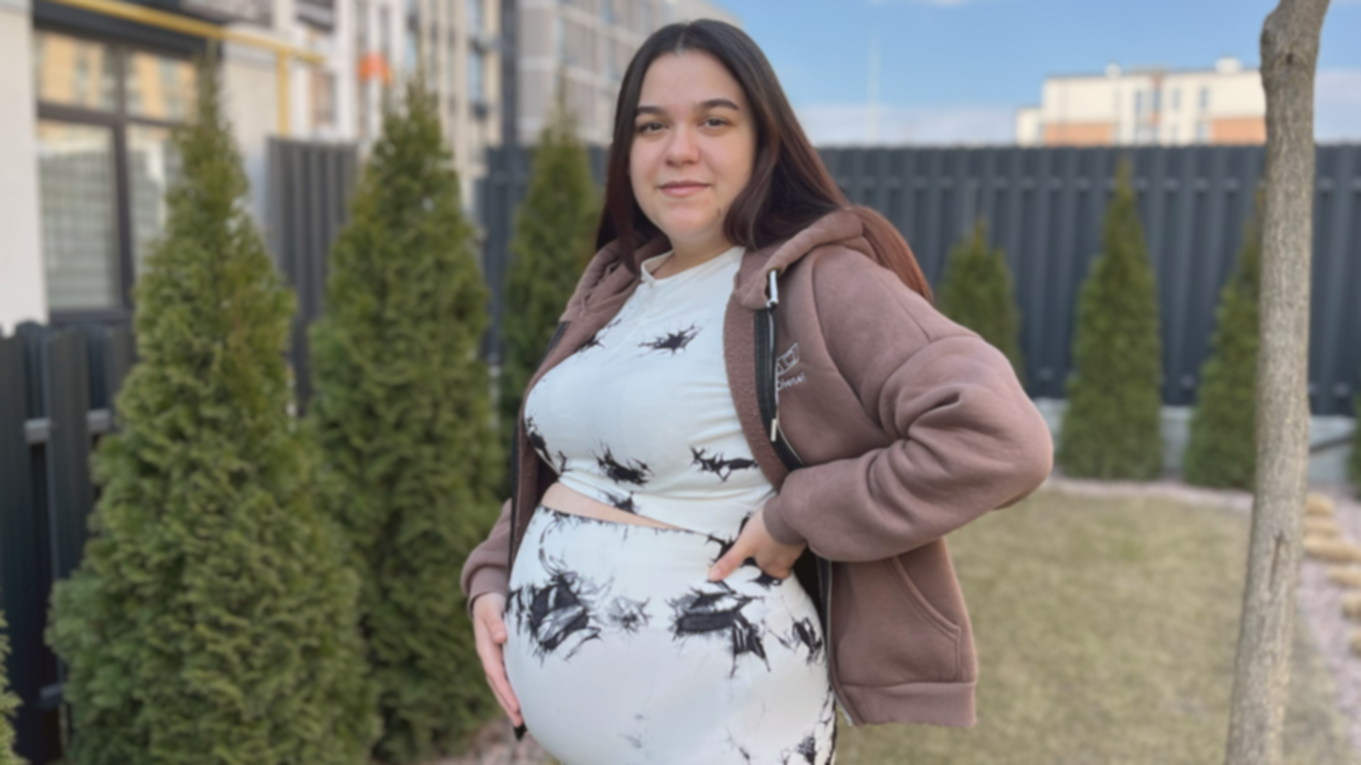

Karina is six months pregnant, but the child she is carrying is not her own.
The 22-year-old from eastern Ukraine is a surrogate mother, “renting” her womb to carry an embryo created from the eggs and sperm of a couple from China. In a country ravaged by conflict, her story is a window into the complex and controversial world of commercial surrogacy.
At just 17, Karina’s world was shattered when her hometown of Bakhmut became one of the most brutal battlefields in the early stages of the Russian invasion. As her city was reduced to ash and rubble, Karina and her partner fled to Kyiv, where they struggled to find stable employment.
The turning point came in a grocery store. Standing with barely enough money for bread and diapers for her eighteen-month-old daughter, Karina made the life-altering decision to become a surrogate. She is candid about her motivation: she would never have chosen this path if it weren’t for the war, which has decimated the economy, sparked soaring inflation, and left millions unemployed.
“At first, being a surrogate made me feel angry and disappointed, but I have come to accept it,” says Karina, who now lives in an apartment on the outskirts of Kyiv provided by a surrogacy clinic. For her service, she is set to receive $17,000—roughly double the average annual salary in Ukraine. The bulk of the payment is due after birth.
Her financial journey hasn’t been without loss. Initially promised $21,000, her compensation was reduced per her contract after one of the twins she was carrying passed away. Despite the risks and emotional toll, Karina plans to undergo the process as many times as possible to save for a home. However, new legislative hurdles may soon bring those plans to a halt.

The Global Hub Under Scrutiny
Before the war, Ukraine was the world’s second-largest hub for commercial surrogacy, trailing only the United States. While the conflict initially disrupted the industry, experts told the BBC World Service that surrogacy births have nearly returned to pre-war levels. But the legal landscape is shifting.
The Ukrainian parliament is currently considering a bill that would strictly regulate the industry and ban foreign nationals from using Ukrainian surrogates. Currently, foreigners account for 95% of the client base. Proponents of the bill argue that the industry commodifies reproduction and exploits vulnerable, impoverished women.
“The war has increased the number of desperate women, and clinics offer these opportunities because Western couples want to ‘buy’ babies cheaply,” says Maria Dmytrieva, a women’s rights activist who advocates for a total ban on the practice. She accuses clinics of predatory marketing, citing social media ads that use AI to show women choosing between surrogacy or being unable to afford clothes for their own children.
BioTexCom Centre for Human Reproduction, Ukraine’s largest surrogacy clinic, has faced significant criticism. In 2021, they promoted “Black Friday discounts” on surrogacy packages. Furthermore, in 2018, CEO Albert Tochilovsky was investigated for alleged human trafficking and document forgery. While BioTexCom denies all wrongdoing, the investigation highlighted the lack of oversight in the sector.
The Children Left Behind
One of the darkest aspects of the industry involves children who are abandoned when biological parents change their minds. While abandoning a child is illegal under Ukrainian law, international enforcement is notoriously difficult.
Five-year-old Wei is a tragic example. Born prematurely in 2021 with severe brain damage through a BioTexCom arrangement, Wei was left in a state orphanage for children with disabilities in Kyiv. His biological parents, a couple from Southeast Asia, disappeared after learning of his condition.

Wei requires 24-hour care and cannot sit up or see clearly. His surrogate mother has no legal obligation to him, and despite BioTexCom calling the situation a “tragedy,” they do not provide financial support for his care. Fifteen families have reviewed Wei’s file, but none have offered to adopt him.
Valeria Soruchan of the Ukrainian Ministry of Health supports the ban on foreign clients, citing the “many” abandoned children as a primary reason for tighter regulation.
A Lifeline for Families
However, many argue that commercial surrogacy is a mutually beneficial arrangement. Himatraj and Rajvir Bajwa, a couple from London, turned to Ukraine after five years of struggling with infertility and unsuccessful IVF treatments. Because the UK only allows “altruistic” surrogacy—where surrogates cannot be paid beyond basic expenses—the couple feared the legal uncertainty of the British system.

They chose BioTexCom, paying approximately $87,770—a fraction of the cost in the US. Their son was born in Kyiv last June. Despite the danger of Russian air raids, they spent three months in the city waiting for UK paperwork.
“They gave us something we never thought possible—they made us a family,” says Himatraj. The couple met their surrogate and insist she was not exploited, viewing it as a choice that helped her financially while fulfilling their dream of parenthood.

“Nobody is Forcing Us”
For Karina, the debate over ethics feels disconnected from her reality. She views the proposed law as a threat to her autonomy and her future.
“Nobody is forcing us. This is my body, my decision… I will be rewarded for giving them happiness,” she says. As she prepares for the birth, she remains emotionally detached yet caring. “I know this isn’t my child, but I love her. I talk to her. When she kicks, I tell her that her parents are waiting for her. I just hope she has a good life.”
Additional reporting by Fay Nurse and Victoria Prisedskaya.

- This story is part of the BBC World Service Global Women series, sharing untold stories from around the world.
- Related: The women renting their wombs for celebrity babies
- Related: Pregnant for nine months, then giving the baby away
- Related: The grandmother who gave birth to her own grandson
Summary
Commercial surrogacy in Ukraine has become a lifeline for women facing severe financial hardship due to the ongoing war, such as 22-year-old Karina who relies on the practice to support her family. While many foreign couples view the service as a vital path to parenthood that is more affordable than in other nations, the industry faces intense scrutiny. Critics and government officials are pushing for stricter regulations, citing concerns over the commodification of reproduction, potential exploitation, and the tragic abandonment of children born with disabilities.
The Ukrainian parliament is currently considering legislation that could ban foreign nationals from using domestic surrogates, threatening the industry that has served as a global hub for years. Despite these legislative hurdles and the ethical controversy surrounding the practice, many surrogates and intended parents maintain that the arrangement is a consensual, mutually beneficial choice. As the debate continues, the future of the industry remains uncertain, leaving both the women who provide the service and the families who depend on it in a precarious position.