
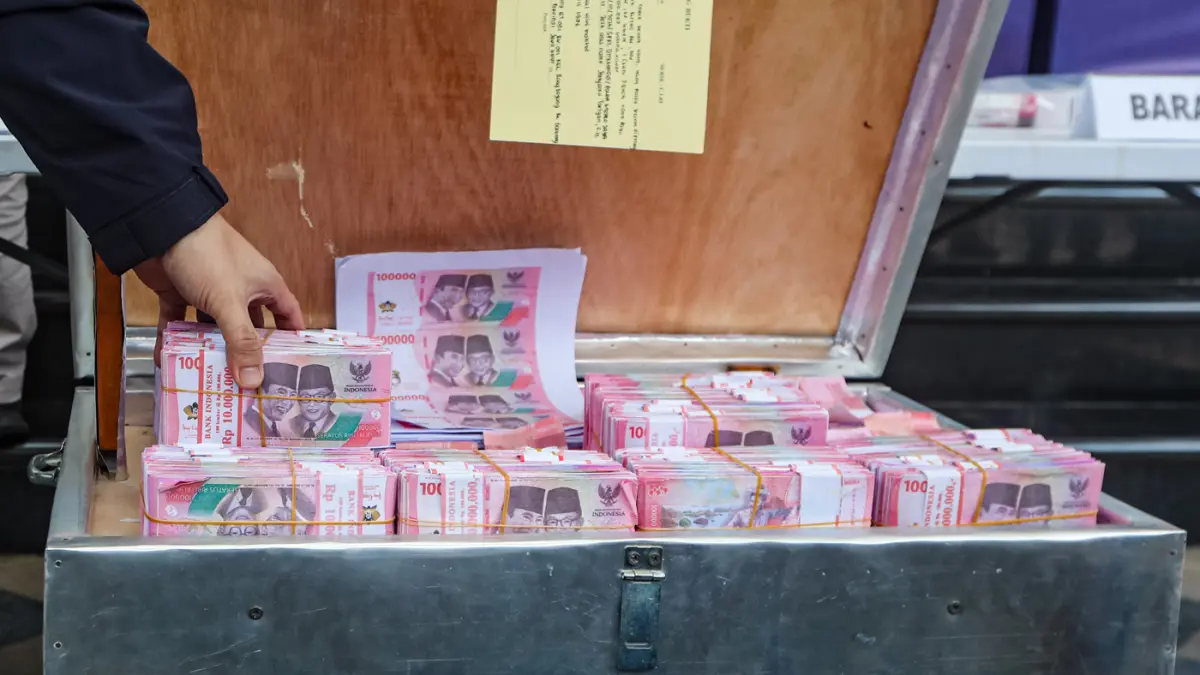

Flooring Guide by Cinvex – Bank Indonesia (BI) has reported a significant decline in counterfeit rupiah circulation over the past three years. The incidence of fake currency has dropped from a ratio of 5 pieces per million (ppm) in 2023 to just 1 ppm as of April 2026. This means that for every million banknotes in circulation, only one is currently identified as a counterfeit.
According to BI Deputy Governor Ricky P. Gozali, this downward trend highlights the increasing difficulty of forging the Indonesian currency. This success is attributed to continuous enhancements in banknote quality, including the use of advanced materials, sophisticated printing technologies, and modern security features.
The reduction in counterfeiting is also a direct result of strong synergy and coordination within the Badan Koordinasi Pemberantasan Rupiah Palsu (Botasupal). This inter-agency task force—comprising the State Intelligence Agency (BIN), the National Police, the Attorney General’s Office, the Ministry of Finance, the Supreme Court, and local district courts—has been instrumental in maintaining the integrity of the national currency.
International recognition underscores the superior quality of the Indonesian rupiah. The 2022 Emission Year (TE) series was honored as the Best New Banknote Series at the 2023 IACA Currency Awards. Furthermore, in November 2024, the Rp50,000 TE 2022 banknote was ranked as the second-most secure and hardest-to-counterfeit currency globally by BestBrokers, featuring 17 advanced security elements.
Aligned with the mandate of Law Number 7 of 2011 concerning Currency, Bank Indonesia remains steadfast in its commitment to protecting public transactions. The central bank provides essential support by offering verification services for suspicious banknotes through expert analysis and laboratory testing to ensure public confidence.
Despite these technological advancements, public vigilance remains a vital component of the strategy to combat counterfeit money. Bank Indonesia encourages citizens to continue practicing the 3D method—dilihat (look), diraba (feel), and diterawang (hold up to the light)—to independently verify the authenticity of their banknotes.
To ensure that money remains easy to verify, BI also urges the public to handle cash with care by adhering to the 5 Jangan (Five Don’ts) policy: do not fold, do not scribble, do not staple, do not crumple, and do not dampen the banknotes. By maintaining the physical condition of the currency, the public plays a direct role in upholding the security of the nation’s financial system.
Summary
Bank Indonesia has reported a major decline in counterfeit rupiah circulation, with the rate dropping from 5 pieces per million in 2023 to just 1 per million as of April 2026. This success is credited to the integration of advanced security features, sophisticated printing technology, and the collaborative efforts of the Botasupal task force. The superior quality of the currency has earned international recognition, including the Best New Banknote Series award and high rankings for security features globally.
To uphold financial integrity, Bank Indonesia continues to provide expert verification services and remains committed to the mandate of Law Number 7 of 2011. While technological defenses are robust, the central bank encourages public vigilance through the 3D verification method and emphasizes the importance of proper banknote care. Adhering to the “Five Don’ts” policy helps ensure the currency remains in good condition and continues to be easily authenticated by the public.