
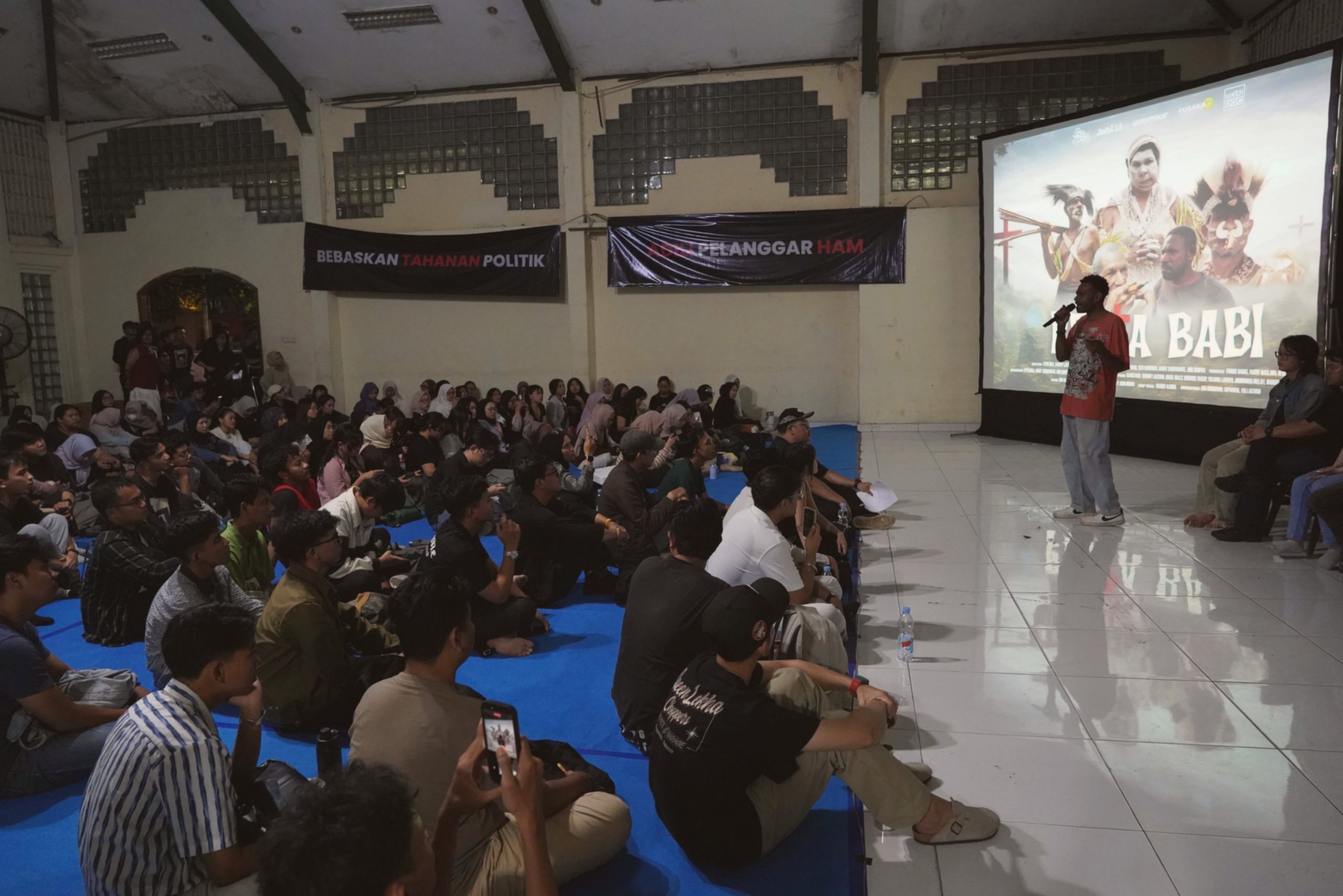

Over 100 participants, predominantly from Gen Z, gathered for a compelling screening of the documentary film Pesta Babi (Pig’s Feast) at the secretariat of the Indonesian Catholic Students Association in Menteng, Central Jakarta, on Saturday evening, May 23. The young audience showed significant enthusiasm for the film, which boldly addresses critical issues surrounding extensive development projects unfolding in South Papua.
The Pesta Babi documentary, a powerful collaboration by filmmakers Dandhy Laksono and Cypri Dale, runs for approximately 95 minutes (1 hour 35 minutes). It meticulously chronicles the alarming conversion of customary forests into vast tracts for bioethanol and large-scale food security initiatives. This visual narrative casts a stark light on the environmental and social ramifications of such ambitious undertakings.
Simultaneously, the film highlights the profound struggles faced by indigenous communities, including the Marind, Awyu, Yei, and Muyu tribes. These communities are depicted as progressively losing their ancestral lands and traditional living spaces, feeling increasingly marginalized and displaced by the relentless expansion of industrial-scale sugarcane, palm oil, and food estate projects. Their deep connection to the land, fundamental to their cultural identity and survival, is being irrevocably severed.
Beyond the film screening, the event featured a vibrant discussion panel. Content creator Virdinda, serving as one of the key respondents, articulated that Pesta Babi transcends mere visual storytelling. She emphasized it serves as a poignant testament to the systemic injustice wherein powerful entities appropriate the vital living spaces of the Papuan people, often under the guise of progress.
Read also:
- FTSE Delists DSSA, DAAZ, HILL, and MLIA Shares from Global Index, What’s the Reason?
- Foreign Net Sell Subsides as IHSG Drops 8.3% in a Week, BMRI, BBCA, and BUMI Bought Up
- State Budget Deficit Potentially Exceeds 3% of GDP if Government Ignores Fiscal Issues
“Eviction, in this context, is often rationalized, resistance branded as defiance, and indigenous communities are labeled as primitive groups who, by rejecting development, are perceived as having no future,” Virdinda passionately explained, encapsulating the dehumanizing rhetoric often employed against those defending their heritage.
Adding a deeply personal perspective, Jerry (24), a university student originally from Highland Papua, affirmed that the Pesta Babi documentary accurately mirrors the harsh realities currently unfolding in Papua. He voiced a fervent hope that the government would extend its focus beyond merely exploiting Papua’s rich natural wealth, urging them instead to prioritize and uplift the human resources and communities integral to the region’s fabric.
“Our customary forests are being forcibly taken without any prior confirmation or consultation,” Jerry revealed to Katadata.co.id, his words resonating with the widespread sentiment of dispossession among Papuan communities.
In a contrasting view, Coordinating Minister for Legal, Human Rights, Immigration, and Correctional Affairs, Yusril Ihza Mahendra, previously refuted claims that the National Strategic Projects (PSN) in South Papua constitute a form of modern colonialism. He underscored his stance by asserting that Papua remains an inseparable and integral part of Indonesia.
“Such land clearing initiatives also occur in Kalimantan and other islands, all of which are integral components of the Unitary State of the Republic of Indonesia,” Mahendra stated on Thursday, May 14, as quoted by Antara, framing the Papua development projects within a broader national development strategy.
Summary
A screening of the documentary film “Pesta Babi” (Pig’s Feast) attracted over 100 predominantly Gen Z participants at an event in Central Jakarta. The film, by Dandhy Laksono and Cypri Dale, meticulously chronicles the conversion of customary forests in South Papua for extensive bioethanol and large-scale food security initiatives. It highlights the profound struggles of indigenous communities like the Marind and Awyu, who are progressively losing ancestral lands to industrial-scale sugarcane, palm oil, and food estate projects, severing their deep connection to the land.
Following the screening, discussions featured content creator Virdinda, who described the film as a testament to systemic injustice where powerful entities appropriate Papuan living spaces. A Papuan student, Jerry, affirmed the documentary’s accuracy, expressing hope for government focus on human resources over natural wealth exploitation, citing forced land appropriations. Conversely, Coordinating Minister Yusril Ihza Mahendra previously refuted claims of modern colonialism regarding National Strategic Projects in South Papua, asserting that Papua remains an integral part of Indonesia with similar development occurring nationwide.