
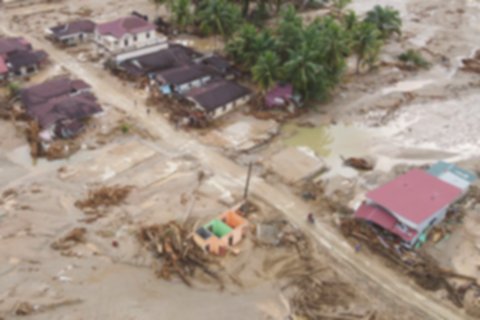

Minister of Home Affairs (Mendagri) Tito Karnavian is set to swiftly identify provinces requiring central government support to manage the widespread flood and landslide disasters currently devastating the Aceh-Sumatera region. This urgent move comes as several local administrations are struggling to cope with the immense challenges posed by the catastrophe.
Specifically highlighted as facing significant difficulties are the Regents of East Aceh, Iskandar Usman Al-Farlaky; South Aceh, Mirwan MS; and Central Aceh, Haili Yoga. Minister Karnavian emphasized the government’s comprehensive approach, stating during a recent address at the Ministry of Home Affairs in Central Jakarta, “We will certainly collect data from affected provinces and various local administrations, including regents and mayors, to determine which situations can be managed independently, which require provincial backup, and which necessitate direct intervention and support from the central government.”
Karnavian elaborated that the immediate disaster management efforts in Sumatera are currently focused on the critical emergency phase. The paramount initial step, he explained, is to ensure the most effective and optimal evacuation process for victims caught in the floods and landslides.
He further detailed the ongoing efforts, noting, “The first step involves effectively evacuating victims, as some are still buried, and extending vital assistance to all affected individuals, including those whose homes are inundated and those seeking refuge in temporary shelters.”

Following the crucial evacuation phase, the government will pivot its focus towards the essential task of repairing foundational infrastructure severely damaged by the disaster. This includes the parallel reconstruction of critical bridges, roads affected by landslides, and other vital access routes, all indispensable for the region’s recovery.
The subsequent stage, according to Minister Karnavian, will be dedicated to the comprehensive recovery of housing for displaced residents. He clarified the phased approach: “Some community homes can be repaired, while others that are beyond repair must be relocated to temporary shelters, before eventually transitioning to permanent housing solutions.”
Karnavian also confirmed that once the basic needs of the affected population are met, the revitalization of public facilities such as government buildings and sports arenas will become a key priority. He added, “Concurrently, other important public facilities, guided by a clear set of priorities, will be addressed. Office buildings, for instance, and sports complexes are included in the subsequent priorities for reconstruction.”
Addressing the critical issue of financial resources, Minister Karnavian stated that if government funds prove insufficient for the extensive recovery operations, an alternative option involves leveraging Corporate Social Responsibility (CSR) funds from both private companies and state-owned enterprises (BUMNs).
He concluded, “Should the fiscal capacity be inadequate and no other avenues are available, we will certainly propose to the central government to utilize CSR funds to facilitate the necessary reconstruction and renovation efforts.”
Summary
Minister of Home Affairs Tito Karnavian will identify provinces in the Aceh-Sumatera region requiring central government support to manage widespread flood and landslide disasters, specifically highlighting East Aceh, South Aceh, and Central Aceh as struggling. The government will collect data to determine the level of assistance needed, focusing immediate disaster management on the critical emergency phase. This initial stage prioritizes the effective evacuation of victims caught in the floods and landslides.
Following the crucial evacuation, the government will repair damaged infrastructure, including bridges and roads, and address housing recovery for displaced residents, ranging from repairs to temporary and permanent solutions. Public facilities like government buildings and sports complexes will then be revitalized. If government funds prove insufficient for these extensive recovery operations, Corporate Social Responsibility (CSR) funds from private and state-owned enterprises will be leveraged.