
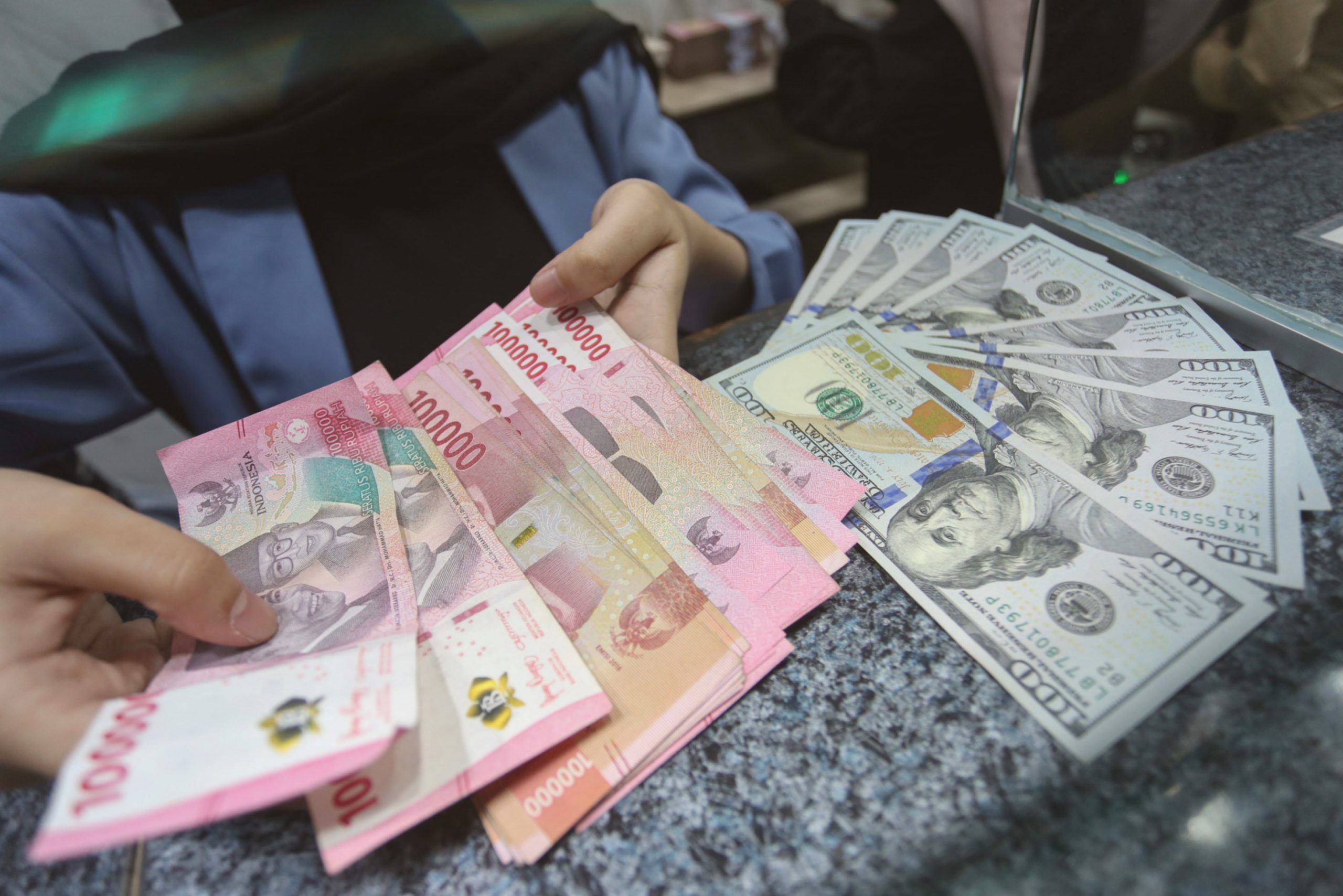

Bank Indonesia (BI) maintains a firm belief that the rupiah is poised for a rebound, targeting an exchange rate of Rp 16,500 per US dollar by the end of this year. Despite the current downward pressure exerted by global economic headwinds and a seasonal surge in foreign currency demand, policymakers remain optimistic about the national currency’s recovery trajectory.
Ramdan Denny Prakoso, Executive Director of the Communication Department at Bank Indonesia, stated that the central bank is deploying its full range of policy instruments to safeguard the rupiah’s stability. He noted that the prevailing pressure is largely driven by a seasonal peak in demand for US dollars between April and June, which historically puts strain on the exchange rate.
“After we pass through the peak demand season for the dollar—specifically April, May, and June—the rupiah has significant potential to strengthen,” Ramdan explained following a meeting with Commission XI of the House of Representatives on Monday (May 18).
BI projects that the average exchange rate for 2026 will settle at Rp 16,500 per US dollar, fluctuating within a range of Rp 16,200 to Rp 16,800. To achieve this, the central bank continues to implement seven strategic measures designed to bolster the currency while closely monitoring highly uncertain global developments.
External challenges remain substantial, fueled by rising global oil prices due to tensions in the Strait of Hormuz and a spike in US Treasury yields, which currently hover between 4.6% and 4.7%. According to Ramdan, this environment has created widespread pressure on currencies across most emerging markets. “As of May, we are seeing many countries experiencing currency depreciation against the US dollar,” he added.
Echoing this sentiment, Bank Indonesia Governor Perry Warjiyo emphasized that the rupiah is currently undervalued relative to its economic fundamentals. He maintained that the central bank’s target of Rp 16,500 is firmly rooted in national economic assumptions that remain aligned with broader macroeconomic projections.
Perry identified specific seasonal triggers for the current weakness, including increased foreign exchange needs for the Hajj and Umrah pilgrimages, corporate dividend distributions, and the repayment of foreign debt. Historically, these seasonal pressures begin to subside after June, providing a window for the rupiah to regain strength in July and August.
Reflecting on his extensive experience managing financial crises—including the 1997-1998 Asian financial crisis, the 2008 global crisis, the “taper tantrum,” and the COVID-19 pandemic—Perry noted that exchange rate volatility often follows a predictable cycle. “I have lived through crisis after crisis. My experience suggests that these pressures typically ease by July and August, allowing the currency to recover,” he said.
While acknowledging that factors such as geopolitical instability in the Middle East, a strong US dollar, and rising energy costs have impacted emerging markets, Perry clarified that these challenges are global in scope. “This is not just happening in Indonesia; it is a global phenomenon that nearly every nation is currently facing,” he concluded.
Summary
Bank Indonesia remains optimistic that the rupiah will recover to a target of Rp 16,500 per US dollar by the end of the year. While the currency currently faces downward pressure due to seasonal demand and global economic challenges, such as rising oil prices and high US Treasury yields, officials believe this volatility is temporary. The central bank expects these seasonal factors to subside after June, allowing the rupiah to regain strength in the second half of the year.
Governor Perry Warjiyo emphasizes that the rupiah is currently undervalued relative to Indonesia’s strong economic fundamentals. Bank Indonesia is actively utilizing its policy instruments to maintain stability while monitoring external geopolitical and financial risks. Drawing on historical crisis management, the central bank maintains that the current depreciation is a global phenomenon affecting most emerging markets and remains confident in its long-term projections.