

Flooring Guide by Cinvex — JAKARTA — Bank Indonesia (BI) remains confident in its ability to steer the rupiah back to its annual average target of Rp16,500 per US dollar, anticipating a range between Rp16,200 and Rp16,800. The central bank projects that the local currency will begin to strengthen significantly by July–August 2026.
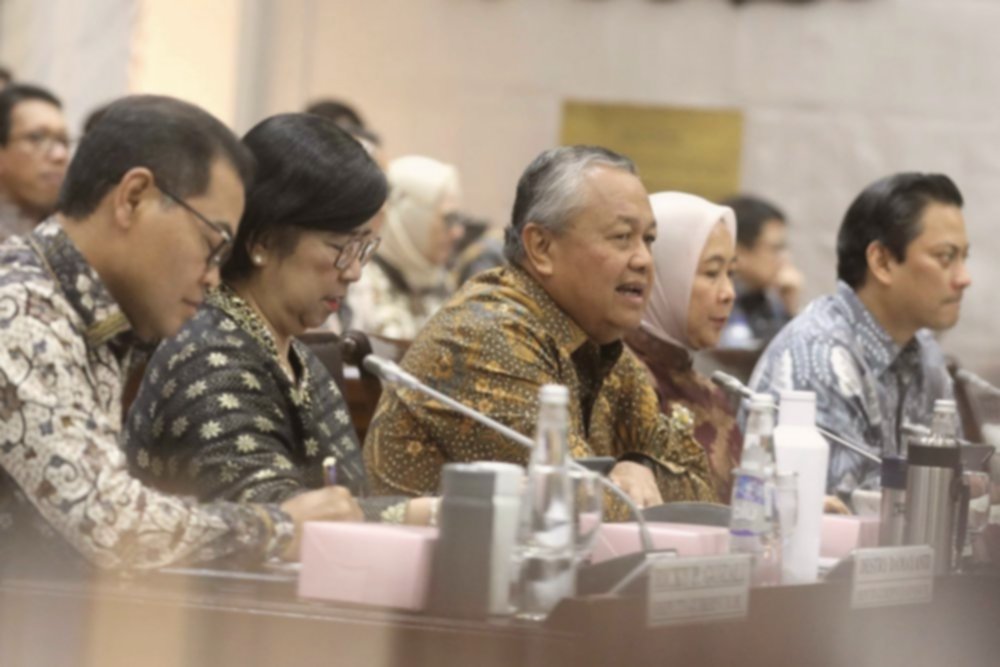
During a meeting with Commission XI of the House of Representatives on Monday (May 18, 2026), BI Governor Perry Warjiyo explained that the current exchange rate, which has surpassed the Rp17,600 mark, remains significantly undervalued compared to its fundamental value of Rp16,500—the baseline assumption used in the state budget (APBN). The state budget law sets a target range for the rupiah between Rp16,200 and Rp16,800 per US dollar.
The fundamental value of the currency is determined by key macroeconomic indicators, including inflation rates and annual economic growth. Notably, Indonesia’s economy demonstrated resilience with a 5.61% year-on-year growth rate in the first quarter of 2026.
Related: JCI and Rupiah Decline, BI Predicted to Hike Interest Rates
Regarding the current market volatility, Perry stated, “Since the macroeconomic target averages Rp16,500 with a ceiling of Rp16,800, we are capable of guiding the currency back to that range. Seasonal factors—specifically high demand for the dollar during April, May, and June—are currently at play. We expect the rupiah to strengthen in July and August, keeping us on track for our overall annual target,” he told the House members at the Parliament Complex in Jakarta.
Governor Perry acknowledged that while the rupiah is currently trading at the Rp17,600 level, the year-to-date (YtD) average remains at approximately Rp16,900. He conceded that this average still sits slightly above the intended fundamental range.
Related: BI Forecasts Rupiah Strengthening by July-August
According to Bank Indonesia’s calculations, the current deviation in the exchange rate stands at 5.4%. For the central bank, this remains within a manageable level of stability. “Stability is not defined by a specific level, but by the magnitude of fluctuations. We monitor this using a 20-day rolling standard deviation,” Perry clarified.
Related: Rupiah Closes Weaker at Rp17,655 per US Dollar Amid Oil Price Volatility
Perry remains optimistic that the rupiah has the potential to return to its projected average of Rp16,200 to Rp16,800. This recovery is expected to gain momentum in July and August as seasonal pressures subside, such as the conclusion of the Hajj pilgrimage season, the completion of corporate dividend repatriations, and the fulfillment of foreign debt obligations.
Reflecting on historical patterns, Perry recalled the market reaction in February 2025, when US President Donald Trump first announced reciprocal import tariffs. Despite the initial pressure on the rupiah, the currency successfully rebounded following that period of uncertainty.
Looking at the current landscape, the 2026 military conflict between the US, Israel, and Iran in the Gulf region has heightened geopolitical risks. Consequently, there has been an uptick in credit default swaps (CDS), reflecting increased investor perception of sovereign debt risk. “These are global risks. I do not wish to deflect blame to external factors, but it is a challenge that every nation is currently facing,” the two-term BI Governor concluded.
Summary
Bank Indonesia remains optimistic that the rupiah will recover to its fundamental target of Rp16,500 per US dollar, despite current fluctuations exceeding Rp17,600. Governor Perry Warjiyo attributes the recent volatility to seasonal factors, including corporate dividend repatriations and high dollar demand, and expects a strengthening trend beginning in July and August 2026. This projection aligns with the annual baseline assumptions established in the state budget.
The central bank emphasizes that current exchange rate pressures are largely influenced by global geopolitical risks and market uncertainties rather than internal economic weakness, noting that Indonesia’s economy remains resilient with a 5.61% growth rate. BI continues to monitor stability through rolling standard deviations rather than fixed levels, remaining confident that the currency will return to its target range as temporary seasonal pressures subside.