
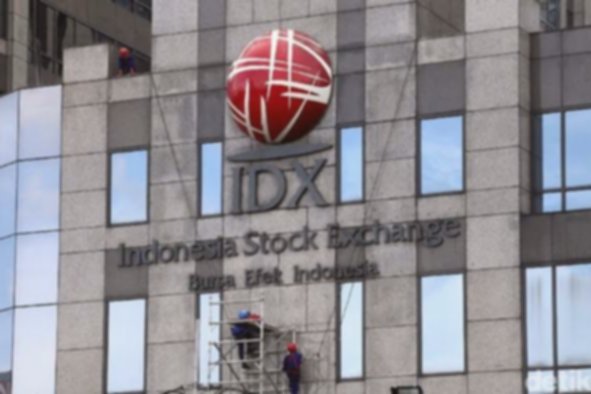

The Indonesia Stock Exchange (BEI) has made a pivotal decision to withhold the comprehensive data and specific shareholder identities of issuers featured on its High Shareholding Concentration (HSC) list. Instead of full disclosure, the exchange opts to publicize only the percentage of concentrated ownership without detailing the involved parties. This strategic choice raises a pertinent question: what is the underlying rationale?
Jeffrey Hendrik, the Interim President Director of BEI, shed light on this policy, explaining that the methodology for compiling the HSC list mirrors practices adopted by the Hong Kong Stock Exchange, which similarly refrains from revealing such granular details to the public. This approach, he asserted, is vital for maintaining regulatory objectivity.
“Indeed, this is crucial for us as regulators to ensure our work remains objective. If the entire methodology were to be disclosed to the public, there would undoubtedly be attempts by certain parties to manipulate their conditions to align with the methodology. This is precisely what we aim to prevent,” Jeffrey stated during an interview at the BEI Building on Monday, April 6.
Jeffrey underscored BEI’s steadfast commitment to ensuring that all its policies are firmly rooted in fair and orderly market mechanisms. This commitment guarantees that every measure undertaken by the exchange is fully accountable and transparent in its process, even if specific data remains private.
Despite the non-disclosure of individual shareholder data, Jeffrey assured that the methodology employed by the BEI is robust and verifiable. He further highlighted that the Financial Services Authority (OJK) holds the explicit authority to oversee and audit the processes implemented by the BEI, providing an additional layer of accountability.
He also emphasized a critical distinction: the inclusion of a stock on the HSC list does not inherently signify a violation, nor does it automatically necessitate sanctions against the respective company. This classification serves a different, more informative purpose.
“The announcement of high shareholding concentration does not imply any wrongdoing. It serves purely as information for investors, indicating that a certain group or number of shareholders holds a concentrated stake in that particular stock,” he clarified.
Jeffrey, who previously served as the BEI Development Director, further elaborated that a stock categorized under HSC might still have a substantial portion of its shares classified as free float. This occurs when the total number of shareholders is relatively limited, leading to a situation where ownership becomes centralized among a specific group, even if a significant percentage is publicly available.
Through the publication of the HSC list, Jeffrey expressed hope that listed companies would proactively take steps to improve the distribution of their shares to the broader public, thereby mitigating high concentration. Should a company’s ownership structure undergo such a change and be reported to the BEI, the exchange is committed to conducting a thorough re-evaluation.
“Once those steps are taken and communicated to us, we will conduct a re-screening, and if the concentration is indeed no longer an issue, we will issue an announcement,” Jeffrey confirmed.
According to the HSC data as of March 31, 2026, and publicly released on Thursday, April 2, nine stocks were identified as having high concentration. The list is as follows:
- PT Rockfields Properti Indonesia (ROCK), where a specific group of shareholders collectively controls 99.85% of all outstanding shares. The ultimate beneficiary owners (UBO) of ROCK are Po Sun Kok and Luciana. The free float of ROCK shares is recorded at 20%.
- PT Ifishdeco Tbk (IFSH), owned by a certain group of shareholders who collectively command 99.77% of all outstanding shares. The UBOs of IFSH are Fanni Susilo and Oei Harry Fong Jaya. The free float of IFSH shares stands at 10.06%.
- PT Satria Mega Kencana Tbk (SOTS), whose shares are held by a select group of shareholders collectively owning 98.35% of all outstanding shares. The free float of SOTS shares is recorded at 25.01%.
- PT Samator Indo Gas Tbk (AGII), with a specific group of shareholders collectively holding 97.75% of all outstanding shares. The UBOs of AGII are Heyzer Harsono, Rasid Harsono, and Rachmat Harsono. The free float of AGII shares is 7.55%.
- PT Barito Renewables Energy Tbk (BREN), where a designated group of shareholders collectively controls 97.31% of all outstanding shares. The UBO of BREN is Prajogo Pangestu. The free float of BREN shares is 12.30%.
- PT Panca Anugrah Wisesa Tbk (MGLV), owned by a particular set of shareholders collectively holding 95.94% of all outstanding shares. The UBOs of MGLV are Glenn T Sugita, Suriyanto, and Sugito Walujo. The free float of MGLV shares is 21.26%.
- PT Dian Swastatika Sentosa Tbk (DSSA), whose shares are controlled by a specific group of shareholders collectively holding 95.76% of all outstanding shares. The UBO of DSSA is Franky Oesman Widjaja. The free float of DSSA shares is 20.41%.
- PT Lima Dua Lima Tiga Tbk (LUCY), with a certain group of shareholders collectively possessing 95.47% of all outstanding shares. The UBO of LUCY is Dimas Wibobo. The free float of LUCY shares is 38.94%.
- PT Abadi Lestari Indonesia Tbk (RLCO), owned by a defined group of shareholders who collectively hold 95.35% of all outstanding shares. The UBO of RLCO is Edwin Pranata. The free float of RLCO shares is 20.04%.