
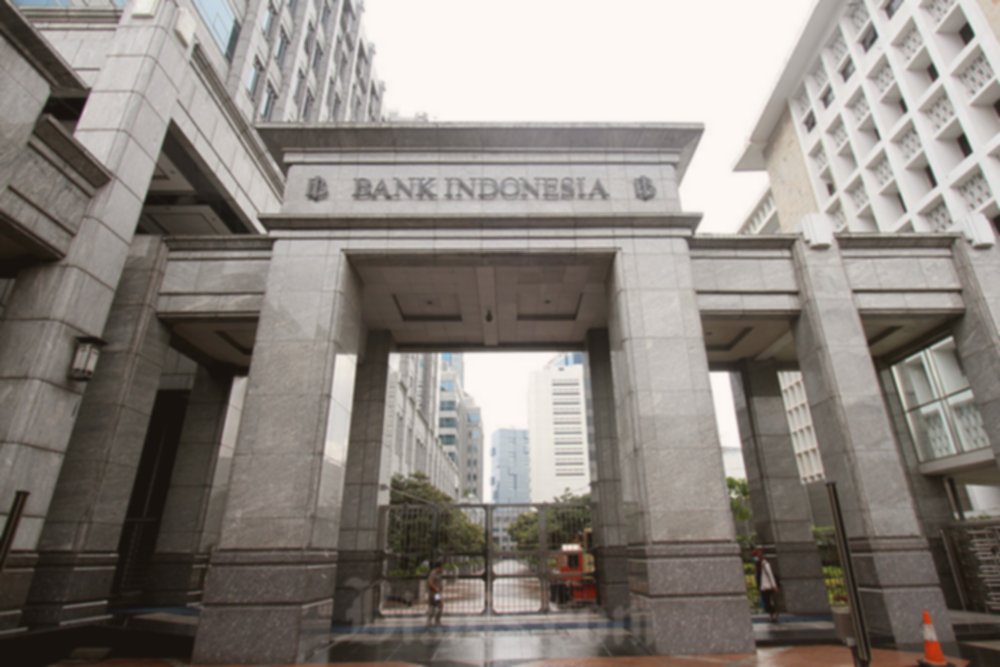
Flooring Guide by Cinvex – JAKARTA — As Bank Indonesia (BI) convenes for its Board of Governors Meeting (RDG) on May 19—20, 2026, economists are signaling a potential shift in monetary policy. With the rupiah facing persistent downward pressure, experts suggest the central bank may be forced to tighten its benchmark interest rate to stabilize the currency.
Market consensus indicates that the window for maintaining the current BI Rate at 4.75% is rapidly closing. Many analysts now anticipate a rate hike of 25 to 50 basis points (bps) to address the growing economic volatility.
Josua Pardede, Chief Economist at PT Bank Permata Tbk. (BNLI), advocates for a 25 bps increase to 5.00%. While he acknowledges that BI still has some flexibility to hold rates, he believes that mounting market pressure necessitates a rate hike to restore confidence in the rupiah.
“The sharp depreciation of the rupiah, which hit Rp17,666 per US dollar on May 18, 2026, combined with 10-year Government Securities (SBN) yields climbing to 6.82%—6.86%, indicates that stress is spreading from the currency market to the bond and equity markets,” Pardede explained. He warned that without a clear and decisive policy signal, BI risks appearing reactive, which could trigger further currency depreciation.
External factors are intensifying the need for tighter monetary policy. The strengthening of the US dollar—driven by rising global oil prices and elevated US Treasury yields—is heightening the risks of imported inflation and a bloated fiscal deficit stemming from energy subsidies. Pardede clarified that a measured rate hike is not intended to aggressively stifle economic growth, especially since first-quarter 2026 performance remains robust. Instead, it should be viewed as a necessary cost to stabilize the economy and protect business margins against rising import costs.
Teuku Riefky, a macroeconomist at LPEM FEB UI, echoed this sentiment, predicting a 25 bps hike to 5.00%. Although headline inflation has moderated to 2.42% year-on-year in April 2026—thanks largely to the government’s decision to maintain subsidized fuel prices—Riefky noted that the sheer scale of external pressure is undeniable. BI has already utilized over US$10 billion in foreign exchange reserves over the last four months to stabilize the currency, and he believes an interest rate hike is now the logical next step.
Taking a more aggressive stance, Fakhrul Fulvian, Chief Economist at Trimegah Sekuritas Indonesia, recommends a 50 bps increase. He argues for a pre-emptive, front-loading, and ahead-of-the-curve approach to policy. Fulvian contends that the current issue is fundamental: the credibility of macroeconomic policy. Without clear adjustments regarding energy pricing and fiscal calibration, he warns of a potential Dornbusch overshooting phenomenon, which would place the entire burden of adjustment on the exchange rate.
“The central bank is not just managing inflation; it is defending the policy anchor itself,” said Fulvian. He suggests that if this move is implemented, the rupiah could strengthen back toward the Rp16,800 per US dollar level. Furthermore, he urges the government to enhance fiscal communication and explore non-dollar financing instruments, such as Renminbi-denominated funding and Dim Sum Bonds, to reduce the reliance on domestic stabilization efforts.
Despite the growing calls for tightening, some remain cautious. David Sumual, Chief Economist at PT Bank Central Asia Tbk. (BBCA), expects the central bank to maintain the rate at 5.75%, noting that headline inflation remains well-contained. “Inflation is currently within BI’s target range of 2.5% plus-minus 1%, assuming there are no sudden hikes in subsidized fuel or Pertamax prices,” Sumual noted. As the meeting progresses, all eyes remain on Bank Indonesia to see whether it will prioritize growth or pivot to aggressive stabilization.
Summary
Economists anticipate that Bank Indonesia may implement a monetary tightening policy during its May 2026 meeting to address significant currency depreciation and market volatility. Experts like Josua Pardede and Teuku Riefky advocate for a 25 basis point hike to 5.00% to restore confidence in the rupiah, while others argue for a more aggressive 50 basis point increase to defend macroeconomic credibility against external pressures. These measures are viewed as necessary steps to mitigate imported inflation and stabilize the economy amid rising global oil prices and strong demand for the US dollar.
Despite the push for higher rates, some analysts maintain a cautious outlook, citing that headline inflation remains within the central bank’s target range. There is ongoing debate regarding whether the focus should remain on domestic growth or shift toward stabilizing the exchange rate to prevent further fiscal stress. As the Board of Governors deliberates, the market is closely watching for a decisive policy signal to determine the future trajectory of Indonesia’s economic stability.