
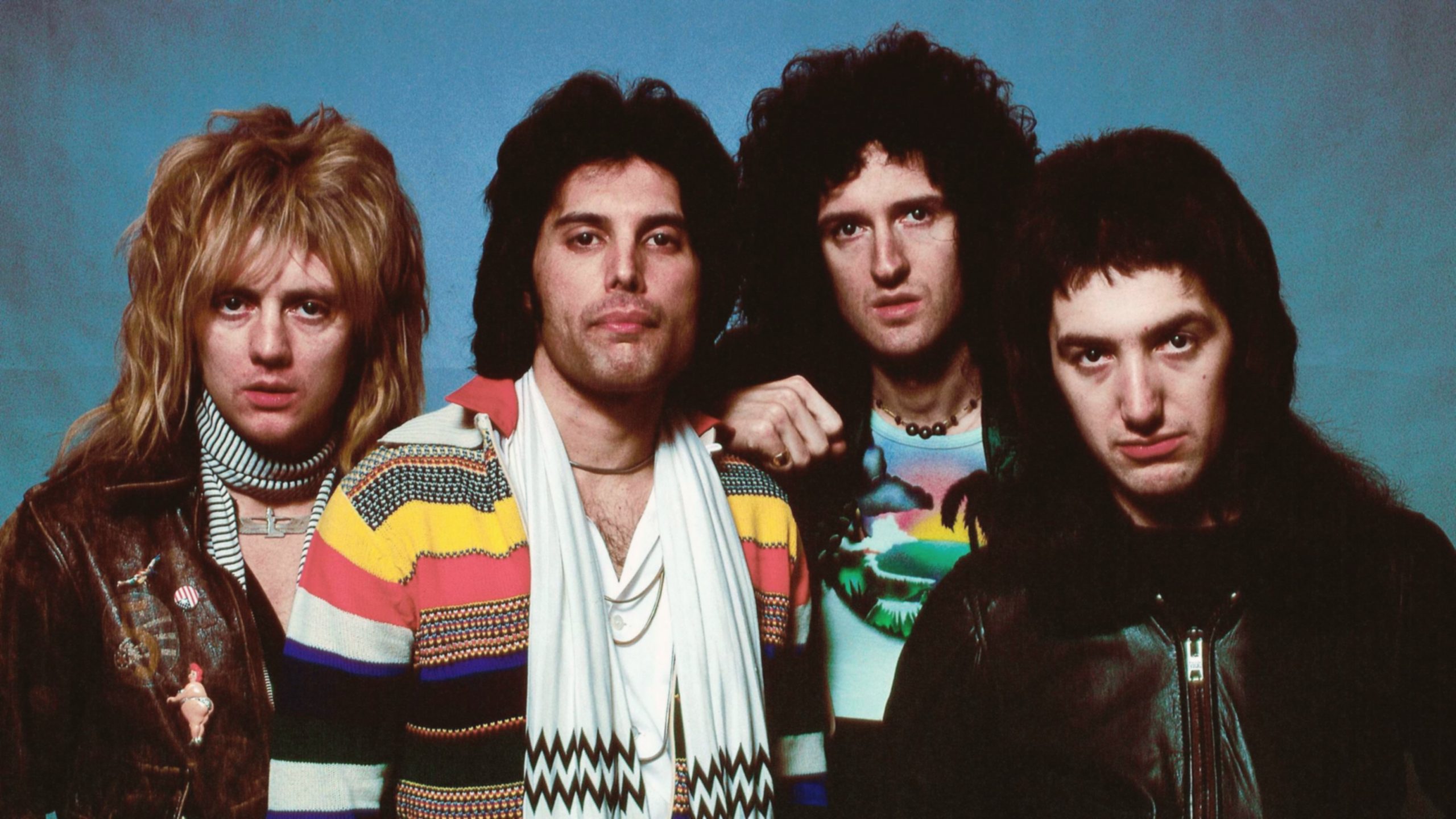

A unique blend of ballad, opera, and rock, all encapsulated in under six minutes. That is Bohemian Rhapsody.
The iconic track by British band Queen celebrated its 50th anniversary on October 31st. But how was this masterpiece created, and what made it such a groundbreaking hit that continues to captivate audiences half a century later?
A Vision Born in Freddie Mercury’s Mind
Released as part of the 1975 album A Night at the Opera, Bohemian Rhapsody, with its unprecedented five-minute, 55-second runtime and its daring operatic interlude, shattered the conventional norms and rules of the music industry at the time. Upon its release, the song soared to the number one spot on the UK music charts, holding its reign for an impressive nine weeks.

Much of this legendary song was meticulously crafted by Freddie Mercury in his London home. John Reid, Queen’s manager between 1975 and 1978, vividly recalled a visit: “Freddie invited me to his apartment on Holland Street [Kensington], and as I walked in, the first thing that struck me was that he was listening to Liza Minnelli’s Cabaret album, which was so out of character for a rock group.”
Reid further shared his insights in the 2004 BBC documentary, The Story of Bohemian Rhapsody: “In his room, there was a piano with candles on it, positioned at the foot of his bed. So, whenever Freddie woke up and felt like playing, he only needed to reach out. I believe that’s how Bohemian Rhapsody began, by playing it backward.”

The recording sessions for this ambitious track took place at Rockfield Studios in Wales in August 1975. Roger Taylor, Queen’s drummer, recounted the challenging process: “We had to be incredibly patient while recording it because the song had so many pauses. It was quite confusing at times.” Guitarist Brian May added, underscoring Mercury’s genius: “Everything was already in Freddie’s head before we even began.”
The Harmonious Voices of Queen
The distinct voices of Brian May, Freddie Mercury, and Roger Taylor are prominently featured in Bohemian Rhapsody, particularly shining through in its iconic operatic sections. The musicians dedicated an intense three weeks to recording the song, practicing their vocal parts relentlessly for 10 to 12 hours a day.

“We were truly enthusiastic to see how far we could push the boundaries. We were lucky. We managed to create excellent harmony in our vocals,” Taylor explained to the BBC. He elaborated on their unique vocal blend: “Brian had a low voice, Freddie possessed an incredible and boundless range, and I could sing well in the high register.” While the vocal trio was essential, John Deacon, Queen’s bassist, opted not to sing.
Despite the high expectations within the group, the intricate recording and mixing process was not always smooth sailing. “There were times when it wasn’t easy,” revealed the band’s producer, Roy Thomas Baker. He painted a picture of Mercury’s meticulous, albeit chaotic, methodology: “Freddie had papers everywhere, drawings, and little ‘Galileos,’ all in pencil and paper. It looked like a puzzle, but it was more organized than it appeared.”
A Risky Gambit: The “Savior Song”

Once the album was complete, the band faced a crucial decision: selecting a single to promote it. With its nearly six-minute runtime, Bohemian Rhapsody was undeniably a high-stakes choice. Manager John Reid sought opinions from various acquaintances, including British musician Elton John, who famously remarked, “They’re mad,” upon hearing it.
Despite considerable skepticism and criticism, Queen ultimately chose Bohemian Rhapsody, and the track began its rotation on radio waves. Brian May reflected on the song’s significance to the band in a 2004 BBC interview: “We had to make an album that would save us. I still enjoy listening to the entire album because that’s how we designed it, and Bohemian Rhapsody was the jewel in that crown.”
Groundbreaking Music Video and Instant Global Stardom
A practical challenge emerged: performing Bohemian Rhapsody live was incredibly complex. The solution? A revolutionary music video. It took only four hours to film. By November 1975, the video was airing, marking an unprecedented moment in music history and setting a new standard for visual promotion.
Slash, the guitarist for American band Guns N’ Roses, commented on its unique impact: “When I saw that video, everything felt so strange. But on the other hand, it felt like, ‘There’s a Queen video for everything!'” The video propelled Queen and Freddie Mercury into household names, bringing instant global fame.
Freddie Mercury’s mother, Jer Bulsara, fondly recalled the song’s immediate success: “I remember going to the record store and there were Queen albums everywhere. I picked one up and was so happy and excited to buy something from my son that was number one.” However, with a poignant note, she added in 2004: “When I listen to the song now, it hurts.”
Dethroned by ABBA, But Never Forgotten

Upon its initial release, many music critics famously declared Bohemian Rhapsody unworthy of purchase. Interestingly, the song did not achieve the same level of widespread popularity in the United States as it did in the UK and other European nations. The track that ultimately unseated Bohemian Rhapsody from the top of the European charts was none other than “Mamma Mia” by the Swedish group ABBA.
Bjorn Ulvaeus, an ABBA member, humorously remarked on the coincidence: “We never expected that we would overthrow Queen from the top spot, and the fact that the words ‘mamma mia’ are also in Bohemian Rhapsody was just a mere coincidence.”
An Enduring Legacy That Transcends Generations

In 1992, a year after Freddie Mercury’s passing, the remaining band members re-released Bohemian Rhapsody. Predictably, the iconic track once again soared to the top of the charts. Brian May, never surprised by its enduring appeal, commented to the BBC, “I’m not surprised. It’s a great song; I’m sure it will get another chance in the coming years.”
The song’s cultural impact continued to grow, featuring prominently in the 1992 American film Wayne’s World, which gave it a massive boost, and later in the stage musical We Will Rock You, which premiered in 2002 and enjoyed successful runs across Europe, North America, and Africa. Its enduring story and creation were finally brought to the big screen with the release of the biographical film Bohemian Rhapsody in October 2018, further cementing its place as a timeless masterpiece in music history.


Summary
Released in 1975, Queen’s “Bohemian Rhapsody” is an iconic blend of ballad, opera, and rock, which celebrated its 50th anniversary. Largely conceived by Freddie Mercury, its nearly six-minute runtime and daring operatic interlude defied industry norms. This groundbreaking track topped UK charts for nine weeks, and its revolutionary four-hour music video instantly propelled Queen to global stardom.
Despite initial skepticism, “Bohemian Rhapsody” became a “savior song” for Queen, enduring past its initial chart success. Re-released in 1992 after Freddie Mercury’s passing, it again soared to the top of the charts. Its cultural impact grew through features in *Wayne’s World*, the *We Will Rock You* musical, and the 2018 biographical film, solidifying its place as a timeless masterpiece across generations.