
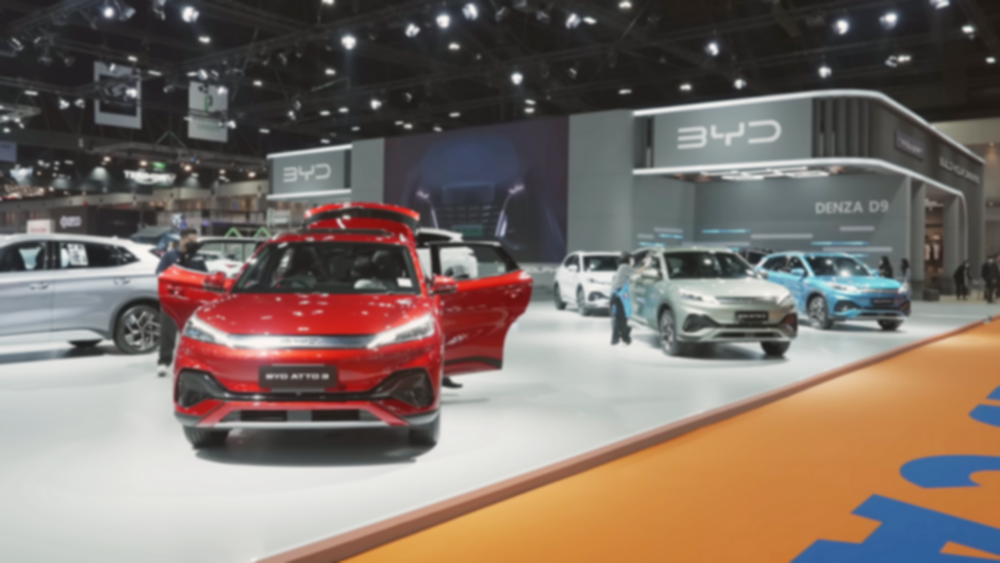
Jakarta, IDN Times – Shares of Chinese electric vehicle (EV) giant BYD plunged by as much as 8 percent on Monday, September 1, 2025. This significant drop followed a disappointing profit report, which analysts attribute to the increasingly brutal price war gripping China’s automotive industry. The stock decline occurred despite BYD reporting a robust 14 percent increase in revenue, reaching approximately 201 billion yuan (equivalent to IDR 462 trillion), primarily fueled by strong international sales.
The financial report, released on Friday, August 29, 2025, revealed that BYD’s net profit for the April-June quarter reached only 6.36 billion yuan (IDR 14.6 trillion), marking a substantial 30 percent decline compared to the previous year. This stark figure underscores the immense pressure faced by even China’s foremost electric vehicle manufacturer. Professor Laura Wu of Nanyang Technological University observed that this trend reflects growing investor anxiety. “This morning’s share price drop signals investor disappointment,” she stated, as quoted by BBC.
Professor Wu further highlighted the significant challenges governments face in curbing the ongoing price war, primarily due to the excessive number of EV manufacturers, which could lead to an oversaturated market in the future.
1. Extreme Price Competition Disrupts China’s EV Market 
Shenzhen-based BYD has publicly highlighted the fierce price competition and what it deems problematic industry practices, including excessive promotions and extreme discounts. These tactics have increasingly destabilized China’s electric vehicle market. Major players, including BYD, NIO, XPeng, and even American giant Tesla, are all actively engaged in slashing prices to capture a larger share of consumers.
According to CNBC, the average price of a car in China has plummeted by 19 percent over the past two years, settling at approximately 165,000 yuan (IDR 379 million). Chinese regulators had issued a warning in May 2025 regarding unfair practices, such as aggressive discounting and delayed payments to suppliers. This regulatory scrutiny has inadvertently disrupted BYD’s long-standing strategy of leveraging its robust supply chain to maintain lower prices and competitive advantage.
2. BYD’s Global Expansion Fuels Revenue Growth 
Despite the dip in quarterly profit, BYD‘s performance in the first half of 2025 remained remarkably strong. The company’s revenue surged by 23 percent to 371.3 billion yuan (IDR 853 trillion), with net profit climbing nearly 14 percent to 15.5 billion yuan (IDR 35.6 trillion). This significant growth was primarily propelled by record-breaking sales of its new energy vehicles.
BYD has set an ambitious target to sell 5.5 million cars throughout 2025. However, as of the end of July, only 2.49 million units had been sold. A substantial portion of this growth stems from international markets, where BYD‘s revenue soared by 50 percent compared to the previous year.
In Europe alone, over 13,000 new BYD vehicles were registered in July 2025, marking an astounding 225 percent increase from the same period last year. To meet this escalating demand, the company is actively opening showrooms in various European cities and introducing competitively priced products in emerging markets like Brazil and Mexico. This robust global expansion is further supported by a dedicated fleet of specialized cargo ships and plans for new manufacturing plants in Brazil, Hungary, and Turkey.
3. Analysts Divided on BYD’s Future Prospects 
Several analysts now contend that BYD‘s aggressive price-cutting strategy is losing its effectiveness, largely due to increasing regulatory restrictions.
“In short, BYD‘s ‘luck train’—driven by scale, cost cuts, and technological leadership—has lost its speed. Until its momentum returns, underperformance is likely to persist,” stated an analyst from Jefferies, as quoted by Business Insider. This perspective reflects broader investor concerns that short-term profits will continue to face significant pressure.
However, other analyses present a more optimistic outlook. Judith MacKenzie of Downing Fund Managers believes that BYD‘s overall performance remains on a positive trajectory despite current headwinds.
“They’ve had such an incredibly fast run-up that it’s okay to have a little bit of a hiccup,” she told BBC. MacKenzie also underscored BYD‘s remarkable achievement of surpassing Tesla to become the world’s largest electric vehicle manufacturer by annual revenue in 2024. This milestone was largely propelled by robust demand for its hybrid vehicles across China, Asia, and Europe.
Summary
Shares of Chinese electric vehicle (EV) giant BYD plunged by as much as 8 percent following a disappointing second-quarter 2025 profit report, which saw net profit decline 30 percent year-over-year to 6.36 billion yuan despite a 14 percent revenue increase. This drop is primarily attributed to the intense price war gripping China’s EV market, characterized by extreme discounts and increased regulatory scrutiny. Major players, including BYD, NIO, XPeng, and Tesla, are actively slashing prices, causing investor anxiety and disrupting BYD’s strategy of leveraging its robust supply chain for competitive pricing.
Despite the dip in quarterly profit, BYD’s revenue for the first half of 2025 surged 23 percent, driven by record new energy vehicle sales and a remarkable 50 percent increase in international market revenue. The company is actively expanding globally, particularly in Europe, Brazil, and Mexico, supported by new showrooms and planned manufacturing plants. While some analysts are concerned about the long-term effectiveness of price-cutting strategies, others maintain an optimistic outlook, noting BYD’s overall strong performance and its achievement of surpassing Tesla as the world’s largest EV manufacturer by annual revenue in 2024.