
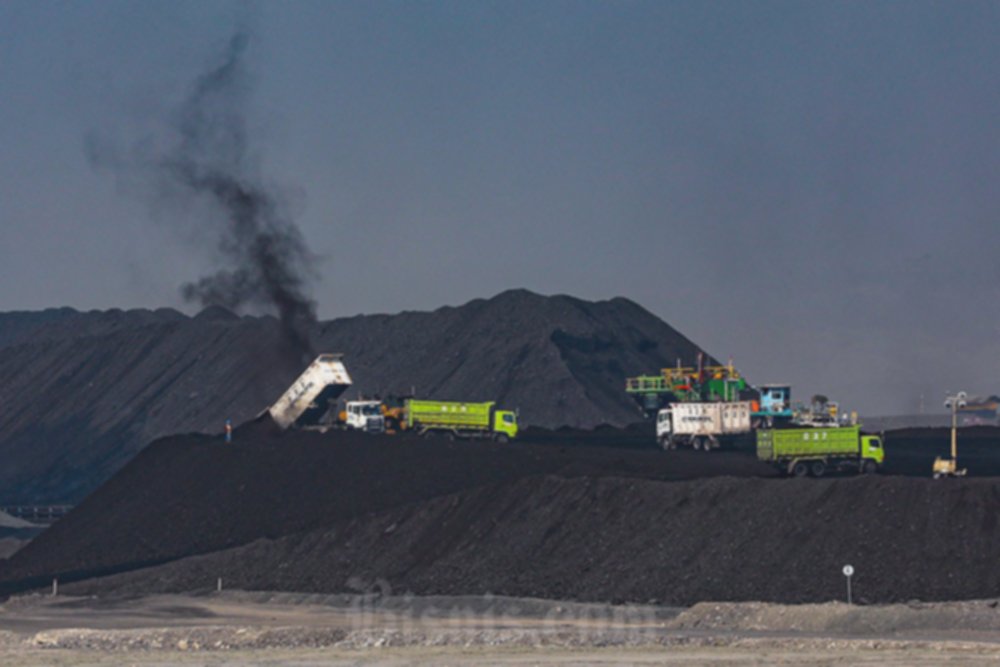

JAKARTA — The introduction of a centralized “single-gate” coal export policy, managed by PT Danantara Sumberdaya Indonesia (DSI), has triggered a significant market sell-off, putting downward pressure on the shares of major coal issuers listed on the Indonesia Stock Exchange (IDX).
Investors have reacted negatively to the mandate, citing heightened business uncertainty and fears that the new framework could squeeze profit margins for coal mining companies over the short to medium term. The policy, first unveiled by President Prabowo Subianto during the presentation of the 2027 Macroeconomic Framework and Fiscal Policy Principles (KEM-PPKF) at a House of Representatives plenary session on May 20, 2026, marks a major shift in the nation’s commodity trade landscape.
Under the phased implementation, exporters are required to transition their international contracts to a state-owned entity starting June 1, 2026. To facilitate this, the Danantara Investment Management Agency (BPI) has established a new subsidiary, PT Danantara Sumberdaya Indonesia (DSI). By September 1, 2026, DSI will become the exclusive entity authorized to sign direct contracts with foreign coal buyers.
Market Reaction and Stock Performance
The market responded swiftly to the announcement on May 20, 2026, as investors offloaded coal stocks. Shares of PT Bayan Resources Tbk. (BYAN) fell 2.18% to Rp11,200, while PT Alamtri Resources Indonesia Tbk. (ADRO) dropped 4.29% to Rp2,230. Other notable decliners included PT Adaro Andalan Indonesia Tbk. (AADI), which slipped 0.91% to Rp8,125.
Selling pressure intensified elsewhere, with PT Bumi Resources Tbk. (BUMI) plummeting 6.99% to Rp173, PT Indika Energy Tbk. (INDY) weakening by 6.15% to Rp2,290, and PT Harum Energy Tbk. (HRUM) falling 5.16% to Rp735.
Analyst Perspectives on Operational Risks
Abida Massi Armand, an analyst at BRI Danareksa Sekuritas, noted that the initial negative market sentiment stems from regulatory ambiguity. “The uncertainty creates a risk premium that weighs on stock valuations, particularly for companies with high exposure to exports,” she explained. According to Armand, there are three primary risks: potential pressure on the Average Selling Price (ASP) due to a loss of direct negotiation flexibility, currency exchange rate risks if transactions are settled in Rupiah rather than the standard US Dollar, and additional trade costs under the Danantara scheme that could erode already slim margins.
However, Armand also acknowledged potential long-term benefits, such as access to new markets via Danantara’s global network and greater price stability resulting from reduced domestic competition. She advises investors to focus on low-cost producers and maintain a “wait and see” approach for companies with tight margins until further technical regulations are clarified.
Strategic Outlook for Investors
Muhammad Wafi, Head of Research at KISI Sekuritas, echoed these concerns regarding the lack of clarity. “The trade mechanism inherently introduces uncertainty, which is acting as a negative sentiment driver for the market,” Wafi remarked. He recommends that investors prioritize issuers with low production costs, diversified non-coal business interests, and robust balance sheets.
For those looking to navigate this volatility, Wafi suggests a selective accumulation strategy rather than aggressive buying. He identifies ITMG and ADRO as relatively defensive plays due to their asset quality and operational flexibility, while cautioning that companies heavily reliant on spot market exports may face higher price volatility.
Looking beyond the immediate turbulence, Wafi believes the single-gate policy could ultimately strengthen Indonesia’s bargaining power in the global market, curb destructive price wars among domestic exporters, and improve overall trade governance if the integrated marketing network is executed effectively.
Disclaimer: This news article is not intended as a solicitation to buy or sell shares. Investment decisions remain the sole responsibility of the reader. Bisnis.com is not liable for any losses or gains arising from investment decisions made based on this information.
Summary
The introduction of a centralized “single-gate” coal export policy by PT Danantara Sumberdaya Indonesia (DSI) has triggered a significant sell-off in shares of major coal issuers on the Indonesia Stock Exchange. Unveiled on May 20, 2026, the policy mandates that exporters transition international contracts to a state-owned entity, with DSI becoming the exclusive direct contractor for foreign buyers by September 1, 2026. Investors reacted negatively due to heightened business uncertainty and fears of squeezed profit margins for mining companies.
Following the announcement, shares of companies like Bayan Resources (BYAN) and Alamtri Resources Indonesia (ADRO) experienced sharp declines. Analysts attribute this market response to regulatory ambiguity, potential pressure on Average Selling Prices, and new trade costs, although long-term benefits such as stronger market bargaining power are acknowledged. Experts recommend a cautious approach, advising investors to prioritize low-cost producers and diversified companies until further policy clarity emerges.