

Wati, portrayed by actress Claresta Taufan, winces in agony as her abdomen is massaged repeatedly, a desperate attempt to conceive a child. Meanwhile, her husband consistently rages whenever asked to undergo a fertility check-up with a doctor.
In a parallel universe, Claresta transforms into Sartika, a single mother compelled to work in a “kopi pangku” (lap-coffee shop) to support her child, navigating a complex web of daily challenges.
These compelling narratives, featuring two women brought to life by Claresta, are showcased in the films The Period of Her and Pangku, both of which premiered in 2025.
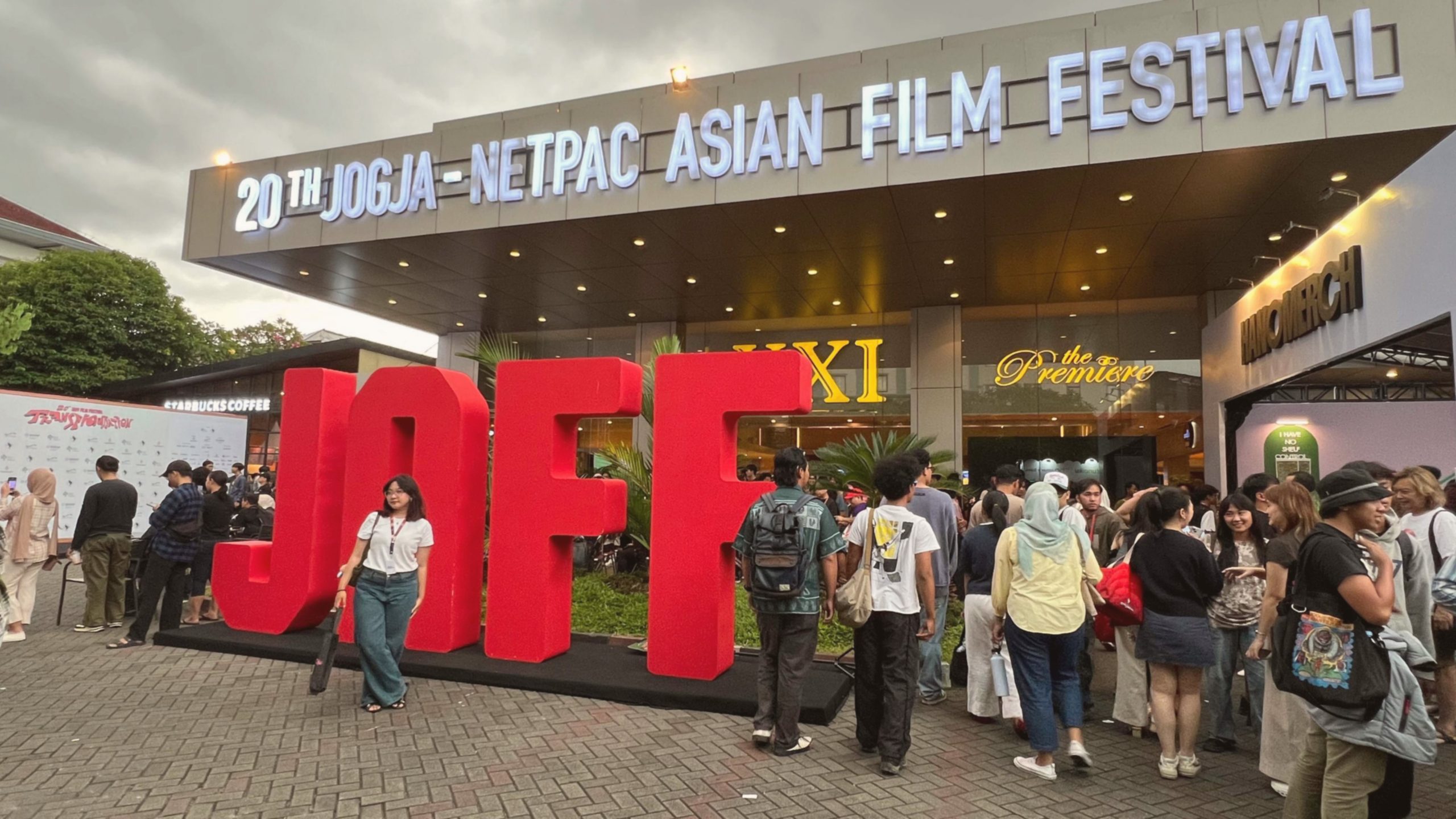
Both films were screened at the prestigious Jogja-Netpac Asian Film Festival (JAFF), which ran from November 29 to December 6, 2025. It’s a recurring theme for films addressing women’s issues to feature prominently in this now 20-year-old film festival.
“Festivals serve the function of observing conditions from diverse perspectives. They also become a reflective moment for various events that spark humanity and crisis,” stated JAFF Director, Ifa Isfanyah, to BBC News Indonesia on Saturday (29/11).
“Women’s issues consistently find a place, as does the growth of female directors,” Ifa added, highlighting the festival’s commitment to inclusivity.

Praditha Blifa, one of the co-directors behind The Period of Her, asserts that film is an incredibly effective medium for amplifying inclusive issues concerning marginalized groups, particularly women.
“Film can touch the core of human empathy, allowing us to be more broadly inspired by the characters. It’s not just confined to urban settings; it can penetrate rural areas too,” Ditha explained.
Reza Rahadian, the director of Pangku, echoed this sentiment, emphasizing that women’s issues remain critically important and require continuous advocacy.
“We are advancing technologically and in many other ways, yet there are still vital issues that revolve around the same fundamental problems, persisting to this very day,” he remarked.
Loeloe Hendra Komara, director of last year’s JAFF selection Tale of the Land, observed that discussions around women’s issues are becoming increasingly open, with fewer restrictions on how they can be presented. Loeloe’s latest project, A Life Full of Holes, currently in development, tells the story of female migrant workers and garnered three awards at this year’s JAFF Future Project.
Long before films like Pangku, The Period of Her, and Tale of The Land, the legendary director Usmar Ismail explored women’s issues in his film Asrama Dara (1958), a restored version of which was also screened at JAFF. Ismail’s film delved into stigmas surrounding women out late at night, dress codes, marriage prospects, discrimination, and romantic relationships.
The diverse women’s issues highlighted in these films often resonate with similar challenges. This raises a pertinent question: has the situation of women in Indonesia truly undergone a ‘transfiguration,’ aligning with this year’s JAFF theme?
The Evolving Role of Women in Indonesian Cinema
JAFF Director, Ifa Isfansyah, underscored the rigorous curation process behind the festival’s film selection. From nearly 900 submissions, the panel meticulously narrowed them down to just 227 films from 43 countries.
Significantly, among these selected films, 60 female directors from across Asia were involved behind the camera, with 18 Indonesian female directors specifically featured at JAFF 2025. Noteworthy titles include The Period of Her, an omnibus comprising four short films by four female directors: Praditha Blifa, Erlina Rakhmawati, Sarah Adillah, and Linda Ariani. Another film is Judheg, directed by Misya Latief.
The festival also showcased several short films from “ready-to-shine” directors, such as Mariam Gesti Pratiwi’s Laut Memendam Luka, Amy Rahmaditha’s So I Pray, Amanda Iswan’s Gokill, Galih Ola’s Potret, and Lailatul Mukjizah’s Pulasara.
“Certainly, quality and curation are paramount,” Ifa emphasized regarding the selection criteria for JAFF 2025. “But then we map it out further: where are they from, are they male or female? While achieving perfect balance is challenging, it’s always on our radar because JAFF consistently supports inclusivity.”
Film festivals, both domestic and international, create invaluable opportunities for women’s voices to be heard through cinema, according to director Praditha Blifa. She stresses the critical need for women’s issues to be prominently featured in these festivals.
“Discussing women requires very strong collaboration. It needs joint efforts, including with the community. If society doesn’t support it, it will be extremely difficult,” Ditha asserted.
According to Ditha, bringing women’s issues to the big screen can sometimes be a significant burden for female directors. Her two short films about women, Kala Nanti (2024) and Ngiring Belasungkawa (2019), successfully passed JAFF curation in 2021 and 2024, respectively.
“There’s a great sense of fear and apprehension. Will it be accepted? Will it be banned? Or will I be perceived as different for bringing a voice that doesn’t align with deeply entrenched patriarchal societal norms?” Ditha confided. However, her latest film, Romansa Keparat, part of The Period of Her omnibus with three other female directors, has helped alleviate her anxieties. “It turns out that when we are together, the story feels even stronger,” Ditha remarked.

The ideology of “Ibuisme” (motherism), propagated during the New Order era, has been absorbed into various levels of society, noted filmmaker Dag Yngvesson during a panel discussion at JAFF 2025. As a consequence, Yngvesson explained, women often face fear and apprehension when they wish to articulate experiences of injustice. This situation, he argued, has the potential to impede women’s contributions across various fields, including film.
In his book, Archipelagic Cinema: Screening Southeast Asian Modernity, Yngvesson details how in the past, pioneering female directors like Ratna Asmara, Sofia W.D, and Roostijati progressed from acting careers to eventually becoming directors. Film critic Fala Pratika believes that patriarchal culture significantly influences the narrative perspectives when telling stories about women.
“In previous decades, women’s roles were consistently confined to being either a wife or a mother. A woman had to be attached to a specific entity to be considered a woman,” Fala observed. However, more recently, Fala has noticed that portrayals of women’s experiences on screen have become “increasingly progressive” and “demonstrate agency without being subservient to a specific entity.” She attributes this positive shift to the growing number of women in the film industry across all roles—as producers, directors, scriptwriters, editors, and cinematographers.

Between 2010 and 2020, there were 124 female directors in Indonesia, according to research by Sazkia Noor Anggraini, Rahayu Harjanthi, and Tito Imanda, published in the book Menuju Kesetaraan Gender Perfilman Indonesia (Towards Gender Equality in Indonesian Cinema). This figure represents 11% of the total film directors in Indonesia.
Loeloe Hendra Komara, a director and lecturer at the Jogja Film Academy, affirmed that the number of women in directorial chairs continues to rise. However, he acknowledged that this increase is still not proportionate to the number of male directors.
“But in creative fields, like scriptwriters and several other areas, women are quite numerous now and contribute significantly to producing more inclusive stories,” Loeloe highlighted.
Can Indonesian Films Tell Women’s Stories Without the ‘Male Gaze’?
Reza Rahadian, a renowned actor who has also ventured into directing, revealed that he uncovered a myriad of women’s issues during his research for his film Pangku. His personal experience of being raised by a single mother also profoundly influenced the development of the film’s narrative.
“It’s crucial from the outset to define who the film is about, what story it aims to tell, and from whose perspective this story should be narrated,” Reza emphasized. He admitted that initially, he hadn’t considered the potential for a male perspective (often referred to as the ‘male gaze’) when portraying Sartika. However, the research conducted with his team significantly raised his awareness of this critical aspect.
“Yes, the creator is a man, the scriptwriter is a man, but when we made this film, we tried to be as honest as possible that this is about a woman facing life’s problems,” Reza clarified. “I consciously drew a line there, to prevent the narrative from veering off in unproductive directions. Because in cinema, if I can’t restrain my ego, I too could fall into the trap of being more exploitative, more dramatic, simply because the space for it exists.”

Loeloe Hendra Komara echoed this sentiment. His two feature films, Tale of The Land (2024) and Sah! Katanya (2025), both explore women’s experiences. His latest film in progress, A Life Full of Holes, also centers on a woman’s story.
For Loeloe, being surrounded by women who play dominant roles in household and financial matters has provided him with a unique perspective. “Women are strong figures in life. I portray them as such in my films, perhaps because that’s what I’ve observed since childhood,” Loeloe reflected.
However, recognizing that filmmaking is a collective effort, Loeloe explained that he regularly converses with his cinematographer to ensure female characters are filmed from a woman’s perspective, avoiding objectification. For scriptwriting, Loeloe consistently discusses with his wife and a team that includes women, seeking input to prevent the script from falling into the trap of the male gaze.

Praditha Blifa, who also served as an assistant director for the films Yuni (2021) and Before, Now & Then (2022), asserts that if filmmakers intend to tell women’s stories, they must view them from a woman’s perspective. “So, even if a man creates it, they won’t inadvertently create a male gaze impression,” Ditha stated.
The pervasive trend of the male gaze in films about women, according to Ditha, is primarily driven by the minimal involvement of women in the filmmaking process. “It’s extremely dangerous to talk about women without involving women themselves in the team, for example, as writers, researchers, or in the creative department,” Ditha warned.
Fala Pratika, who also directed the film The Other Daughter (2024), noted that today’s increasingly critical audience is driving significant change in the film industry. “Therefore, when men now make films about women, they consider many aspects because audiences are very critical in how they view films,” Fala explained. She pointed out that even in several horror films in recent years, women are now depicted with agency, not merely as victims of objectification or demonization.
Drama films, Fala added, are also forging new forms of resilience and subtle resistance, narratives that emerge from women’s experiences and are told by women themselves. According to Fala, such narratives must continuously be given space. Understanding the male gaze must also be reinforced to ensure that women are no longer merely objects in films.

Ditha recounted that throughout her work at Forka Films, a safe space during film production is meticulously maintained. She highlighted the presence of a scannable barcode, serving as a reporting and complaint mechanism for any incidents of violence during the filmmaking process. Violence, she clarified, encompasses various forms: sexual, physical, verbal, and extends to ensuring that ideas and concepts can be conveyed without fear. “Sexist jokes are also almost non-existent now because awareness has grown,” Ditha observed.
Loeloe also implements similar practices during his productions. He claimed to have established safe complaint channels and imposed sanctions on team members who commit acts of violence. For Loeloe, a safe space also pertains to work rhythm and hours. He is particularly mindful of ensuring that the team does not work beyond agreed-upon times.
Fala offered a crucial insight regarding safe spaces for women. “Male dominance, unfortunately, also influences how women in film might feel compelled to change and become more masculine to ‘fit in.’ This is counterproductive to what we are trying to achieve,” Fala argued. “Being a woman working and creating, even today, still involves many considerations that can lead to feelings of inferiority, self-distrust, and even feeling unworthy due to the pervasive patriarchal values. For that reason, these safe spaces must also ensure that women can remain authentically themselves,” Fala concluded.
Film Archives: Preserving the Nation’s History
In the nascent era of cinema, the presence of women behind the camera often went unnoticed, not just in Indonesia but across the global landscape. The name Alice Guy Blaché is rarely mentioned, despite her film La Fee aux Choux premiering in 1896, merely a year after the Lumière brothers developed their camera-projector and screened their first film. In Indonesia, the name Ratna Asmara similarly remains largely unheard. When discussing Indonesian cinema, the figures consistently celebrated behind the scenes are Usmar Ismail, Asrul Sani, Sjumandjaya, or Teguh Karya.
Yet, Ratna made her mark as a director as early as the 1950s. Her film, Sedap Malam (1950), is believed to be the first Indonesian film to address women’s issues within the context of commercial sex. Besides directing Sedap Malam, Ratna also helmed Musim Bunga di Selabintana (1951) and Dokter Samsi (1952). The film Nelayan, screened in 1953, was also her directorial effort, for which she also wrote the screenplay and served as producer. In 1954, she directed the film titled Dewi dan Pemilihan Umum (Dewi and the General Election).
The themes Ratna explored were quite controversial for her time, and her film archives are notably difficult to locate. One film that was successfully traced and subsequently restored by Kelas Liarsip was Dokter Samsi, a restored version of which was screened at JAFF several years ago. This year, JAFF once again featured a restored film, Usmar Ismail’s Asrama Dara (1958), which also delves into women’s stories. Prior to this, Usmar was well-known for Tiga Dara (1956), which addressed women’s issues in a lighter, musical format.
Delving deeper, films addressing women’s issues gradually grew during that period, each packaged in its own way, particularly transitioning into the New Order era. Asrul Sani, for instance, through films like Apa yang Kau Tjari, Palupi? (What Are You Looking For, Palupi?, 1969) or Kemelut Hidup (Life’s Turmoil, 1978), depicted female discrimination and the layered burdens on women that often led to prostitution. In some New Order films, prostitution and the nightlife, aligning with the Ibuisme ideology, were portrayed as consequences of women choosing independence and leaving the home. While Asrul superficially touched upon this, a deeper understanding reveals his films actually highlighted the cumulative burdens on women due to poverty and other social issues.

Despite the many films depicting women and even those directed by women in the past, their condition is largely unknown, underscoring the inadequate state of film archiving. JAFF Director, Ifa Isfansyah, delivered a powerful manifesto on film archiving during the opening of JAFF 2025.
“What good is a film watched by five million people today if it disappears without a trace in 10 years? Film is how a nation views itself. It preserves the voices, languages, anxieties, and hopes of a particular generation,” Ifa proclaimed on the JAFF opening stage before Minister of Culture, Fadli Zon.
“A nation without film archives is not merely a nation that has lost its history, but a nation that does not believe its future deserves to be shaped by accurate memories.” He urged the government to prioritize the management of film archives, citing that the film Opera Jawa (2005), screened as JAFF 2025’s opening film, had to be retrieved from France, where its archive was preserved.
JAFF Program Director Alexander Matius further added that screening restored films like Asrama Dara is also an effort to preserve memory. “Because it seems in recent years, memory has always been a very important context in Indonesia.” He also emphasized that history does not belong to just one particular group; therefore, it must be examined from various perspectives and sources. Film serves as one such medium for recording history.
Indeed, film is a marker of its time, capturing history as it unfolds. If allowed to disappear, the nuanced perspectives of history will also erode. This includes the history of women, who continue to strive for transfiguration, seeking their best form amidst a swirling tide of issues that, decade after decade, remain strikingly similar.
This report was compiled by Riana Ibrahim from Yogyakarta.
- Beyond ‘Sore: Istri dari Masa Depan’ – When women’s grief is still misunderstood
- Why has Ratna Asmara, Indonesia’s first female director, ‘disappeared from Indonesian film history?’
- Why are many female directors ‘marginalized’ from film history?
- The 100 greatest films directed by women, according to BBC Culture
- Films with female protagonists actually perform better at the box office
- Breaking ‘caste’ in film genres: ‘Perempuan Tanah Jahanam’ becomes the first horror film to represent Indonesia at the Academy Awards
Summary
The Jogja-Netpac Asian Film Festival (JAFF), celebrating its 20th anniversary, consistently highlights films addressing women’s issues, exemplified by recent screenings of *The Period of Her* and *Pangku*. Directors like Praditha Blifa and Reza Rahadian emphasize that despite societal advancements, fundamental problems affecting women persist and require continuous advocacy through film. JAFF Director Ifa Isfansyah noted the festival’s role in observing societal conditions and its commitment to inclusivity, evident in the significant number of female directors featured.
There’s a noticeable shift towards more progressive portrayals of women in Indonesian cinema, with an increasing number of female directors influencing narratives beyond traditional roles. Filmmakers, both male and female, actively strive to avoid the “male gaze” by involving women in all stages of production and establishing safe creative spaces. Furthermore, JAFF underscored the critical importance of film archiving to preserve national history, including the often-overlooked contributions and stories of women, whose struggles for ‘transfiguration’ remain strikingly similar across decades.