
Jakarta, IDN Times – The Jakarta Composite Index (IHSG) experienced a volatile trading session on Thursday, May 21, 2026. Opening at 6,366.48 points, the benchmark index briefly showed strength, touching an intraday high of 6,378.81. However, this fleeting gain was short-lived, as the IHSG swiftly plummeted into the red zone just minutes after the morning trading commenced.
According to Nafan Aji Gusta, Senior Technical Analyst at Mirae Asset Sekuritas Indonesia, the IHSG was technically attempting a rebound, driven by an oversold condition indicated by the Relative Strength Index (RSI), having previously met its wave 5/A target. He noted that an alternative wave 5/A target remains valid should the Stochastics K_D indicator signal negative trends, further supported by declining trading volume.
Bank Indonesia’s Unexpected Rate Hike 
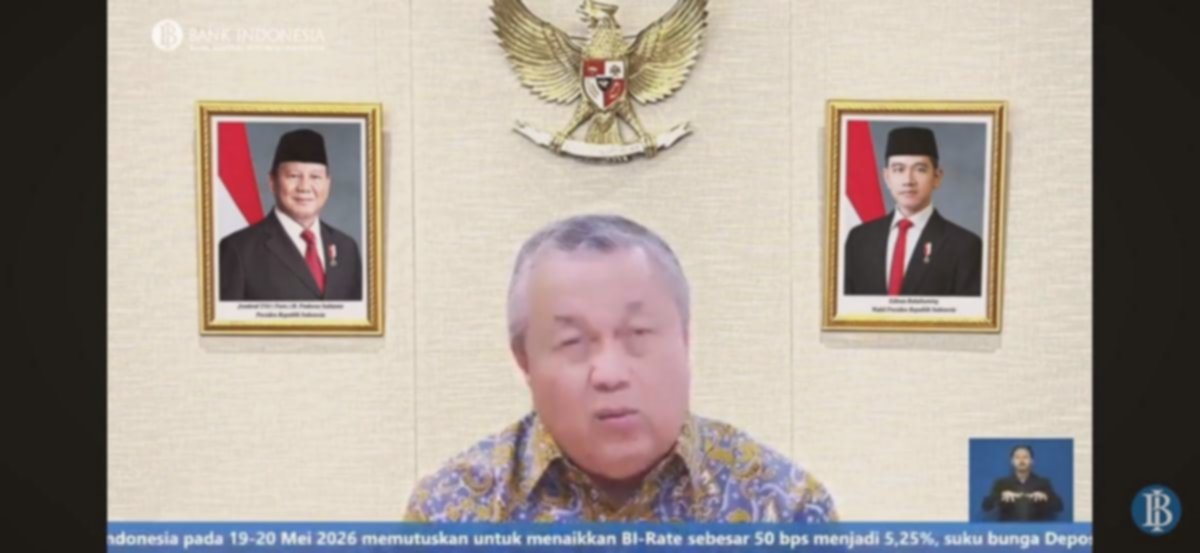
Beyond technical indicators, a significant market driver was the surprising move by Bank Indonesia (BI). Defying market consensus, BI implemented a more aggressive monetary tightening policy, raising its benchmark interest rate by 50 basis points (bps) to 5.25 percent. This increase surpassed earlier expectations of a more modest hike to 5 percent. Nafan explained that this decisive action aimed to mitigate the intense pressure from the recent depreciation of the Rupiah exchange rate. The move appeared successful, as the Rupiah subsequently strengthened by 0.29 percent, trading at Rp17,653.5 per US dollar, signaling a positive sentiment for the local currency.
Market Certainty from President Prabowo’s Economic Vision 
Adding a layer of stability, market participants found renewed confidence following President Prabowo’s address during the DPR (House of Representatives) plenary session. In his speech, President Prabowo unveiled realistic economic growth targets, projecting a range of 5.8 percent to 6.5 percent for the upcoming fiscal year. Nafan highlighted that this clarity, coupled with assured macroeconomic assumptions such as State Securities (SBN) yield targets, provided crucial certainty to the market, effectively dampening volatility risks.
Global Sentiments: Geopolitics and The Fed’s Stance 
Globally, the evolving US-Iran geopolitical tensions continued to be a primary focus for markets. President Trump’s announcement that the US was in the final stages of peace talks with Iran triggered a sharp reaction in commodity markets, with WTI oil prices plummeting by over 4 percent.
Meanwhile, the release of the April Federal Reserve (The Fed) meeting minutes revealed that a majority of Federal Open Market Committee (FOMC) participants believed that interest rate hikes would likely be appropriate if inflation persisted above the Fed’s 2 percent target. This disclosure came during a period of transition for The Fed, as Jerome Powell’s tenure as Fed Chair concluded on May 15, 2026, with Trump’s pick, Kevin Warsh, expected to be sworn in soon. According to CME FedWatch, the market generally anticipates The Fed to maintain stable interest rates throughout the current year, yet expectations for rate hikes are noticeably increasing from July through December.
Summary
The Jakarta Composite Index (IHSG) experienced a volatile trading session on May 21, 2026, struggling to maintain early gains despite technical indicators suggesting a potential rebound. A primary driver for market sentiment was Bank Indonesia’s surprise decision to raise its benchmark interest rate by 50 basis points to 5.25 percent. This aggressive monetary policy successfully bolstered the Rupiah, which appreciated by 0.29 percent against the US dollar.
Market confidence was further supported by President Prabowo’s address to the DPR, where he provided clarity by outlining realistic economic growth targets of 5.8 to 6.5 percent. While domestic policies offered stability, global sentiment remained cautious due to easing US-Iran geopolitical tensions and the Federal Reserve’s signal that future rate hikes may be necessary if inflation persists. Investors are now closely monitoring these shifts as the US central bank navigates a leadership transition.