
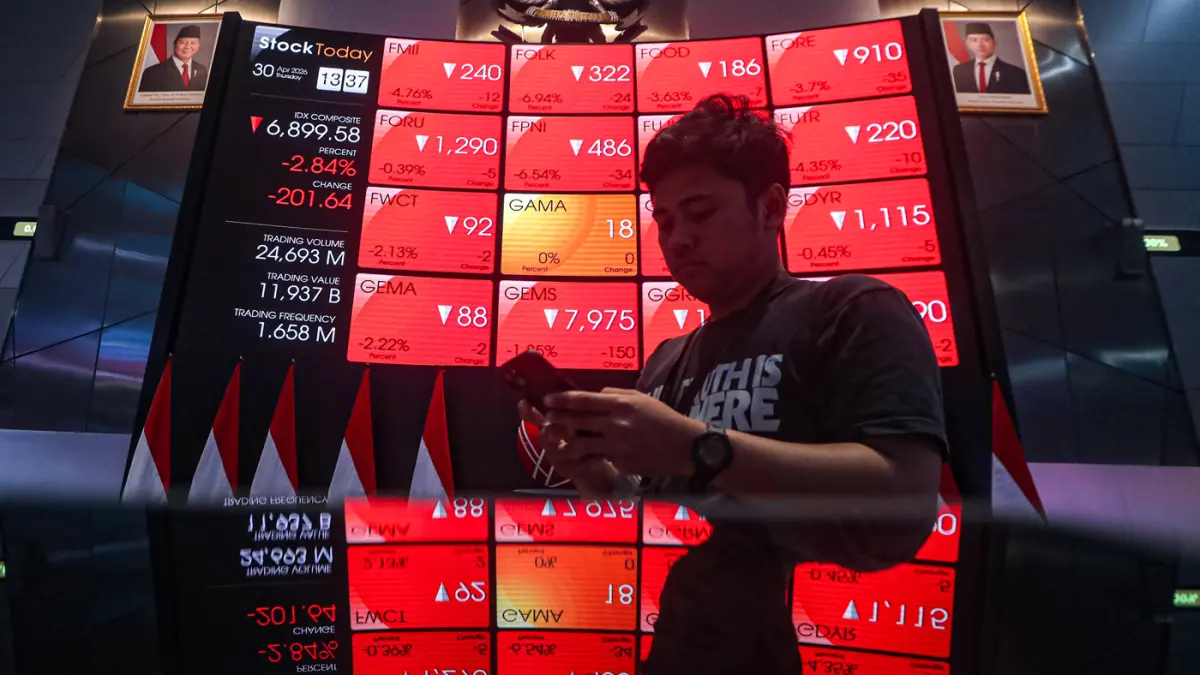

Flooring Guide by Cinvex — The Jakarta Composite Index (IHSG) faced significant downward pressure during the first trading session on Tuesday (May 19). By the end of the morning session, the index had tumbled by approximately 3.08 percent, shedding over 200 points to settle at the 6,396 level.
This steep decline reflects a broad-based sell-off across nearly all domestic sectors. The downturn was not an abrupt event; despite early signs of volatility, the market struggled to find stable ground from the opening bell, maintaining a consistent downward trend throughout the morning.
Edi Permadi, an analyst at Taprof Lemhanas RI, noted that the market landscape was overwhelmingly dominated by the red zone. With more than 600 stocks recording price declines, only a handful of issuers managed to maintain a positive trajectory.
According to Permadi, the high volume of trading activity amidst the index’s decline signals massive distribution, primarily driven by institutional and foreign investors. The accelerating pace of capital outflows has significantly intensified the pressure on the national stock market.
“The situation is further exacerbated by the weakening of the rupiah, which is nearing record lows, thereby increasing the risks associated with rupiah-denominated assets,” Permadi stated.
On the global front, external factors have provided little relief. Geopolitical tensions, rising global energy costs, and a climate of investor caution ahead of pending monetary policy decisions regarding interest rates have created a challenging environment for the IHSG.
However, market sentiment has been further clouded by unverified reports concerning the potential formation of an export control agency. This information, while lacking official confirmation, circulated rapidly among investors, fueling new anxieties regarding the future of the nation’s export sector.
Permadi emphasized that market rumors exert a powerful influence on investor psychology, particularly when the market is already under duress. Such ambiguity often fosters widespread speculation, prompting market participants to trigger sell-offs more aggressively.
“In the context of market psychology, rumors often carry more weight than factual reality. The lack of clarity creates a vacuum for speculation, driving investors to adopt defensive positions,” said Permadi.
Despite the market volatility, there has been no official government announcement regarding the establishment of an export control agency. The current regulatory framework remains governed by Minister of Trade Regulation Number 12 of 2026, which serves as the fifth amendment to Regulation Number 23 of 2023 concerning export policies and management.
These existing regulations focus primarily on administrative control instruments, such as the suspension of export licensing services, license revocation, and the halting of technical verifications under specific conditions, all aimed at safeguarding national interests and ensuring the stability of strategic supply chains.
“In other words, current policies are rooted in regulatory control rather than market control. This distinction is vital, as the implications for the business community differ significantly,” he concluded.
Summary
The Jakarta Composite Index (IHSG) experienced a sharp decline of 3.08 percent during Tuesday’s morning session, falling to 6,396 points. This downturn was characterized by a widespread sell-off across domestic sectors, with over 600 stocks recording losses amid significant capital outflows from institutional and foreign investors. Analysts attributed this pressure primarily to the weakening rupiah and a challenging global environment marked by geopolitical tensions and rising energy costs.
Market sentiment was further destabilized by unverified rumors regarding a new export control agency, which triggered investor anxiety and speculative selling. Experts clarified that no such agency has been established, noting that current policies remain focused on existing administrative regulations rather than broad market intervention. Despite the volatility, the government maintains its commitment to current regulatory frameworks designed to protect national interests and supply chain stability.