
Capital Market Reform Agenda: IHSG Dips, Set for Higher Ground
JAKARTA – Market participants are urging capital market regulators to implement reform measures in a phased manner. Indonesia’s capital market authorities have already launched four reform initiatives, one of which involves making data on concentrated shareholdings, also known as high shareholders concentration (HSC), publicly accessible.
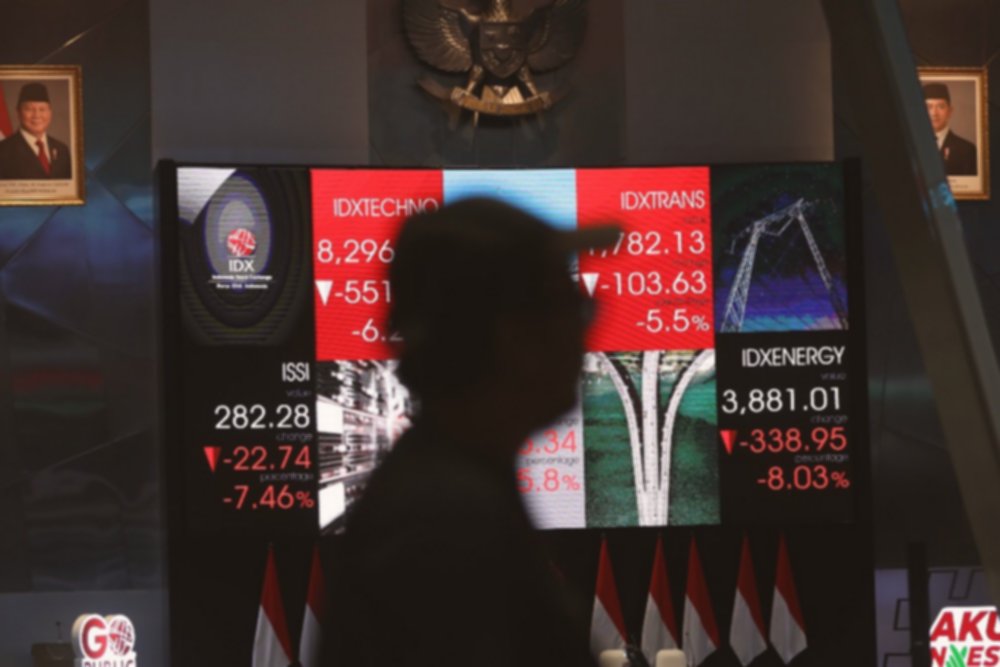
The implementation of these new HSC rules significantly impacted the Composite Stock Price Index (IHSG) earlier this week. On Monday (April 6, 2026), the IHSG closed with a 0.53% correction, settling at 6,989 points. This figure reflects a substantial 19.17% correction year-to-date (YtD) and extends the composite index’s weakening trend over the past week, from March 30 to April 2, 2026, during which it declined by 0.99%.
Concurrently, foreign funds experienced a significant outflow of Rp623.02 billion on the day. This foreign selling pressure has further exacerbated the year-to-date net sell, which now stands at Rp34.45 trillion. The Indonesia Stock Exchange (IDX) acknowledges that this transitional phase carries short-term consequences, primarily in the form of selling pressure on the stock market. This pressure is largely driven by the exodus of foreign capital, prompted by the risk of a reduction in the weighting of Indonesian stocks within global indices such as MSCI.
Sukarno Alatas, a Senior Analyst at Kiwoom Sekuritas Indonesia, believes that the short-term pressure from foreign capital outflows will predominantly be felt by stocks with a relatively small proportion of public ownership, often referred to as low free float. In light of this, Alatas suggests that regulators should implement the HSC rules gradually. He also recommends encouraging companies to increase their public share portions and actively work to maintain robust trading activity. Crucially, fostering open communication with global index providers like MSCI is vital to prevent abrupt changes in international indices that could further destabilize the market.
He elaborates that should Indonesian stocks be delisted from the MSCI Emerging Markets Index, foreign funds tracking this index would automatically initiate a sell-off. This scenario would invariably lead to a decline in stock prices, reduced transaction volumes, and wider bid-ask spreads. However, Alatas maintains that this situation could recover if the underlying share structure of these companies is improved. “In the short term, the market may face pressure. But in the long term, this increased transparency will actually foster a healthier market and gain the trust of major investors,” Sukarno remarked. He added, “While domestic investors can help mitigate the decline, their capacity is not yet strong enough to quickly replace the entirety of foreign funds.”
Echoing this sentiment, Muhammad Wafi, Head of Research at KISI Sekuritas, also assesses that the capacity of domestic investors is inherently limited. He argues that local liquidity cannot instantly absorb massive selling pressure, especially since the majority of domestic investors are likely to adopt a wait-and-see approach, closely monitoring the movement of foreign capital.
Wafi outlined a negative scenario where Indonesian stocks might be excluded from the MSCI index due to share concentration issues. Such a move would trigger automatic selling by global passive funds, leading to a sharp decline in stock valuations and an aggregate reduction in the IHSG’s weighting. He identifies infrastructure, energy, and big-cap stocks with a “pseudo free float” status as the most vulnerable sectors when foreign outflows intensify. To navigate the selling pressure during this transitional phase while maintaining Indonesia’s global market appeal, Wafi advises that issuers must strengthen their Good Corporate Governance (GCG) practices to rebuild long-term investor confidence.
“Meanwhile, for regulators, a gradual implementation of [HSC], an extension of adjustment deadlines, and corporate incentives such as rights issues or private placements are essential,” Wafi concluded, outlining key strategies to support market stability and growth.
Disclaimer: This article is not intended to solicit the buying or selling of shares. Investment decisions rest solely with the reader. Bisnis.com is not responsible for any losses or gains arising from the reader’s investment decisions.