
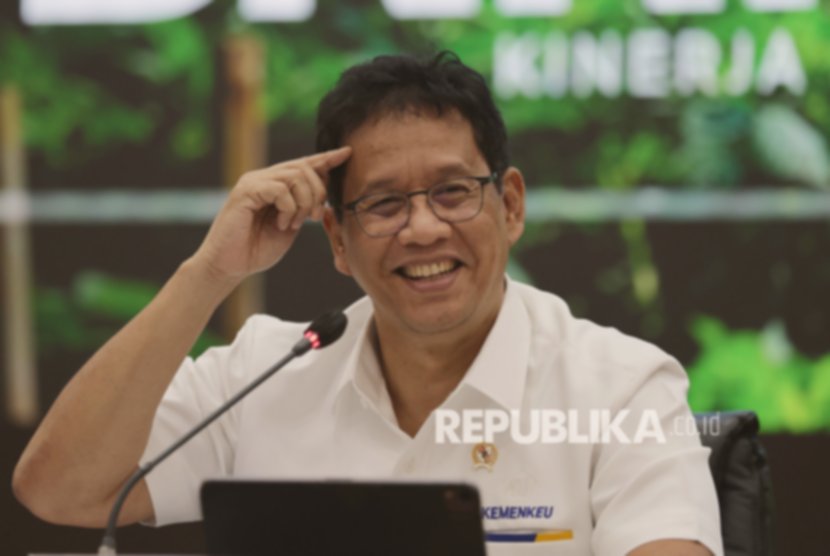
Indonesian Finance Minister Purbaya Yudhi Sadewa has issued a stern call to action, demanding that the Indonesia Stock Exchange (IDX) and the Financial Services Authority (FSA) impose strict sanctions on market participants engaging in manipulative practices, commonly known as “share price rigging” or “pump-and-dump schemes.” The Minister expressed his ambition to see the capital market purged of such speculators within the next year.
Speaking at a Ministry of Finance media event in Bogor, West Java, on Friday, October 10, 2025, Purbaya revealed his personal observations of the market. “If we can clean up the market within a year, I can actually identify the stocks being manipulated. I observe the stock market, you see. There are those who engage in rigging, and I even know some of the players involved – not market makers, but those actively participating in these schemes,” Purbaya stated, underscoring his familiarity with the illicit activities.
According to the Minister, curbing these manipulative practices is paramount for sustaining the interest of younger generations in capital market investments. He voiced concerns that such unhealthy activities could severely erode the trust of novice investors, especially since approximately 50 percent of current capital market investors are from the younger demographic.
“If this isn’t cleaned up, it would be a shame. The interest of Gen Z or young people currently investing in the capital market could vanish, considering 50 percent are young individuals. If that interest is lost, our capital market simply cannot grow further. But if it’s tidied up, they will be confident enough to enter the stock market because they will believe it’s a fair game,” he emphasized, highlighting the critical role of market integrity in fostering future growth.
Furthermore, the Finance Minister opened the door to the possibility of providing fiscal incentives if the capital market demonstrates enhanced cleanliness and integrity. One form of incentive currently under consideration is a reduction in the tax burden for capital market participants. “We will see how it unfolds, but I can support such measures if they work harder to maintain the integrity of the capital market itself,” Purbaya affirmed.
Earlier, during his visit to the IDX on Thursday, October 9, 2025, Minister Purbaya had explicitly stated that tax incentives would only be granted if the capital market authorities proved capable of disciplining market participants whose behavior harms small investors. “The exchange director kept asking for incentives earlier, which I haven’t necessarily agreed to give. So, I told them I would provide incentives once they have tidied up investor behavior in the capital market. This means controlling rigging activities to protect small investors; only then will I consider the incentives,” he elaborated, setting clear preconditions.
Purbaya added that the government has already taken steps to clean up its own house, particularly within the Ministry of Finance and its Directorate General of Taxes (DGT), to uphold fiscal integrity. If the capital market can achieve similar levels of integrity and self-regulation, then incentives will be given due consideration to support the development of a healthy and robust investment ecosystem.
Summary
Indonesia’s Finance Minister Purbaya Yudhi Sadewa has strongly urged the Indonesia Stock Exchange (IDX) and the Financial Services Authority (FSA) to impose strict sanctions on market manipulators, including those involved in “share price rigging” and “pump-and-dump schemes.” The Minister aims to clean up the capital market within a year, stressing that curbing such practices is crucial to maintain trust, especially among younger investors who comprise 50 percent of market participants. He warned that a lack of integrity could cause young people to lose interest, impeding the market’s growth.
Purbaya also stated that fiscal incentives, such as reduced tax burdens, would only be considered if the capital market demonstrates enhanced cleanliness and integrity. He made it clear that tax incentives would be granted only when authorities prove capable of disciplining market participants and protecting small investors from manipulative activities. This conditional offer is intended to foster a healthy and robust investment ecosystem by aligning market integrity with potential government support.