

A relentless wave of extreme heat has gripped the Ciayumajakuning region—comprising Cirebon, Indramayu, Majalengka, and Kuningan in West Java—over the past few days, leaving residents to contend with scorching temperatures. According to data from the Kertajati Meteorological Station, the maximum temperature recorded a blistering 37.8 degrees Celsius on October 15, 2025. This marks the highest temperature recorded throughout the year in the area, setting an unprecedented benchmark for 2025.
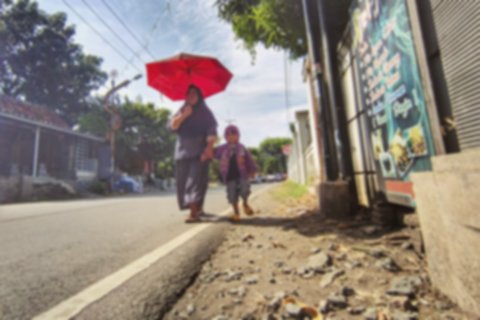
The intense heat has significantly impacted daily life. Kartini Hidayati (42), an Indramayu resident, shared her experience of adapting to the sweltering conditions. She now routinely carries an umbrella whenever she ventures outside during the day, not for rain, but as a crucial shield against the unforgiving sun.
“The heat is unbearable; it feels like standing in front of a stove in the middle of the day. Whenever I leave the house now, I always carry an umbrella – not for rain, but to shield myself from the intense heat,” Kartini told kumparan. “If I don’t, my head immediately starts throbbing from the scorching sun. So, even a trip to the market requires an umbrella these days,” she added, highlighting the discomfort felt by many.
Primary Factors Behind the Soaring Temperatures
Muhammad Syifaul Fuad, Head of the Forecast, Data, and Information Work Team at BMKG Kertajati, explained that while this heat is still within expected seasonal variations, it feels particularly oppressive due to the scarcity of cloud formation in the atmosphere. “From our observations, the maximum temperature in mid-October reached 37.8°C. This is the highest temperature recorded between January and October 2025. This condition is likely to persist until the end of October or early November,” Fuad informed kumparan via telephone on Tuesday (October 21).
Fuad elaborated on several key factors contributing to the escalating air temperatures across the Ciayumajakuning area. Firstly, the sun’s apparent position is currently situated near the southern hemisphere, a region that includes Java Island. This alignment means that these areas receive more intense solar radiation directly impacting the Earth’s surface.
“Coincidentally, the sun’s position this October is south of the equator. As a result, regions like Java receive stronger solar radiation compared to the northern hemisphere,” he clarified, detailing the astronomical influence on local weather patterns.
Secondly, the presence of easterly winds originating from the Australian continent plays a significant role, as these winds carry dry and hot air. This dry air mass actively hinders the process of cloud development, allowing unfiltered sunlight to directly reach the Earth’s surface and intensifying the heat felt by residents.
The third contributing factor is the minimal cloud cover. With fewer clouds to act as a natural barrier, the sun’s rays are unimpeded, making the heat feel much more scorching during daylight hours. “Usually, clouds act like a natural filter. But because clouds rarely form, the heat feels direct and far more intense,” Fuad added, emphasizing the lack of natural protection.
BMKG observations indicate that the peak heat typically occurs between 1:00 PM and 4:00 PM Western Indonesian Time (WIB), coinciding with the period of highest solar intensity.
Kertajati Becomes the Hottest Region in Indonesia

Further underscoring the severity of the situation, Fuad noted that on October 20-21, 2025, the Kertajati Meteorological Station registered a maximum temperature of 36.4 degrees Celsius. This reading made Kertajati the hottest spot in Indonesia over that 24-hour period, according to data from various weather observation stations across the archipelago. “Yesterday’s maximum temperature in Kertajati was recorded as the hottest in Indonesia among several weather observation stations,” he confirmed.
In response to this extreme weather phenomenon, the Indramayu Regency Regional Disaster Management Agency (BPBD) has issued an urgent appeal to the public. They emphasize the importance of remaining vigilant against the potential health impacts associated with prolonged exposure to extreme heat.
Sutrisno, Head of the BPBD Indramayu Secretariat, specifically advised residents to limit outdoor activities between 10:00 AM and 4:00 PM WIB, which are the hours of most intense sun exposure. “The public health advisory is straightforward: avoid direct sunlight exposure, increase your intake of plain water, and use body protection such as hats or umbrellas,” he stated, outlining simple yet effective preventative measures.
To ensure widespread awareness and preparedness, BPBD Indramayu is actively coordinating with the Health Agency and various sub-district heads. This collaborative effort aims to disseminate these crucial advisories and mitigation steps to all communities, reinforcing public safety.
“We are currently preparing a circular letter to ensure this vital information reaches every village,” he concluded, highlighting the agency’s commitment to broad outreach. BPBD Indramayu urges residents to remain calm yet vigilant, and to consistently follow official information and guidance provided by both BMKG and BPBD. This proactive approach is essential to minimize and avoid any negative impacts resulting from the extreme temperatures affecting Indramayu and its surrounding areas.
Summary
The Ciayumajakuning region, including Indramayu, has been experiencing an extreme heatwave, with Kertajati Meteorological Station recording a peak of 37.8°C on October 15, 2025, marking the highest temperature for the year. This intense heat significantly impacts daily life, leading residents to carry umbrellas for sun protection. Kertajati was also identified as the hottest location in Indonesia on October 20-21, 2025, registering 36.4°C.
According to BMKG Kertajati, key factors contributing to the soaring temperatures include the sun’s position near Java, strong easterly winds carrying dry air, and minimal cloud cover, which allows direct and intense solar radiation. In response, the Indramayu BPBD advises residents to limit outdoor activities between 10 AM and 4 PM, increase water intake, and use protective gear like hats or umbrellas. The agency is coordinating efforts to disseminate these crucial health advisories to the public.