
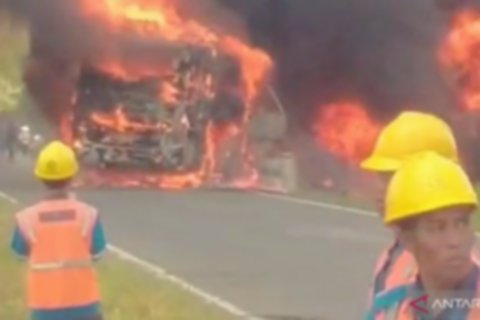
A recent tragic accident on the Trans-Sumatra Highway, involving an ALS bus and a fuel tanker, has sparked a significant call for reform from Saadiah Uluputty, a member of Commission V of the House of Representatives (DPR RI). The collision, which occurred on Wednesday (May 6) in Karang Jaya, Musi Rawas Utara, South Sumatra, claimed the lives of 16 people, prompting a deeper look into the systemic issues behind such devastating events.
Saadiah Uluputty vehemently asserted that the catastrophic incident cannot be solely attributed to driver error. Instead, she pointed to a critical failure in the national road safety governance framework, particularly concerning critical infrastructure and oversight mechanisms. “This tragedy demonstrates that road safety cannot be viewed merely as a consequence of driver mistakes. The state must also assume responsibility for the condition of road infrastructure and the existing transportation safety system,” Saadiah stated in her official remarks on Thursday (May 7).
Investigations into the accident revealed a harrowing sequence of events: the ALS bus driver swerved abruptly to avoid a substantial pothole on the Karang Jaya section of the Trans-Sumatra Highway. This sudden maneuver forced the bus into the opposing lane, resulting in a head-on collision with an oncoming fuel tanker. The violent impact ignited sparks, engulfing both vehicles in flames. This detail underscores the immediate and dangerous consequences of neglected road conditions.
The fact that the accident occurred on a national road classified with damage ranging from light to severe poses a grave concern for Saadiah. She highlighted alarming data from the Directorate General of Highways (Ditjen Bina Marga), indicating that a mere 33.45 percent of national roads in South Sumatra are in good condition. “This is an irony. On paper, the stability levels of our roads appear high, yet the reality on the ground reveals numerous road sections that gravely endanger users,” she lamented.
Furthermore, Saadiah emphasized the glaring absence of crucial safety facilities at the accident site. Investigative reports confirmed no warning signs indicating damaged roads or adequate road markings were present. Faded and unclear road markings significantly heighten the risk of accidents, particularly when drivers are forced to perform sudden evasive maneuvers. “If roads are damaged without proper warning signs and road markings are also indistinct, then this transcends mere technical oversight; it becomes a matter of public safety responsibility,” Saadiah stressed.
Beyond the perilous road conditions, Saadiah demanded a comprehensive evaluation of the oversight protocols for vehicles transporting hazardous and toxic materials (B3), including fuel tankers. The fatalities caused by the fire during this accident underscore the urgent need for a stringent audit of the safety standards governing fuel transport fleets. “Accidents involving B3 vehicles must be subjected to far higher mitigation standards. We cannot allow every such incident to escalate into a major fire tragedy,” she elaborated, pushing for proactive measures to prevent similar catastrophes.
The PKS party politician also cited Article 273 of the Traffic and Road Transport Law (LLAJ), which outlines criminal sanctions for road organizers found negligent in repairing damaged roads, leading to fatalities. She urged law enforcement agencies to thoroughly investigate the accountability of road organizers in this specific case. “Every tragedy must not conclude without a systemic evaluation. If negligence in national road maintenance is indeed identified, then clear accountability must follow,” she asserted, advocating for justice and systemic change.
As a critical preventative measure, Saadiah strongly advocated for the government to conduct a complete audit of all national road conditions, with particular focus on inter-provincial routes that serve as vital arteries for passenger and logistics transport. She also called for a substantial increase in the road preservation budget, ensuring that improvements transition from reactive repairs, initiated only after accidents, to proactive and ongoing maintenance. Additionally, she underscored the paramount importance of implementing early warning systems at known damaged road points, including the installation of emergency signs and regular normalization of road markings. “We must not wait for the next victim before taking action. Road safety must be the country’s top priority,” she concluded, urging immediate and decisive governmental intervention.
Summary
A recent fatal collision on the Trans-Sumatra Highway between a bus and a fuel tanker has prompted calls for systemic reform regarding national road safety. House of Representatives member Saadiah Uluputty argues that the crash, caused by a driver swerving to avoid a pothole, highlights critical failures in infrastructure maintenance and the lack of essential safety warnings. Data reveals that a significant portion of national roads in South Sumatra remains in poor condition, creating life-threatening risks for commuters and transport vehicles.
To prevent future tragedies, officials are demanding a comprehensive audit of all national roads and stricter safety standards for vehicles transporting hazardous materials. The government is being urged to shift from reactive repairs to proactive maintenance and to enforce accountability for road organizers under existing traffic laws. Strengthening early warning systems and infrastructure oversight is considered essential to prioritizing public safety and preventing similar catastrophes.