
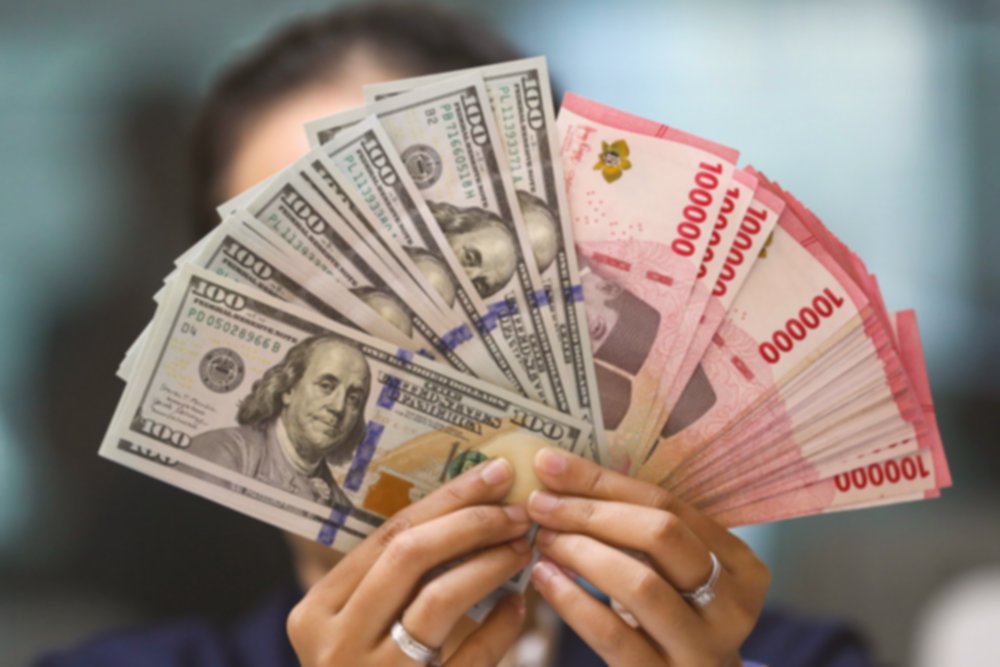

Flooring Guide by Cinvex — MAKASSAR — Amid the ongoing pressure on the Indonesian Rupiah against the US Dollar, Bank Indonesia (BI) is intensifying its efforts to optimize Local Currency Transaction (LCT) frameworks with key trading partners. LCT enables businesses in Indonesia and partner nations to settle bilateral trade using their respective local currencies through Appointed Cross Currency Dealers (ACCD), effectively bypassing the need for the US Dollar.
By diversifying currency exposure, this initiative aims to slash transaction costs, bolster regional local currency markets, and improve accessibility for market participants. The core advantage is efficiency; by removing the need for a middleman currency, trade becomes more streamlined and cost-effective.
High Potential: BI Urged to Prioritize LCT in Markets with Significant Migrant Worker Populations
Ruth A. Cussoy, Director of the Financial Market Deepening Department at Bank Indonesia, highlighted that the urgency for LCT has spiked following the US import tariff announcements in 2025. The results are already tangible: LCT transaction volumes reached an equivalent of US$22.61 billion between January and April 2026, marking a staggering 309% year-on-year (yoy) increase compared to the US$7.33 billion recorded in the same period of 2025.
“We are not avoiding the US Dollar, as we recognize its role in the global economy,” Ruth explained during a press training session in Makassar on Friday, May 22, 2026. “However, for nations where trade is conducted directly, there is no reason to route transactions through an intermediary currency. That adds unnecessary costs. Efficiency is the fundamental essence of the LCT program.”
Rupiah Under Pressure: Ministry of Industry Pushes for Import Shifts Toward LCT-Compatible Nations like China and Japan
Currently, the most active participants in Indonesia’s LCT framework are China (89%), followed by Japan (6%) and Malaysia (3%). The success of the program is reflected in the steady growth of total transaction volumes, which climbed from US$2.53 billion in 2021 to US$25.72 billion by the end of 2025. Given that the volume for the first four months of 2026 has nearly matched the entire output of 2025, BI remains optimistic about the upward trend.
The growing adoption is further evidenced by the number of active business participants, which surged from an average of 497 per month in 2021 to 9,720 in 2025. Between January and April 2026, the average monthly participation remained strong at 5,265 businesses.
Expanding Global Reach
The LCT mechanism requires formal agreements between central banks. Since 2018, Bank Indonesia has established these frameworks with counterparts in Malaysia, Thailand, Japan, China, South Korea, and the United Arab Emirates (UAE). Under this system, importers and exporters open accounts at ACCD banks, allowing them to settle trades in the local currency of their partner countries.
Looking ahead, BI plans to expand its LCT network further. According to Ruth, Indonesia is in the final stages of establishing LCT partnerships with Singapore, India, and Saudi Arabia. “Implementation for the Singapore Dollar, Indian Rupee, and Saudi Riyal is expected in the near future,” she confirmed.
Economic Perspective: Addressing Currency Depreciation
Josua Pardede, Chief Economist at PT Bank Permata Tbk, supports the acceleration of LCT, especially as the Rupiah faces persistent depreciation against the US Dollar. By mid-2026, the Rupiah had weakened by more than 5% year-to-date. While other regional currencies such as the Indian Rupee, South Korean Won, Japanese Yen, and Thai Baht have also struggled against the greenback, the Rupiah has felt the sting particularly sharply in comparison to major Asian currencies.
“The Rupiah has weakened most significantly against the Malaysian Ringgit, followed by the Singapore Dollar, the Hong Kong Dollar, and the Chinese Yuan,” Josua noted. He emphasized that the depreciation is driven by a combination of global macroeconomic conditions, domestic pressures, and seasonal factors, including the high demand for foreign exchange during the Hajj pilgrimage season, corporate dividend repatriations, and external debt repayments.
Josua specifically pointed to the Hajj season as a missed opportunity where LCT could mitigate pressure on the Rupiah. “We need to promote LCT aggressively. For example, during the Hajj, the high demand to convert Rupiah to US Dollars exerts unnecessary pressure on the exchange rate. This is exactly where LCT between Indonesia and Saudi Arabia would provide a vital solution. I strongly encourage Bank Indonesia to continue advocating for these mechanisms with their peers at other central banks,” he concluded.