
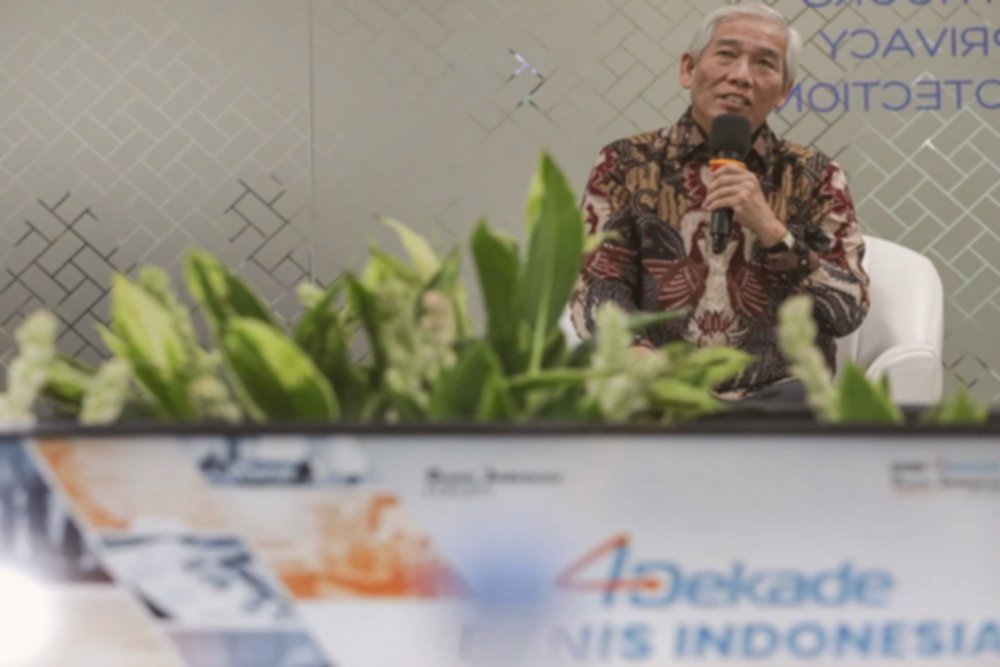

JAKARTA — Renowned investor Lo Kheng Hong is meticulously crafting his portfolio strategy for the anticipated “Year of the Fire Horse” in 2026. Beyond merely seeking undervalued stocks, Lo emphatically states that his primary focus next year will be on high-dividend stocks and state-owned banks, which he believes are poised to reclaim their status as market darlings amidst a prevailing trend of declining interest rates.
Lo views the momentum of Bank Indonesia’s (BI) rate cuts as a pivotal catalyst for the market. Throughout 2025, Bank Indonesia has already reduced its benchmark interest rate to 4.75%, marking its lowest level since 2022. This favorable condition, he argues, creates significant room for banking stocks to once again demonstrate robust performance expansion.
“I have plans to buy [stocks]. I typically favor the banking sector,” Lo stated following the BIG 40 Award event held on Monday, December 8, 2025, in Jakarta, underscoring his long-standing preference for financial institutions.
He specifically highlighted Himbara (Association of State-Owned Banks) stocks such as BBRI (PT Bank Rakyat Indonesia Tbk.) and BMRI (PT Bank Mandiri Tbk.) as strong candidates for his investment basket. This preference is largely driven by the continuous liquidity support extended by the government. Furthermore, Lo reiterated that the dividend yields offered by banking stocks are far more attractive than traditional bank deposits.
“For instance, Bank Mandiri’s dividend yield could be 9%. BRI’s dividend yield could reach 8%. That’s already more than twice the bank interest rate,” he explained. “If bank deposits offer 5%, after tax, you’re left with only 4%. With an 8% dividend, it’s clearly superior,” he elaborated, emphasizing the compelling returns from dividends.
In addition to the banking sector, Lo Kheng Hong is also targeting the mining and palm oil sectors. These two industries have historically formed the bedrock of his portfolio, consistently generating stable profits. Throughout 2025, Lo was documented as remaining the largest individual shareholder in several prominent issuers across coal, palm oil, and even property sectors.
: : Lo Kheng Hong Continues to Acquire Intiland (DILD) Shares Amid Performance Pressure
Within the palm oil plantation sector, Lo Kheng Hong stands as the largest individual investor in PT Salim Ivomas Pratama Tbk. (SIMP), an issuer under the Salim Group. Reports from PT Kustodian Sentral Efek Indonesia (KSEI) indicate that Lo Kheng Hong holds 779.20 million SIMP shares, equivalent to a 5.03% stake. Likewise, Lo Kheng Hong is also the largest individual investor in the coal issuer PT ABM Investama Tbk. (ABMM). KSEI data further reveals that Lo Kheng Hong possesses 154.01 million ABMM shares, translating to a 5.59% ownership.
Moreover, Lo Kheng Hong holds a significant portfolio in the property sector through PT Intiland Development Tbk. (DILD). He is recorded as holding 691.51 million DILD shares, representing a substantial 6.67% stake in the company.
: : Lo Kheng Hong Buys More Gajah Tunggal (GJTL) Shares in November 2025
Beyond these, Lo Kheng Hong is also listed among the largest shareholders, with ownership exceeding 5%, in PT Global Mediacom Tbk. (BMTR) and PT Gajah Tunggal Tbk. (GJTL). Specifically, his holdings at the close of Q3 2025 included a 5.76% stake in GJTL shares and a 6.44% stake in BMTR shares, solidifying his diverse investment footprint.
Alongside his jumbo stock portfolios, Lo Kheng Hong also maintains stakes in a range of other issuers, albeit below the 5% threshold, such as PT Bank Danamon Indonesia Tbk. (BDMN). Most recently, Lo Kheng Hong increased his ownership in BDMN to 26.10 million shares, equivalent to 0.26%. This makes him the fifth-largest shareholder in Bank Danamon Indonesia, showcasing his strategic accumulation even in smaller positions.
Disclaimer: This news article does not aim to encourage buying or selling stocks. Investment decisions are solely at the discretion of the reader. Bisnis.com is not responsible for any losses or gains arising from the reader’s investment decisions.