

Government Spending Discipline as a Catalyst for Economic Growth
Herman Saherudin, Acting Director General of Financial Sector Stability and Development at the Ministry of Finance, has emphasized that government spending discipline is a critical pillar in maintaining Indonesia’s 5.61 percent economic growth amidst ongoing global uncertainty. By optimizing the timing of budget absorption, the government aims to ensure that state expenditures provide immediate impacts and effectively stimulate national economic activity.
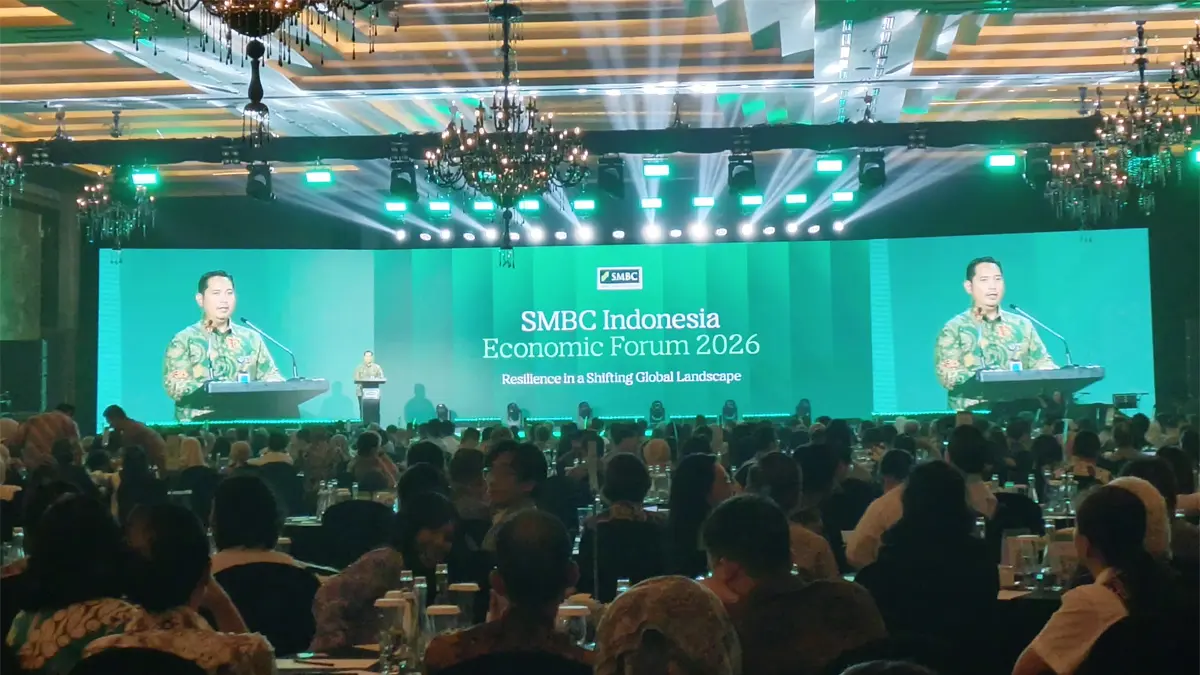
“Government consumption is becoming more disciplined, which means we are ensuring budget absorption is executed in a timely manner,” Herman stated during the SMBC Indonesia event in Jakarta on Tuesday (May 19).
Historically, government spending has often been concentrated toward the end of the year. Herman warned that delaying expenditures essentially means delaying the critical multiplier effect that fuels the economy. By refining spending patterns through strategic national programs, the Ministry of Finance aims to make government consumption more consistent from the very beginning of the fiscal year.
The success of this approach is already evident. Through disciplined budget absorption, government consumption in the first quarter of 2026 reached over 20 percent of the annual target, driving a 21.81 percent year-on-year increase in government consumption. “By maintaining this discipline in the first quarter—spending more than 20 percent—we have seen strong growth, which creates a positive multiplier effect,” he explained.
Quality Over Quantity in State Expenditure
According to Herman, the true measure of effective state spending lies not just in the total volume of the budget, but in its timing, efficacy, and overall economic impact. “Quality government spending is defined by discipline, impactful outcomes, and timely execution,” he noted.
Beyond expenditure, the Ministry of Finance is committed to maintaining strict fiscal discipline by controlling the state budget deficit and managing national cash reserves efficiently. The ministry aims to keep the fiscal deficit below 3 percent of the Gross Domestic Product (GDP). Furthermore, officials are continuously monitoring consumption patterns and cash flow management to ensure they remain perfectly aligned with national needs.
Addressing the management of the Excess Budget Balance (SILPA), Herman cautioned that an excessively large SILPA indicates inefficient financing, as it incurs unnecessary additional costs. Therefore, comprehensive fiscal discipline requires a delicate balance: precise and effective spending combined with cash management that strictly mirrors actual requirements. By modernizing these financial processes, the government seeks to foster a more resilient and responsive economic environment.
Rupiah Faces Pressure: Purbaya Convenes Emergency Meeting at Ministry of Finance Lobby
Summary
The Indonesian Ministry of Finance emphasizes that disciplined government spending is essential for sustaining economic growth amidst global uncertainty. By optimizing the timing of budget absorption and avoiding the traditional end-of-year expenditure surge, the government aims to generate a more consistent multiplier effect. This strategic approach has already contributed to a significant 21.81 percent increase in government consumption during the first quarter of 2026.
Beyond timely execution, the ministry is prioritizing the quality of spending and strict fiscal management to maintain a deficit below 3 percent of the GDP. Officials are also focusing on efficient cash management to reduce excessive budget balances, which are viewed as indicators of financial inefficiency. These measures are designed to modernize fiscal processes and ensure a more resilient and responsive national economy.