
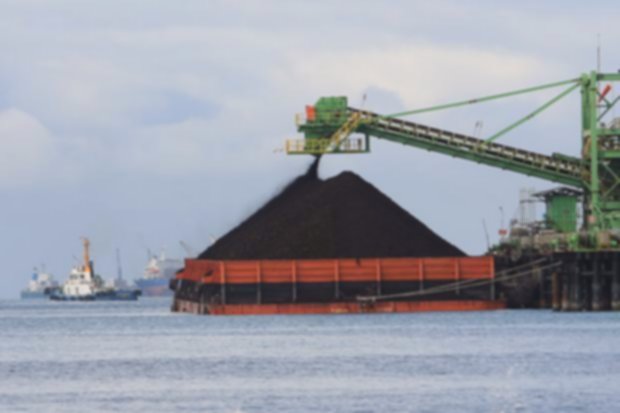

New research from the NEXT Indonesia Center has uncovered evidence of widespread trade misinvoicing in Indonesia’s coal export sector. Over the past decade (2015–2024), discrepancies in customs reporting have reached a staggering US$20 billion (approximately Rp 345 trillion). When looking back over the last 25 years, the total volume of these unexplained reporting gaps climbs to US$39.5 billion, suggesting a long-standing systemic issue.
“The potential revenue lost due to coal export misinvoicing is immense. On average, we are seeing roughly US$1.6 billion to US$2 billion in trade value vanish or go unrecorded every year,” explained Ade Holis, Lead Researcher at the NEXT Indonesia Center, in Jakarta on Sunday (April 26, 2026). He noted that these practices, which involve both under-invoicing and over-invoicing, create significant loopholes for evading domestic obligations and facilitating illicit cross-border capital flows.
As the world’s largest coal exporter, Indonesia’s influence on the global market is undeniable. Between 2020 and 2024, the country supplied 28.31% of the global coal market, with exports averaging US$30.6 billion annually. Given this scale, even minor discrepancies in trade data have massive implications for national revenue.
India and Bangladesh: Key Nodes in Trade Misinvoicing
By analyzing UN Comtrade data from 2015–2024, the NEXT Indonesia Center identified under-invoicing as the most dominant pattern, accounting for US$13.5 billion in discrepancies. Ade Holis suggests this method is likely used to artificially lower production royalty burdens or bypass Domestic Market Obligation (DMO) regulations, which mandate that coal companies sell a portion of their output locally at controlled prices.
India was identified as the primary destination for under-invoiced coal, accounting for US$7.9 billion, or 58.63% of the total under-invoicing value. This aligns with India’s role as the largest buyer of Indonesian coal, absorbing 27.08% of total exports between 2020 and 2024.
Conversely, the study identified US$6.5 billion in over-invoicing, which is highly concentrated in Bangladesh. This specific trade pattern, with 66.13% of over-invoicing value linked to a single nation, points toward highly structured and non-transparent trade mechanisms. “Because coal accounts for 10% of Indonesia’s total exports—reaching a peak value of US$46.8 billion in 2022—any manipulation of these figures results in billions of dollars in lost state revenue,” Holis added.
The Dilemma of Coal Export Levies
The Indonesian government is currently debating the implementation of a new coal export levy to boost state income. Minister of Finance Purbaya Yudhi Sadewa has expressed a firm intention to combat under-invoicing and illegal exports to secure these missing revenues. However, the proposal—ranging from a 1% to 5% export duty—has faced internal debate. Minister of Energy and Mineral Resources Bahlil Lahadalia has urged caution, confirming that as of early April 2026, the levy has yet to be implemented.
“Managing the coal sector is a delicate balancing act,” said Holis. “While the government aims to increase revenue, there is legitimate concern regarding the impact on export stability. Without systemic improvements, simply adjusting tariffs will be a superficial solution.”
The NEXT Indonesia Center emphasizes that the US$20 billion discrepancy over the last decade is not merely an administrative error, but a systemic problem. Experts argue that until the government enhances price transparency, integrates international trade data, and tightens oversight of long-term contracts and offshore affiliates, tariff policies may fail to address the root causes of revenue leakage. Ultimately, resolving these data inaccuracies is vital to preserving the integrity of Indonesia’s trade statistics and ensuring the nation receives the full economic benefit of its most valuable commodity.
Summary
New research from the NEXT Indonesia Center indicates that trade misinvoicing in the coal sector has resulted in $20 billion of unexplained reporting gaps between 2015 and 2024. This systemic issue involves both under-invoicing, primarily linked to exports to India, and over-invoicing, which is heavily concentrated in Bangladesh. These discrepancies allow companies to evade royalties and domestic market obligations, significantly impacting Indonesia’s national revenue.
While the Indonesian government is considering new export levies to recover these losses, experts warn that tariff adjustments may not resolve the underlying problem. Addressing the $39.5 billion gap identified over the last 25 years requires systemic improvements, including enhanced price transparency and stricter oversight of international trade data. Without these structural reforms, the country risks continued revenue leakage from its most valuable commodity.