
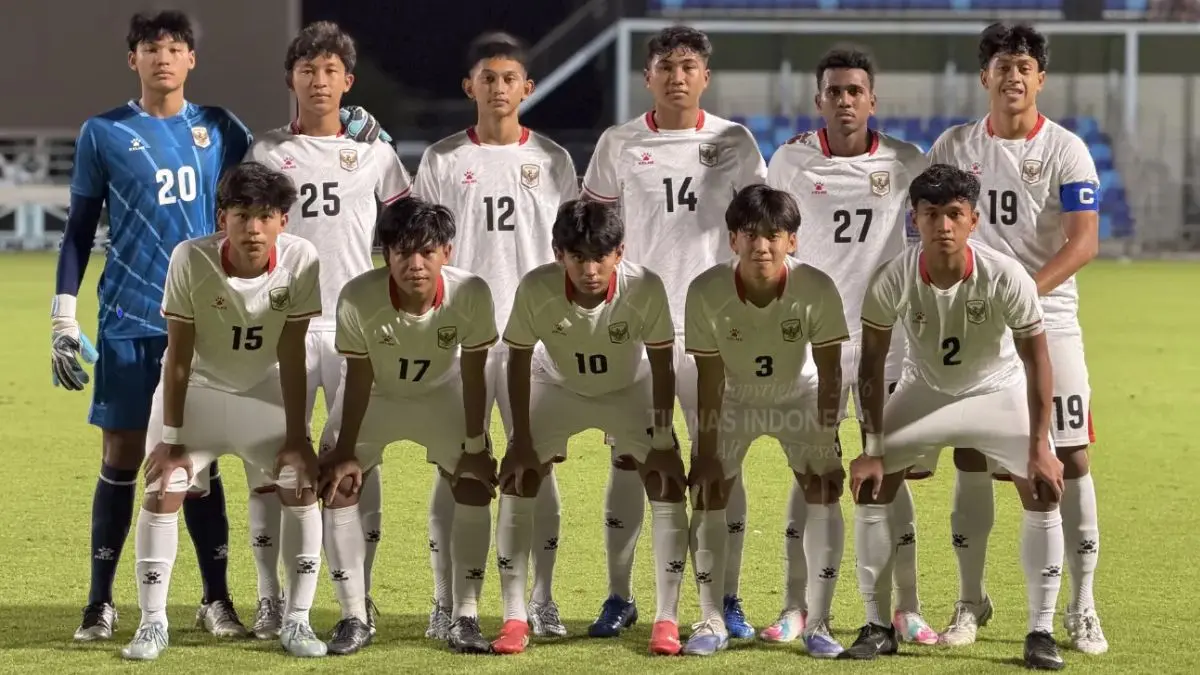

Indonesia’s U-17 National Team concluded their AFC U-17 Asian Cup 2026 journey in Group B with a disappointing outcome. Despite accumulating the same number of points as Qatar and China, the Young Garuda ultimately finished at the bottom of the final group standings.
This result was confirmed following Indonesia’s 1-3 defeat to Japan U-17 in their final group stage match, held at the King Abdullah Sports City Training Stadium on Tuesday evening, May 13, 2026. In another crucial fixture, China successfully beat Qatar 2-0, intensifying the competition within the group standings.
Meeting the Indonesian National Team at the 2027 Asian Cup, Thailand Coach Praises: They Are Developing!
All three teams—Indonesia, Qatar, and China—each garnered three points from their three matches. This unusual situation initially caused confusion among many supporters, wondering why Indonesia was placed last despite having an identical points tally to its two rivals.
In official AFC tournaments, such as the U-17 Asian Cup, group positions are not immediately determined by overall goal difference. Instead, regulations prioritize a head-to-head (H2H) calculation based on the results of matches between the teams with equal points.
This Is Not The End! Kurniawan’s Firm Message to Indonesia U-17 Players After Failing to Qualify for World Cup
Indonesia initially started well in this mini-standings scenario, securing a 1-0 victory over China. However, a 0-2 loss to Qatar proved to be a critical factor. Meanwhile, China clinched a 2-0 win against Qatar in the final group game.
Based on these three direct encounters, China emerged with the best goal difference in the mini-group of teams with equal points, recording a +1 (two goals scored, one conceded). Qatar secured second place with a goal difference of 0, having defeated Indonesia 2-0 but losing 0-2 to China.
Conversely, Indonesia finished with a goal difference of -1, stemming from their 1-0 win against China and a 0-2 defeat to Qatar. It was this specific regulation that consigned Kurniawan Dwi Yulianto’s squad to the last position in Group B.
The defeat to Japan in their final match further complicated Indonesia’s chances. Japan dominated from the start, opening the scoring through Ryoma Tsuyoneshi in the 28th minute. The Young Samurai Blue extended their lead with Takeshi Wada’s goal in the 59th minute. Indonesia briefly found hope when Peres Tjoe netted from a free-kick in the 70th minute.
Meeting Supporters, Fariz Julinar Affirms PSIS Semarang Ready to Rise Next Season
However, Japan swiftly responded just a minute later with a goal from Arata Okamoto. The 3-1 scoreline held until the final whistle, confirming Japan as the group winners.
Burying the Dream
This failure to advance from the group stage also meant Indonesia had to relinquish their dream of competing in the U-17 World Cup 2027. Nevertheless, the Young Garuda’s performance still garnered attention, as they managed to put up a spirited fight in several important group matches.
Slammed After Being Caught Pulling Beckham Putra’s Hair After the Heated Persija vs Persib Match, Rizky Ridho: We Are Ready to Accept the Consequences!
Many supporters on social media also speculated that Indonesia would have had a significantly better chance if they had managed to score one additional goal against Qatar, underscoring the critical role of goal difference in the head-to-head mini-standings. AFC regulations are indeed stringent when more than two teams finish with identical points. After head-to-head points are calculated, the tie-breaking procedure proceeds to goal difference among the tied teams, followed by the number of goals scored.
If still level, then overall group goal difference, overall goals scored, and finally disciplinary points are considered. In the case of Group B, the tie-breaker was settled at the head-to-head goal difference stage.
The final Group B standings saw Japan secure the top spot, while China climbed to second place. Qatar finished third, leaving Indonesia to accept their position at the bottom of the table.
Although they failed to progress further, the experience of competing at the Asian level remains a crucial asset for Indonesia’s young players. This tournament also serves as valuable material for the coaching staff to evaluate and improve the team’s game consistency, particularly in high-stakes matches.
The Indonesia U-17 National Team’s journey in the AFC U-17 Asian Cup 2026 may have ended prematurely. Still, several young players continue to demonstrate immense potential to become vital contributors to Indonesian football in the future.
Summary
The Indonesia U-17 National Team was eliminated from the AFC U-17 Asian Cup 2026, finishing at the bottom of Group B despite having the same three points as Qatar and China. Their final standing was determined by head-to-head (H2H) goal difference among the tied teams. Indonesia’s 1-0 victory over China was negated by a 0-2 defeat to Qatar, resulting in a -1 H2H goal difference, placing them last behind China (+1) and Qatar (0).
This H2H regulation prevented Indonesia from advancing, ending their aspiration to compete in the U-17 World Cup 2027. The Young Garuda concluded their campaign with a 1-3 loss to Japan, who secured the top spot in Group B. This early exit provides crucial experience for the young players and valuable insights for the coaching staff.